
The Habsburg Monarchy had inherited the Bohemian …
Years: 1526 - 1526
October
The Habsburg Monarchy had inherited the Bohemian Crown Lands, including the Legnica fiefdom, after the death of Louis II at Mohács in 1526.
Silesian mystic and reformer Caspar Schwenckfeld, born in Ossig near Liegnitz to noble parents in 1489, had studied in Cologne from 1505 to 1507, then enrolled at the University of Frankfurt on the Oder.
Between 1511 and 1523, Schwenckfeld had served the Duchy of Liegnitz as an adviser to the successive Duke Charles I, George I, and Frederick II.
Schwenckfeld had experienced an awakening in 1518 or 1519 that he called a "visitation of God."
Luther's writings had had a deep influence on Schwenckfeld, and he had embraced the "Lutheran" Reformation and become a student of the Scriptures.
Schwenckfeld had begun to preach the gospel in 1521, and in the following year had won Duke Frederick II over to Protestantism.
The population of Legnica, following their ruler, had become Lutheran.
Duke Frederick II of Legnica, who has been a strong supporter of the Reformation from 1523, establishes in 1526 the first Protestant University here; however, because of the controversies between Luther and Schwenckfeld, it will not be until 1530 that the University finally opens.
Schwenckfeld had organized a Brotherhood of his converts for the purpose of study and prayer in 1523, his Neoplatonic and mystical interests leading him to a highly spiritualized view of the Lord's Supper.
In 1525, he had rejected Luther's idea of Real Presence and had come to a spiritual interpretation of the Lord's Supper, which Luther subsequently rejected.
Schwenckfeld had begun to teach that the true believer ate the spiritual body of Christ.
He takes strong efforts toward reformation wherever he goes, but also criticizes reformers who he thinks go to extremes.
He emphasizes that for one to be a true Christian, one must not change only outwardly but inwardly.
Because of the communion and other controversies, Schwenckfeld breaks with Luther and follows what has been described as a "middle way".
Some of the teachings of Schwenckfeld include opposition to war, secret societies, and oath-taking, that the government has no right to command one's conscience, that regeneration is by grace through inner work of the Spirit, that believers feed on Christ spiritually, and that believers must give evidence of regeneration.
He rejects infant baptism, outward church forms, and "denominations".
His views on the Eucharist prompts Luther to publish several sermons on the subject in his 1526 The Sacrament of the Body and Blood of Christ—Against the Fanatics.
Locations
People
Groups
- Christians, Roman Catholic
- Bohemia, Kingdom of
- Legnica, Duchy of
- Holy Roman Empire
- Protestantism
- Habsburg Monarchy, or Empire
Topics
Commodoties
Subjects
- Commerce
- Writing
- Labor and Service
- Conflict
- Mayhem
- Faith
- Government
- Scholarship
- Custom and Law
- Technology
- Movements
Regions
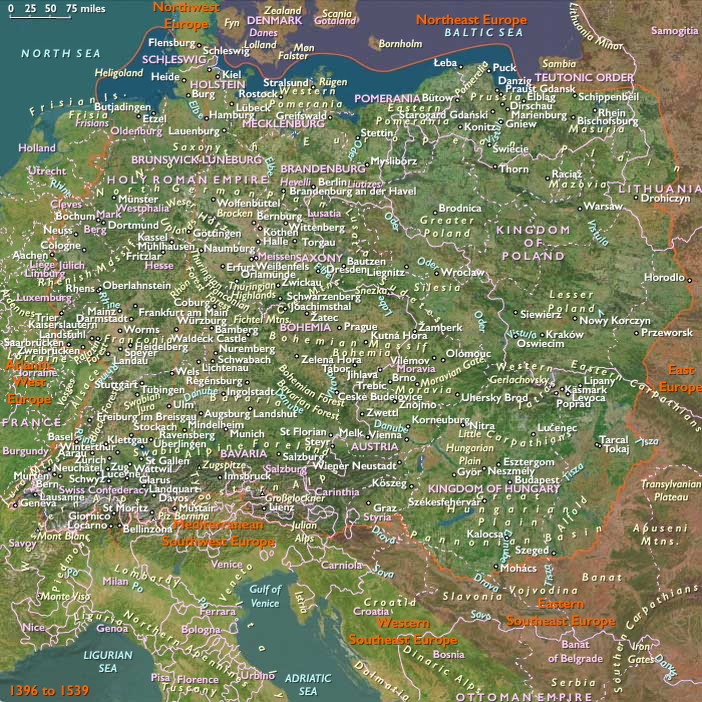
Subregions
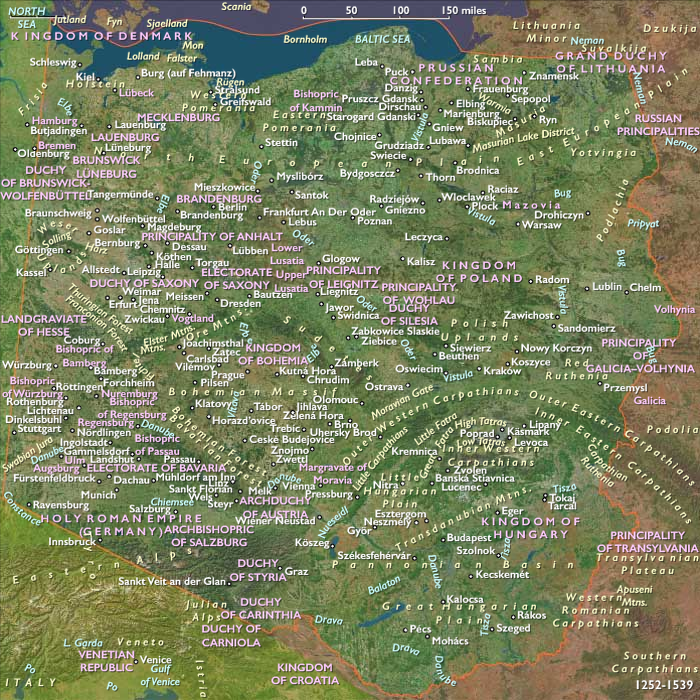
Years: 1526 - 1526
October
Locations
People
Groups
- Christians, Roman Catholic
- Bohemia, Kingdom of
- Legnica, Duchy of
- Holy Roman Empire
- Protestantism
- Habsburg Monarchy, or Empire
Topics
Commodoties
Subjects
- Commerce
- Writing
- Labor and Service
- Conflict
- Mayhem
- Faith
- Government
- Scholarship
- Custom and Law
- Technology
- Movements
Regions
Subregions