
The Gupta Dynasty, originating probably in Bengal, …
Years: 397 - 397
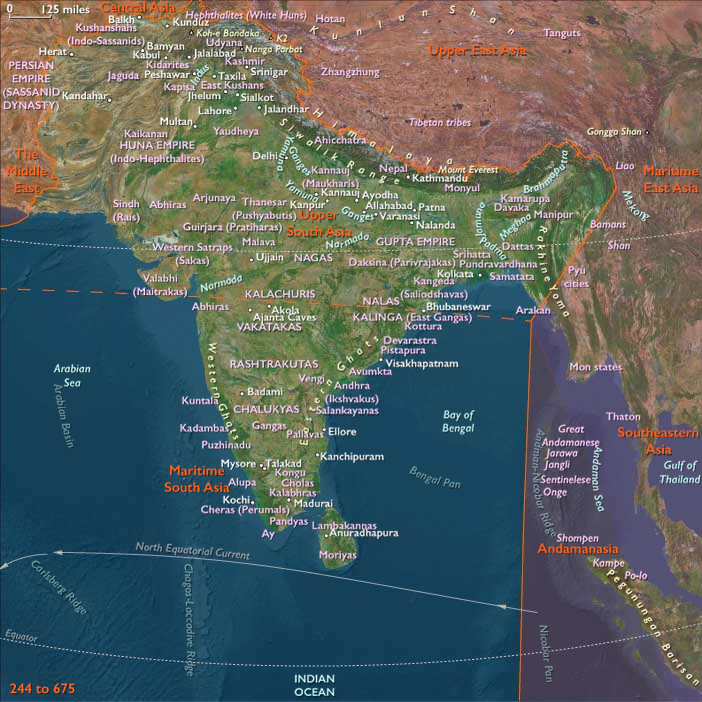
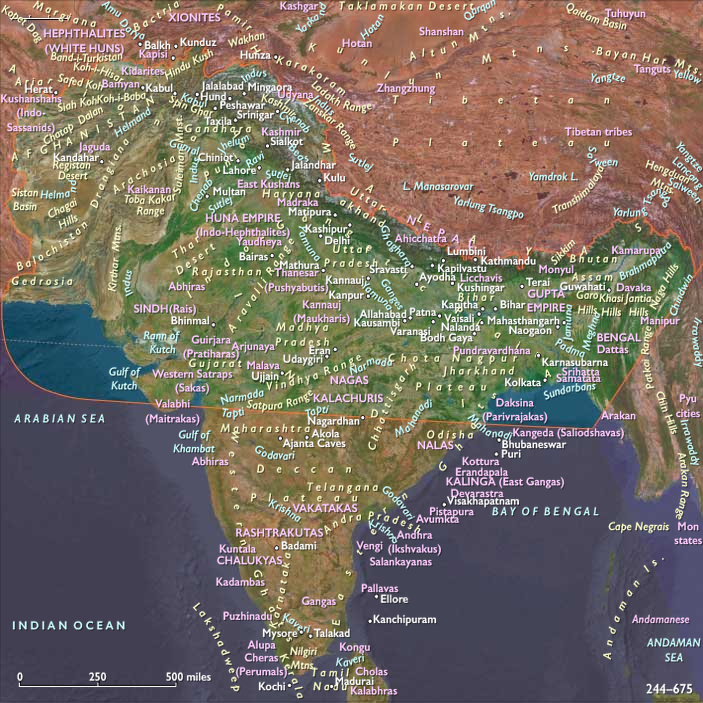
The Gupta Dynasty, originating probably in Bengal, had in the beginning of the fourth century established and ruled a few small Hindu kingdoms in Magadha and around modern-day Uttar Pradesh.
Chandragupta, with a dowry of the kingdom of Magadha and an alliance with the Lichchhavis, had set about expanding his power, conquering much of Magadha, Prayaga and Saketa, and by 320 establishing a realm stretching from the Ganges River to Prayaga, modern-day Allahabad.
His successor Samudragupta had taken the kingdoms of Shichchhatra and Padmavati early in his reign, then attacked the tribes in Malwa: the Yaudheyas, the Arjunayanas, the Maduras and the Abhiras.
By his death in 380, he had incorporated over twenty kingdoms into his realm, his rule extending from the Himalayas to the river Narmada and from the Brahmaputra to the Yamuna.
Considered the Napoleon of India, he gave himself the titles King of Kings and World Monarch.
A talented military leader and a great patron of art and literature, he had been succeeded by his son Ramagupta, who had been captured by the Saka Western Satraps ("Kshatrapas") and had soon been succeeded by his brother Chandragupta II, whose greatest victory is over the Shaka-Kshatrapa dynasty and annexation of their kingdom in Gujarat, by defeating their last ruler Rudrasimha III in 395.
The age of classical Sanskrit writings begins under the Guptas; Kalidasa’s dramas and poems epitomize the kavya school’s epic genre.
Known to be an ardent worshiper of Shiva, he writes his plays and poetry largely based around Hindu mythology and philosophy.
His name means, literally, "Kali's servant".
Locations
People
Groups
Topics
Commodoties
Subjects
Regions
Subregions
Years: 397 - 397
Locations
People
Groups
Topics
Commodoties
Subjects
Regions
Subregions