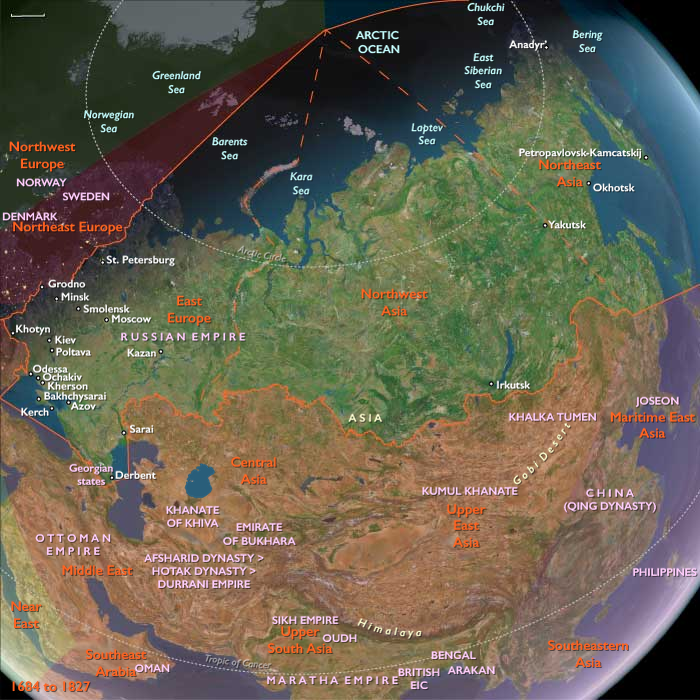
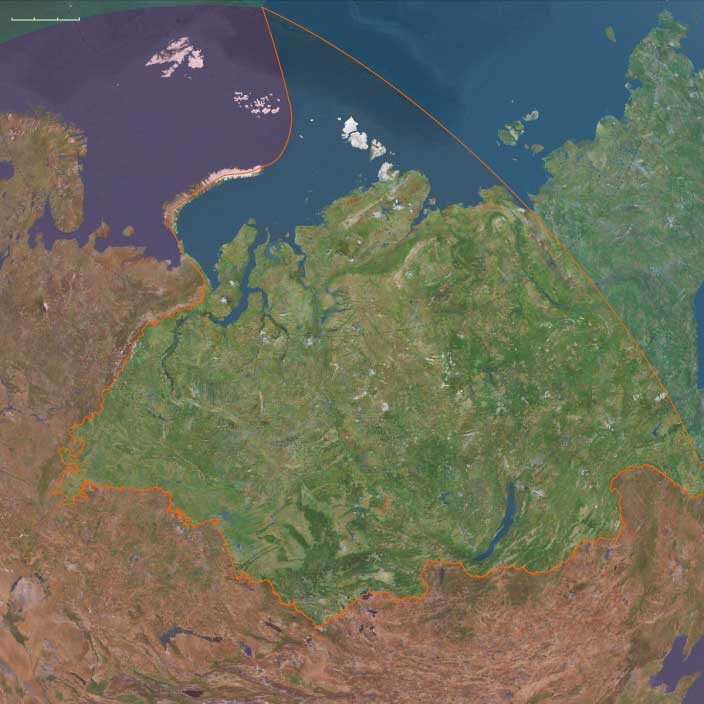
Some two hundred and thirty thousand Russians …
Years: 1708 - 1719
Some two hundred and thirty thousand Russians have settled in Siberia by 1709.
Locations
Groups
Subjects
Regions
Subregions
Related Events
Filter results
Showing 10 events out of 28695 total
Eastern West Indies (1708–1719 CE): Decline and Economic Stagnation in Santo Domingo
Economic and Social Decline
Between 1708 and 1719, the Spanish colony of Santo Domingo experienced significant economic stagnation and decline. Wealthy landowners made little effort to develop their vast holdings, leaving large tracts of fertile land idle. The once-thriving sugar plantations along the southern coast were abandoned due to continuous harassment from pirates and privateers, severely crippling the colony’s agricultural production and export capacity.
Impact on Commerce and Trade
With the cessation of sugar cultivation and external threats severely disrupting maritime commerce, foreign trade nearly ceased. Domestic trade became highly centralized, with nearly all commerce conducted within the protective confines of the capital city of Santo Domingo. This concentration further exacerbated economic disparities between urban and rural areas, deepening social inequalities.
Security Challenges
Pirate activities along the southern coast not only destroyed economic infrastructure but also weakened overall colonial security. The inability of Spanish authorities to maintain adequate military protection further contributed to the colony’s isolation and economic vulnerability.
Conclusion
The era 1708–1719 marked a period of economic hardship and stagnation for Santo Domingo, as persistent piracy, declining agricultural production, and isolation significantly hampered development. The colony’s dependence on the capital city for limited internal commerce underscored broader vulnerabilities that would persist into subsequent decades.
Northeast Asia (1708–1719 CE)
Russian Maritime Expansion and Strategic Developments
From 1708 to 1719, Northeast Asia—a region encompassing the easternmost areas of Siberia (east of 130°E), the extreme northeastern portion of China's Heilongjiang province, the northern half of Russia's Primorsky Krai, and most of the island of Hokkaido (excluding its southwestern portion)—witnessed significant Russian efforts to solidify maritime routes and expand fur trading activities, setting the stage for deeper colonial integration and increased indigenous interaction.
Russian exploration and colonization intensified under Tsar Peter the Great, who sought more efficient ways to access and exploit Kamchatka Peninsula’s rich fur resources. Prior to this period, Russian entry into Kamchatka was arduous, primarily involving difficult overland routes from the north. To facilitate quicker access, in 1714, Peter the Great commissioned a group of shipbuilders to establish a maritime base at Okhotsk, despite recognizing the site’s considerable limitations.
In 1715, the first significant maritime construction project culminated with the building of the ship Vostok, marking a major advancement in Russia’s naval capabilities on the Pacific frontier. Under the command of Kozma Sokolov, the Vostok successfully completed a landmark voyage to Kamchatka in 1716–1717, demonstrating the viability of a maritime link between Okhotsk and Kamchatka. Despite its drawbacks—including a difficult inland route, a poor harbor, and the necessity of importing food due to the region’s short growing season and lack of arable land—Okhotsk emerged as Russia’s main Pacific seaport. It would maintain this status for the subsequent one hundred and fifty years, playing a critical logistical role in supporting Kamchatka and other emerging Russian settlements along the coast.
These strategic initiatives during 1708–1719 considerably enhanced Russian influence in Northeast Asia, creating vital infrastructure that would shape future colonization and significantly impact the region's indigenous populations.
The first Russians to enter the Kamchatka Peninsula had had to travel overland from the north.
Peter the Great sends a party of shipbuilders to Okhotsk in 1714 to allow faster access to the furs of Kamchatka.
They build the Vostok in 1715, and Kozma Sokolov sails it to Kamchatka in 1716-17.
It is clear from at least 1715 that Okhotsk is a poor site.
In addition to the difficult track inland, the harbor is poor, though usable, and the short growing season and lack of arable land to plow means that food has to be imported.
Despite these drawbacks, Okhotsk will for the next one hundred and fifty years be the main Russian seaport on the Pacific, supplying Kamchatka and other coastal settlements.
The British East India Company opens its first trading office in Canton, China and begins importing opium.
Emperor Kangxi has ordered the compilation of a dictionary of Chinese characters, which will become known as the Kangxi Dictionary.
This is seen as an attempt by Kangxi to gain support from the Han Chinese scholar-bureaucrats, as many of them had initially refused to serve him and remained loyal to the Ming Dynasty.
However, by persuading the scholars to work on the dictionary without asking them to formally serve the Qing imperial court, Kangxi has led them to gradually taking on greater responsibilities until they are assuming the duties of state officials.
The Uzbek Ming tribe, harboring imperial ambitions as Ashtarkhanid rule falters around 1710, establishes a new dynasty in Kokand centered in the Fergana Valley in the east.
Turkmen tribal ascendancy passes during the seventeenth and eighteenth centuries to the Yomuts, Tekkes, Ersaris, and Saryks, who have begun to move out of the desert into the oases of Khorezm and to the Atrek, Tejen, and Morghab rivers and adopt a settled way of life.
The first notable Russian expedition under Prince Aleksandr Bekovich-Cherkasski in 1717 meets with failure, as the military skills developed by the Turkmens enable them to frustrate Russian, and later British, expansion.
However, there is bitter rivalry among the various Turkmen tribes, particularly between the Tekke and Yomut, while the Goklans, inhabiting part of the Khiva oasis, oppose both.
Plague strikes Germany, Russia, Scandinavia and Turkey from 1709 through 1710.
East Europe (1708–1719 CE): Military Triumphs and Institutional Reforms
Political and Military Developments
Victory in the Great Northern War
From 1708 to 1719 CE, Peter the Great achieved decisive victories in the Great Northern War, most notably the Battle of Poltava in 1709. This pivotal victory dramatically shifted the balance of power in favor of Russia, significantly diminishing Sweden's regional dominance.
Expansion and Administrative Reforms
Peter intensified administrative reforms, further centralizing government functions and introducing new bureaucratic institutions. These measures streamlined governance, improved efficiency, and solidified state control over vast territories.
Diplomatic Achievements
Diplomatic relations with European powers expanded and strengthened, with Russia increasingly recognized as a major European state. Strategic alliances were reinforced, aiding Russia's diplomatic leverage across the continent.
Economic and Technological Developments
Economic Expansion and Industrial Growth
Economic modernization advanced, highlighted by substantial growth in manufacturing, particularly in metallurgy, shipbuilding, and textile industries. Enhanced trade networks facilitated further economic prosperity.
Military and Technological Innovations
Continued military reforms and technological advancements, including improved artillery and naval capacities, significantly boosted Russia's military effectiveness. Robust fortifications and strategic infrastructure upgrades secured territorial holdings.
Cultural and Artistic Developments
Flourishing Westernization
The westernization of Russian culture deepened, with significant architectural projects and artistic endeavors reflecting European influences. Cultural patronage under Peter promoted sophisticated European-style developments.
Intellectual Vibrancy and Scholarship
Intellectual and literary activities flourished, reflecting deeper engagement with European Enlightenment ideas. Academic institutions expanded, and scholarly production grew significantly, enriching Russia’s intellectual and cultural landscape.
Settlement Patterns and Urban Development
Urban Expansion and Development
Urban growth accelerated, particularly in Saint Petersburg, Peter's strategically planned capital, which rapidly became a major political, economic, and cultural center. Infrastructure improvements and urban planning projects expanded significantly.
Strategic Fortification and Infrastructure
Continuous enhancement of urban and territorial fortifications strengthened regional security, reflecting Russia’s growing military and administrative sophistication.
Social and Religious Developments
Social Structure and Integration
Social reforms intensified, promoting greater integration and Westernization of societal structures. Efforts continued to incorporate diverse ethnic and regional groups, enhancing overall cohesion and administrative unity.
Reformation of the Orthodox Church
The Orthodox Church experienced further state-led reforms aimed at aligning religious institutions closely with state objectives. This restructuring significantly reshaped its societal role and institutional influence.
Long-Term Consequences and Historical Significance
The era from 1708 to 1719 CE represented a critical phase in Russia's ascent as a European power, driven by military victories, administrative centralization, economic growth, and deepening cultural transformation. These developments had enduring impacts on Russia's future trajectory, shaping its modern political, economic, and cultural identity.

Eventually Tsar Peter the Great recognizes that to consolidate and modernize Russia's political and economic power it is necessary to do away with the hetmanate and Ukrainian and Cossack aspirations to autonomy.
Mazepa dies in exile after fleeing from the Battle of Poltava (1709), where the Swedes and their Cossack allies suffer a catastrophic defeat.