
The Grijalva expedition’s crew had returned to …
Years: 1517 - 1517
April
The Grijalva expedition’s crew had returned to the ships without the fresh water that had been the original reason to land.
Furthermore, they had seen their crew reduced by more than fifty men, many of them sailors, which combined with the great number of the seriously injured makes it an impossibility to operate three ships.
They break up the ship of least draft and burn it on the high sea, after having distributed to the others two its sails, anchors, and cables.
The thirst begins to become intolerable.
Bernal writes that their "mouths and tongues were cracked", and of soldiers who were driven by desperation to drink brackish water at a place which they called El Estero de los Lagartos, because of the large alligators.
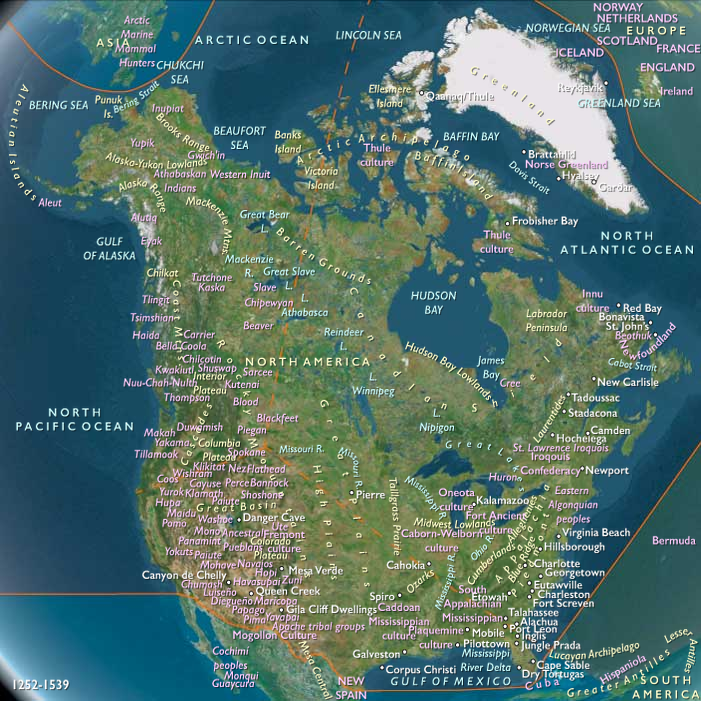
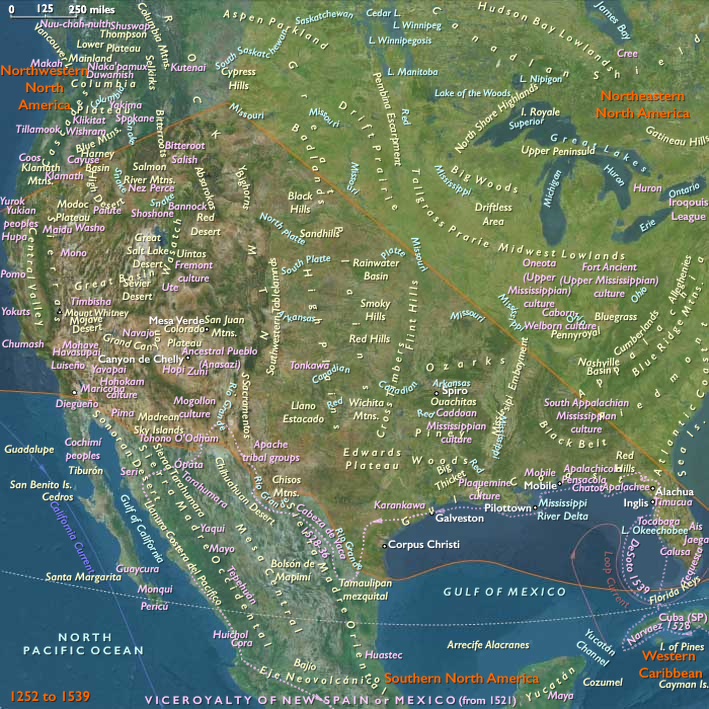
The pilots Alaminos, Camacho, and Álvarez decide, on the initiative of Alaminos, to navigate to Florida rather than head directly for Cuba.
Alaminos remembers his exploration of Florida with Juan Ponce de León, and believes this to be the safest route, although promptly upon arriving in Florida he advises his companions of the bellicosity of the local natives.
In the event, the twenty people—among them, Bernal and the pilot Alaminos—who debark in search of water are attacked by natives, although this time they come out victorious, with Bernal nonetheless receiving his third injury of the voyage, and Alaminos taking an arrow in the neck.
One of the sentries who had been placed on guard around the troop disappears: Berrio, precisely the only soldier who had escaped unscathed in Champotón.
The others are able to return to the boat, and finally bring fresh water to alleviate the suffering of those who had remained with the boat, although one of them (according to Bernal) drinks so much that he swells up and dies within a few days.
Now with fresh water, they head to Havana in the two remaining ships, and not without difficulties—the boats are deteriorated and taking on water, and some mutinous sailors refuse to work the pumps—they are able to complete their voyage and disembark in the port of Carenas (Havana).
Francisco Hernández de Córdoba barely reaches Cuba; suffering from his mortal wounds, he expires within days of reaching the port, along with three other sailors.
Locations
People
- Bernal Díaz del Castillo
- Diego Velázquez de Cuéllar
- Francisco Hernández de Córdoba
- Juan Ponce de León y Figueroa
Groups
- Maya peoples
- Calusa
- Santo Domingo, Captaincy General of
- Tierra Firme, Province of
- Cuba, Governorate of
- Spain, Habsburg Kingdom of
Topics
Commodoties
Subjects
Regions
Subregions
Years: 1517 - 1517
April
Locations
People
- Bernal Díaz del Castillo
- Diego Velázquez de Cuéllar
- Francisco Hernández de Córdoba
- Juan Ponce de León y Figueroa
Groups
- Maya peoples
- Calusa
- Santo Domingo, Captaincy General of
- Tierra Firme, Province of
- Cuba, Governorate of
- Spain, Habsburg Kingdom of
Topics
Commodoties
Subjects
Regions
Subregions