
The Greeks push the Bulgarian boundary beyond …
Years: 1265 - 1265
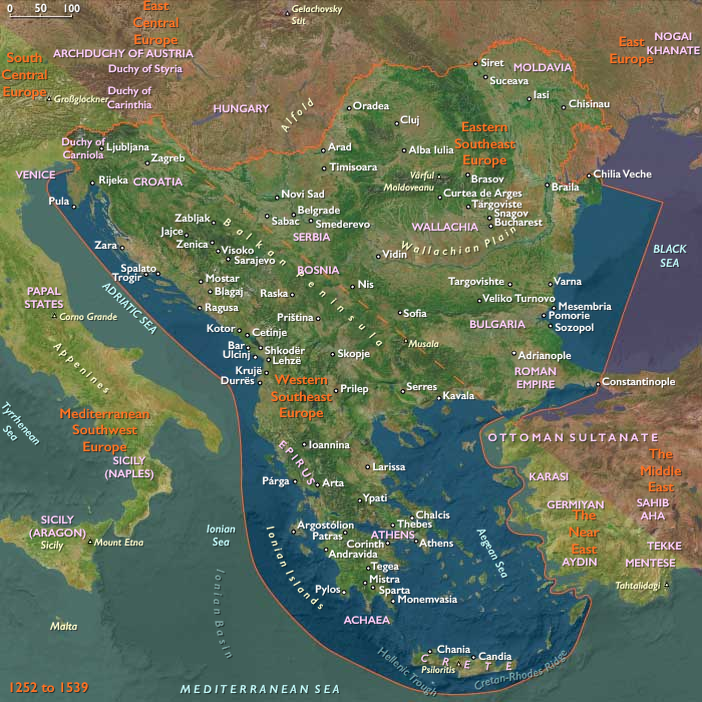
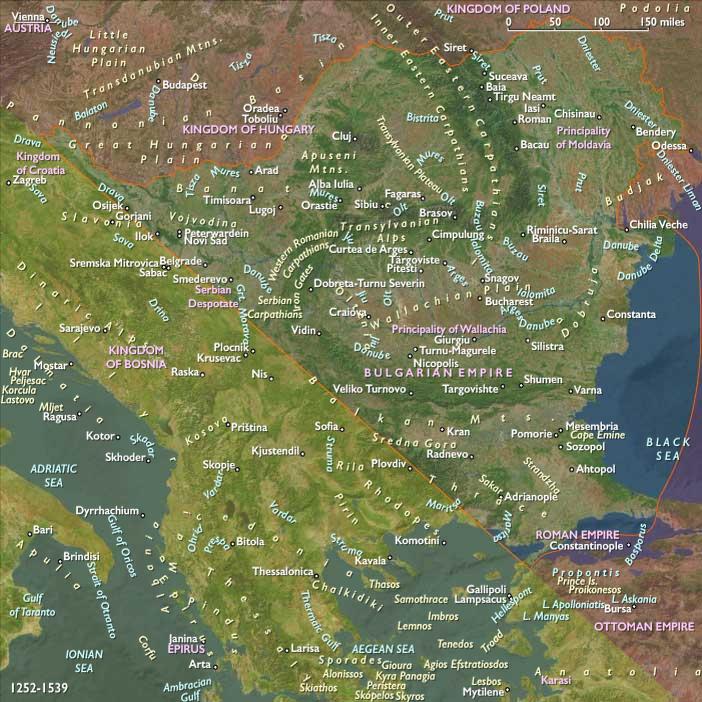
The Greeks push the Bulgarian boundary beyond Mount Haemus (the Balkan Mountains) in 1265.
The emperor, returning from battle, is ambushed and captured by the Bulgarians, who release him after forcing him to promise the return of the two seaports taken in 1261.
Locations
People
Groups
- Greeks, Medieval (Byzantines)
- Bulgarians (South Slavs)
- Bulgarian Empire (Second), or Empire of Vlachs and Bulgars
- Roman Empire, Eastern: Palaiologan dynasty
Topics
Commodoties
Subjects
Regions
Subregions
Related Events
Showing 10 events out of 45858 total
Years: 1265 - 1265
Locations
People
Groups
- Greeks, Medieval (Byzantines)
- Bulgarians (South Slavs)
- Bulgarian Empire (Second), or Empire of Vlachs and Bulgars
- Roman Empire, Eastern: Palaiologan dynasty
Topics
Commodoties
Subjects
Regions
Subregions