
The Great Roman Civil War (49–45 BCE), …
Years: 57BCE - 46BCE
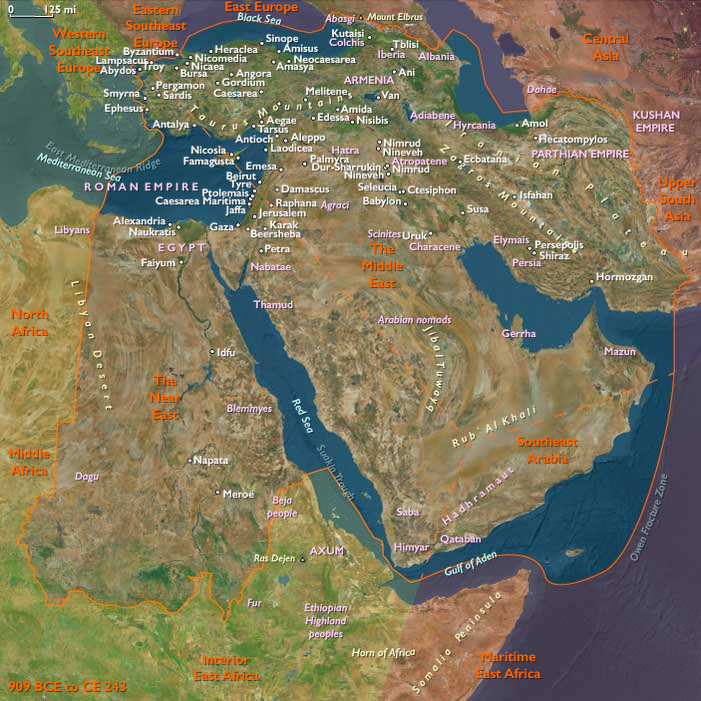
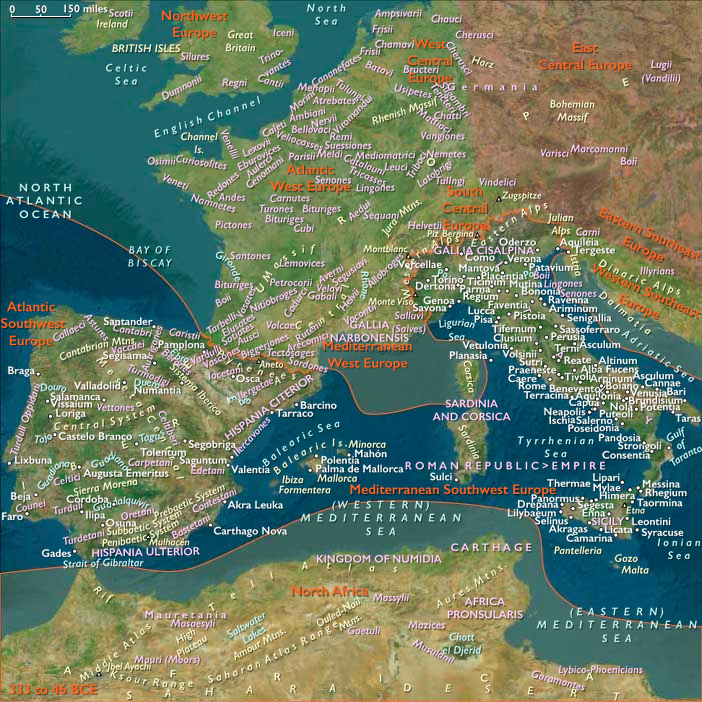
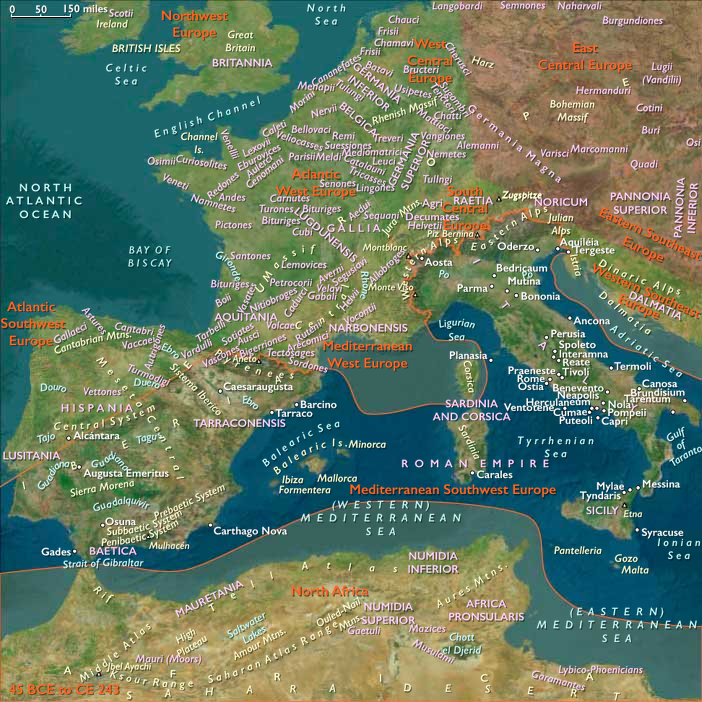
The Great Roman Civil War (49–45 BCE), also known as Caesar's Civil War, one of the last politico-military conflicts in the Roman Republic before the establishment of the Roman Empire, begins as a series of political and military confrontations between Julius Caesar, his political supporters (broadly known as Populares), and his legions, against the Optimates (or Boni), the politically conservative and socially traditionalist faction of the Roman Senate, who are supported by Pompey and his legions.
Caesar is appointed dictator in Rome, with Mark Antony as his Master of the Horse; Caesar presides over his own election to a second consulate (with Publius Servilius Vatia as his colleague), then, after eleven days, resigns this dictatorate.
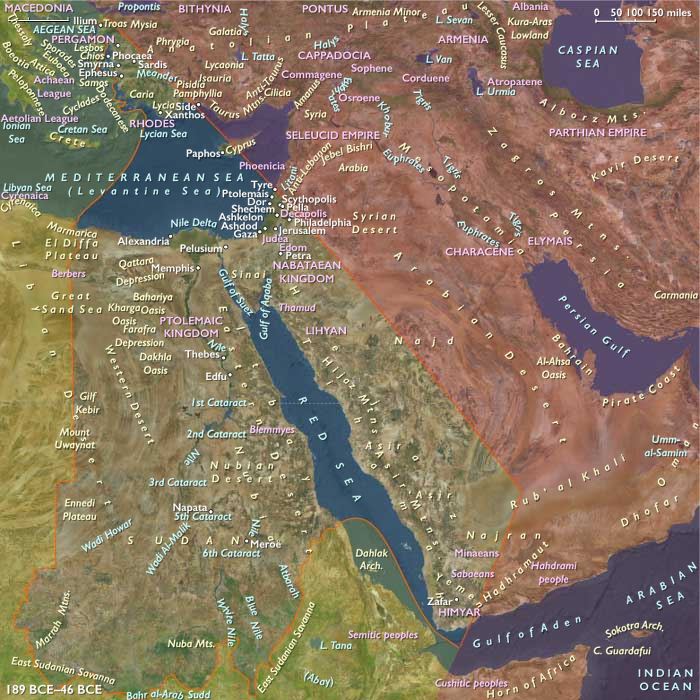
He pursues Pompey to Alexandria, where Pompey is murdered by a former Roman officer serving in the court of King Ptolemy XIII.
Caesar then becomes involved with the Alexandrine civil war between Ptolemy and his sister, wife, and co-regent queen, the Pharaoh Cleopatra VII.
Caesar sides with Cleopatra, perhaps as a result of Ptolemy's role in Pompey's murder; he is reported to have wept at the sight of Pompey's head, which is offered to him by Ptolemy's chamberlain Pothinus as a gift.
In any event, Caesar withstands the Siege of Alexandria, later defeating the Ptolemaic forces in 47 BCE in the Battle of the Nile and installing Cleopatra as ruler.
Caesar and Cleopatra never marry, as Roman Law only recognizes marriages between two Roman citizens, but he continues his relationship with Cleopatra throughout his last marriage, which lasts fourteen years—in Roman eyes, this does not constitute adultery—and may have fathered a son called Caesarion.
Cleopatra visits Rome on more than one occasion, residing in Caesar's villa just outside Rome across the Tiber.
Caesar had again been appointed Dictator late in 48 BCE, with a term of one year.
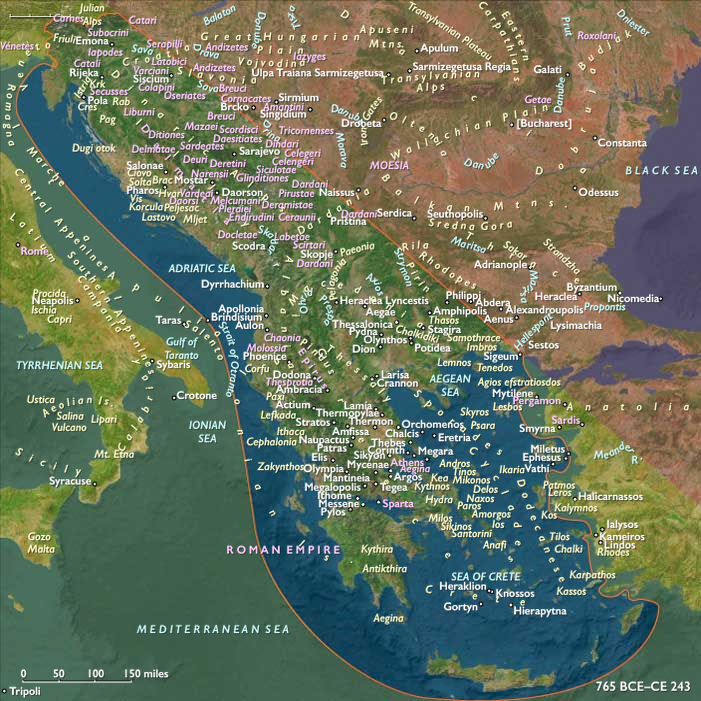
After spending the first months of 47 BCE in Egypt, Caesar crosses to Asia, where he annihilates King Pharnaces II of Pontus in the Battle of Zela; his victory is so swift and complete that he mocks Pompey's previous victories over such poor enemies.
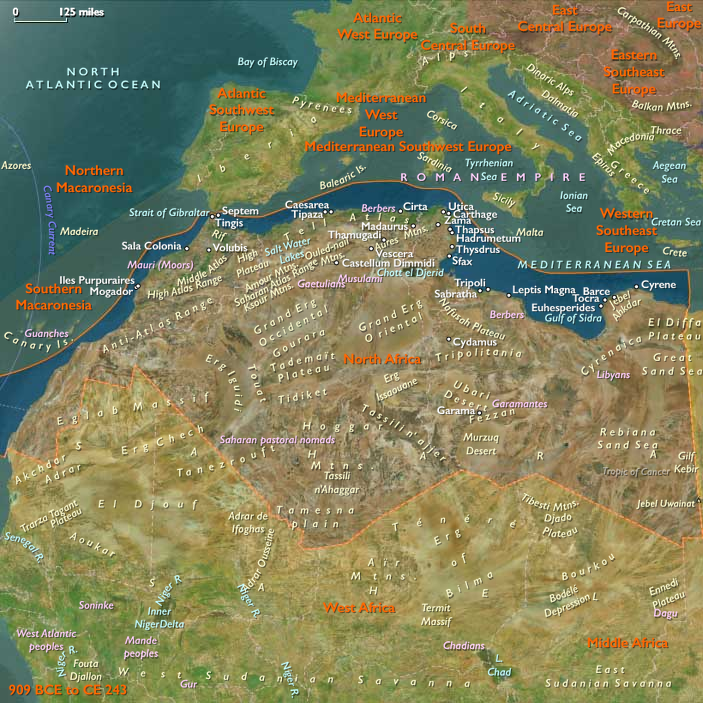
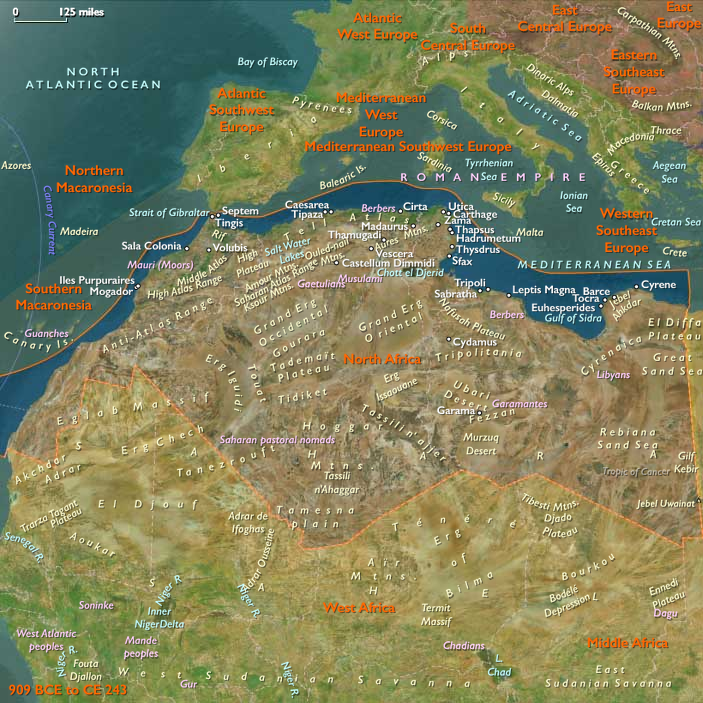
He thence proceeds to Africa to deal with the remnants of Pompey's senatorial supporters.
He quickly gains a significant victory at Thapsus in 46 BCE over the forces of Metellus Scipio (who dies in the battle) and Cato the Younger (who commits suicide).
After this victory, Caesar is appointed Dictator for ten years.
People
- Cassivellaunus
- Cato the Younger
- Cleopatra VII
- Julius Caesar
- Mandubracius
- Marcus Licinius Crassus
- Pharnaces II
- Pompey
- Ptolemy XIII Theos Philopator
- Quintus Caecilius Metellus Pius Scipio Nasica
- Surena
Groups
- Korean people
- Persian people
- Britain, Iron Age
- Gauls
- Roman Republic
- Bosporan Kingdom
- Britons (historical)
- Pontus, Kingdom of
- Egypt, Ptolemaic Kingdom of
- Parthian Empire
- Trinovantes (Celtic tribe)
- Silla, Kingdom of
Topics
- Classical antiquity
- Pre-Roman Iron Age of Northern Europe
- Roman Age Optimum
- Roman Republic, Crisis of the
- Han-Xiongnu War
- Gallic Wars
- Three Kingdoms of Korea
- Caesar's invasions of Britain
- Roman-Parthian War of 55-36 BCE
- Alesia, Battle of
- Roman Civil War, Great, or Caesar's Civil War
- Alexandria, Siege of
- Zela, Battle of
- Caesar's War in Pontus
- Thapsus, Battle of
Commodoties
Subjects
Regions
Subregions
Years: 57BCE - 46BCE
People
- Cassivellaunus
- Cato the Younger
- Cleopatra VII
- Julius Caesar
- Mandubracius
- Marcus Licinius Crassus
- Pharnaces II
- Pompey
- Ptolemy XIII Theos Philopator
- Quintus Caecilius Metellus Pius Scipio Nasica
- Surena
Groups
- Korean people
- Persian people
- Britain, Iron Age
- Gauls
- Roman Republic
- Bosporan Kingdom
- Britons (historical)
- Pontus, Kingdom of
- Egypt, Ptolemaic Kingdom of
- Parthian Empire
- Trinovantes (Celtic tribe)
- Silla, Kingdom of
Topics
- Classical antiquity
- Pre-Roman Iron Age of Northern Europe
- Roman Age Optimum
- Roman Republic, Crisis of the
- Han-Xiongnu War
- Gallic Wars
- Three Kingdoms of Korea
- Caesar's invasions of Britain
- Roman-Parthian War of 55-36 BCE
- Alesia, Battle of
- Roman Civil War, Great, or Caesar's Civil War
- Alexandria, Siege of
- Zela, Battle of
- Caesar's War in Pontus
- Thapsus, Battle of
Commodoties
Subjects
Regions
Subregions