
Filters:
The Gravettian Tool Industry (28,000–22,000 Years Ago) …
Years: 21645BCE - 19918BCE
The Gravettian Tool Industry (28,000–22,000 Years Ago)
The Gravettian tool industry, named after the site of La Gravette in France, flourished between 28,000 and 22,000 years ago during the Upper Paleolithic period. It is characterized by specialized stone tools that reflect the technological sophistication of Early European Modern Humans (EEMH).
Key Features of Gravettian Technology
- Burins (chisel tools) – Used for carving bone, antler, and wood, demonstrating a shift toward multimaterial craftsmanship.
- Simple end scrapers – Essential for hide processing, indicating advancements in clothing and shelter production.
- Backed blades and bladelets – Small, finely retouched cutting tools, likely used for composite tools, such as hafted knives, arrows, or spears.
Cultural and Technological Significance
- Efficient Hunting Strategies: The backed bladelets suggest the use of projectile weapons, allowing for improved hunting success.
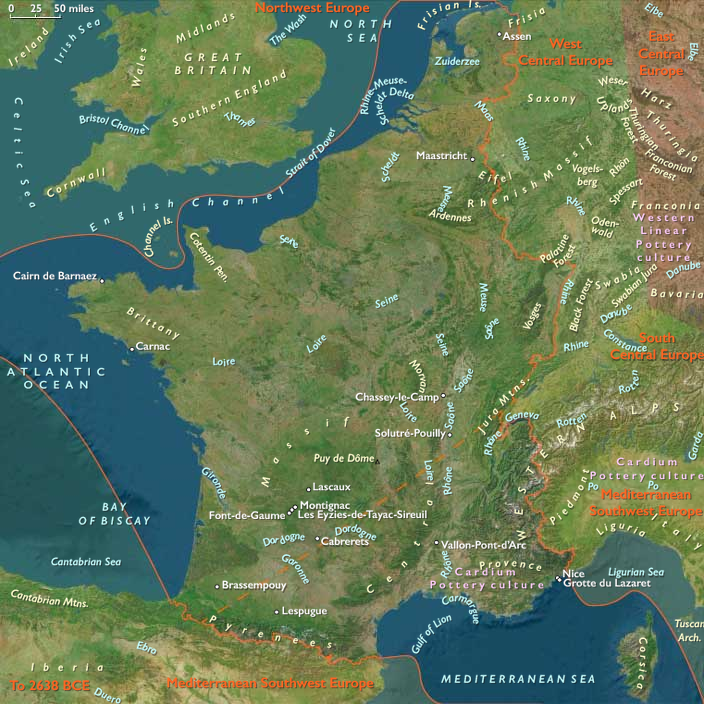
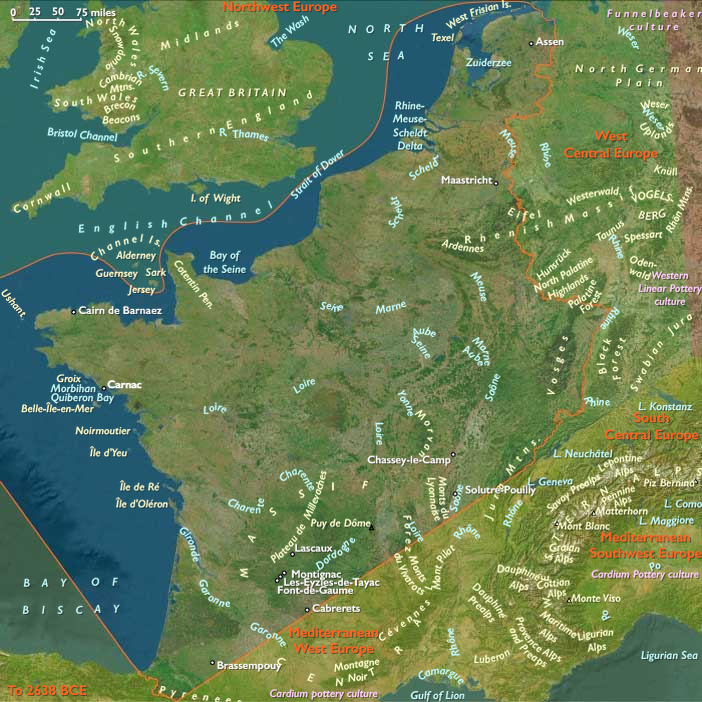
- Expansion Across Europe: The Gravettian culture spread widely across Western, Central, and Eastern Europe, adapting to diverse environments.
- Artistic and Ritualistic Expression: The Venus figurines, found at Gravettian sites, indicate symbolic and artistic developments, possibly linked to fertility or social identity.
The Gravettian industry represents an important technological evolution in tool-making, setting the stage for later Upper Paleolithic cultures, such as the Solutrean and Magdalenian traditions.
Groups
Topics
Subjects
Regions
Subregions
Years: 21645BCE - 19918BCE
Groups
Topics
Subjects
Regions
Subregions