
The Goths’ numbers continually increase by the …
Years: 378 - 378
August
The Goths’ numbers continually increase by the addition of new bands, until finally they threaten Constantinople itself, though they lack the siege instruments necessary to take the Roman capital.
Valens’ generals, despite reinforcements, are unable to halt the roaming and plundering by the new settlers, so Valens takes command of the army.
He sends for aid from Gratian, but joins battle without waiting for it to arrive.
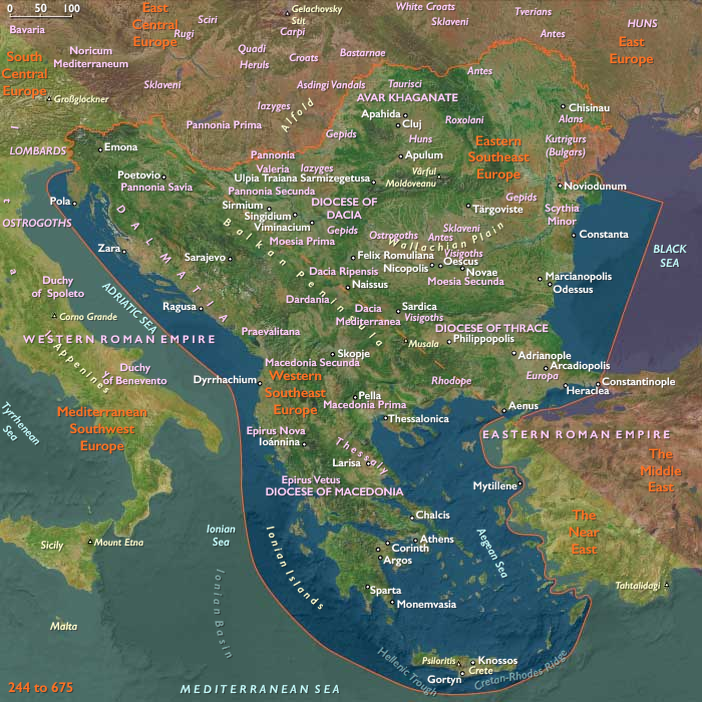
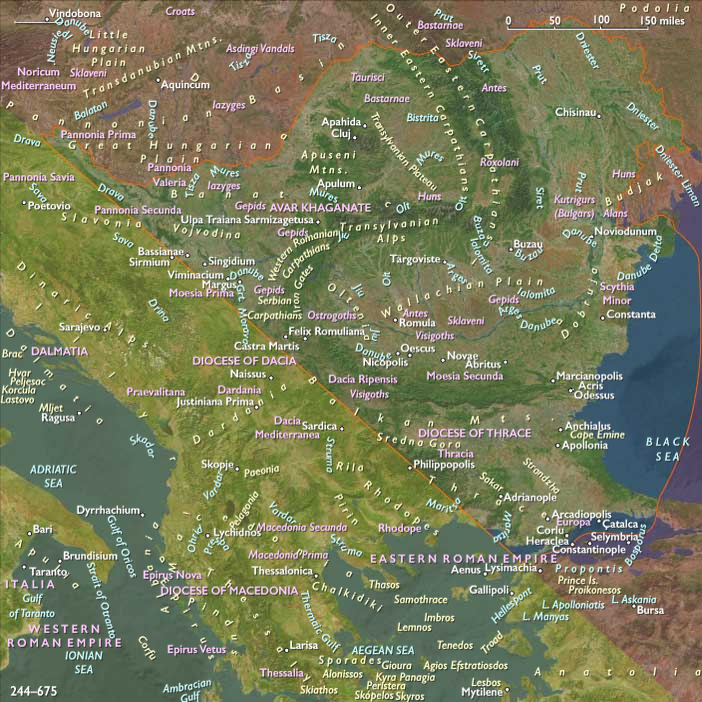
The Therving army, led by Fritigern and augmented by Greuthung and other reinforcements, engages the imperial forces on August 9, 378, in the great Battle of Adrianople (modern Edirne, Turkey).
The emperor’s poor tactics lead to the total defeat of his army, which the Goths annihilate to the tune of forty thousand men, by some accounts, killing Valens on the battlefield.
This major victory of barbarian horse over Roman infantry, which leaves the eastern provinces nearly defenseless, marks the beginning of serious Germanic inroads into Roman territory and, to some critics, foreshadows the approaching fall of the Roman Empire.
The victory frees the Goths to roam at will, plundering throughout Thrace for the rest of 378.
Locations
People
Groups
- Polytheism (“paganism”)
- Thervingi (East Germanic tribe)
- Greuthungi (East Germanic tribe)
- Moesia II (Roman province)
- Christianity, Arian
- Thrace, Diocese of
- Dacia, Diocese of
- East, or Oriens, Praetorian prefecture of
- Roman Empire: Valentinian dynasty (Rome)
Topics
- Roman Age Optimum
- Late Antiquity
- Migration Period
- Arian controversy
- Visigothic Raids on the Roman Empire, Early
- Fall of the Western Roman Empire
- Roman Gothic War, Fifth, or Gothic War (376–382)
- Adrianople, Battle of
Commodoties
Subjects
- Commerce
- Environment
- Labor and Service
- Conflict
- Mayhem
- Faith
- Government
- Technology
- Movements
- Theology
- Christology
Regions
Subregions
Years: 378 - 378
August
Locations
People
Groups
- Polytheism (“paganism”)
- Thervingi (East Germanic tribe)
- Greuthungi (East Germanic tribe)
- Moesia II (Roman province)
- Christianity, Arian
- Thrace, Diocese of
- Dacia, Diocese of
- East, or Oriens, Praetorian prefecture of
- Roman Empire: Valentinian dynasty (Rome)
Topics
- Roman Age Optimum
- Late Antiquity
- Migration Period
- Arian controversy
- Visigothic Raids on the Roman Empire, Early
- Fall of the Western Roman Empire
- Roman Gothic War, Fifth, or Gothic War (376–382)
- Adrianople, Battle of
Commodoties
Subjects
- Commerce
- Environment
- Labor and Service
- Conflict
- Mayhem
- Faith
- Government
- Technology
- Movements
- Theology
- Christology
Regions
Subregions