
The Goths are now retreating by land …
Years: 269 - 269
The Goths are now retreating by land from their plunder of Greece’s Aegean coastal cities into the province of Pannonia, their invasion leading to disaster and even threatening Rome, while the Alamanni, a loosely knit confederation of tribes composed of fragments of several Germanic peoples, are simultaneously raising havoc in the northern part of Italy.
Emperor Gallienus, now fifty, halts the progress of the Alamanni by defeating them in battle in April 268, then turns north and wins several victories over the Goths.
His attention demanded by problems in Italy, Gallienus returns there without further pursuit of the survivors, who flee to armed encampments to the northeast.
In the autumn, he turns on the Goths once again, leading a large Roman force into Moesia to cut off the Gothic army.
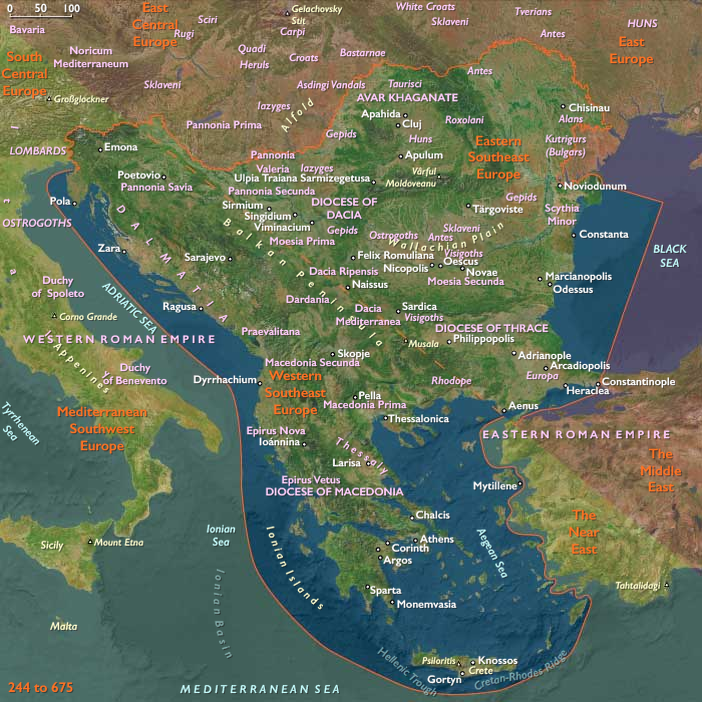
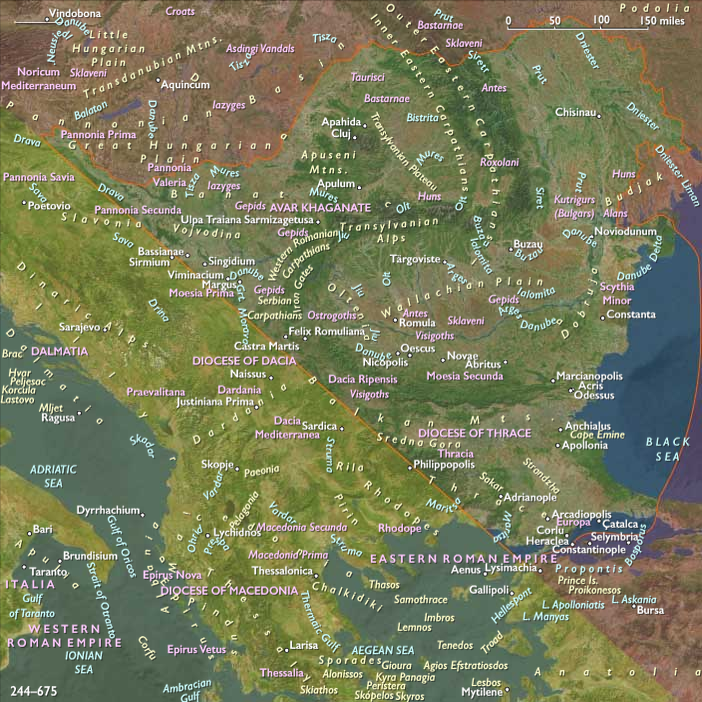
Claudius, having succeeded Gallienus as emperor leads the Roman army to victory (although the cavalry commander Lucius Domitius Aurelianus is the real victor) at the Battle of Naissus, where the Romans slaughter the Goths by the thousands in 269.
Large numbers on both sides are killed but, at the critical point, the Romans trick the Goths into an ambush by pretended flight.
Some fifty thousand Goths are allegedly killed or taken captive.
It seems that Aurelian, who was in charge of all Roman cavalry during reign of Claudius, led the decisive attack in the battle.
Locations
People
Groups
- Goths (East Germanic tribe)
- Moesia Superior (Roman province)
- Pannonia Inferior (Roman province)
- Pannonia Superior (Roman province)
- Alamanni (Germanic tribal alliance)
- Roman Empire (Rome): Non-dynastic
- Thervingi (East Germanic tribe)
Topics
- Classical antiquity
- Roman Age Optimum
- Crisis of the Third Century (Roman Civil “War” of 235-84)
- Roman Gothic War, Second
- Naissus, Battle of
Subjects
Regions
Subregions
Years: 269 - 269
Locations
People
Groups
- Goths (East Germanic tribe)
- Moesia Superior (Roman province)
- Pannonia Inferior (Roman province)
- Pannonia Superior (Roman province)
- Alamanni (Germanic tribal alliance)
- Roman Empire (Rome): Non-dynastic
- Thervingi (East Germanic tribe)
Topics
- Classical antiquity
- Roman Age Optimum
- Crisis of the Third Century (Roman Civil “War” of 235-84)
- Roman Gothic War, Second
- Naissus, Battle of
Subjects
Regions
Subregions