
The Gerzean (Naqada II) Culture, named after …
Years: 3501BCE - 3358BCE
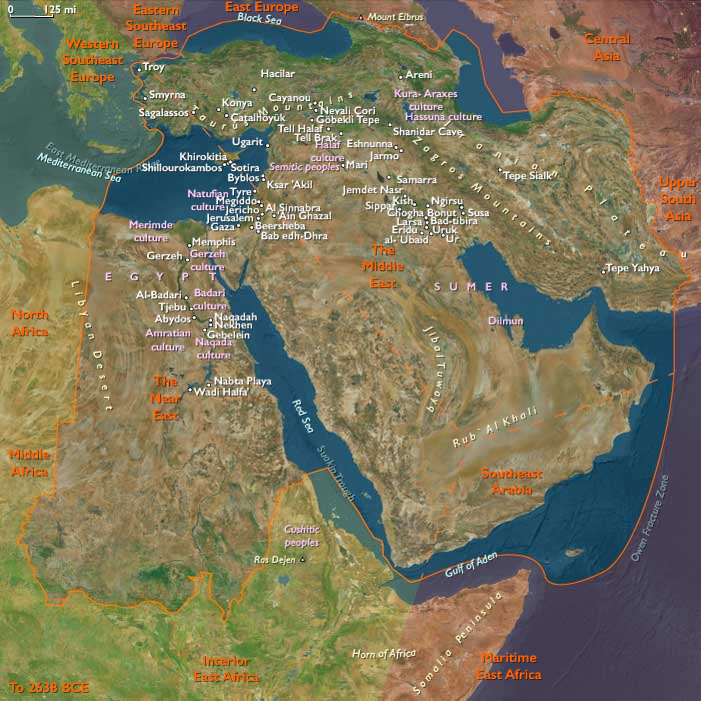
The Gerzean (Naqada II) Culture, named after the site of Gerza, is the next stage in Egyptian cultural development, and it is during this time that the foundation for Dynastic Egypt is laid.
Gerzean culture is largely an unbroken development out of Amratian Culture, starting in the delta and moving south through Upper Egypt, however failing to dislodge Amratian Culture in Nubia.
Gerzean sites are identified by the presence of pottery distinctly different from Amratian white cross-lined wares or black-topped ware.
Gerzean pottery is painted mostly in dark red with pictures of animals, people, and ships, as well as geometric symbols that appear to derive from pictures of animals.
Moreover, the handles now become "wavy" and reach a highly decorative phase.
The Gerzean Culture uses silver, gold, lapis, and faience ornamentally, and the grinding palettes used for eye-paint since the Badarian period begin to be adorned with relief carvings.
Gerzean culture coincides with a significant drop in rainfall, and farming produces the vast majority of food, although paintings from this time indicate that hunting retains some importance.
With increased food supplies, Egyptians adopt a greatly more sedentary lifestyle, and larger settlements grow to cities with about five thousand residents.
It is during this time that Egyptian city dwellers cease building from reeds, and employ mudbrick, which had been developed in the Amratian Period, en masse to build their cities.
The Mesopotamian process of sun-dried bricks, and architectural building principles—including the use of arch and of recessed walls for decorative effect—becomes popular.
Egyptian stone tools, while still in use, move from bifacial construction to ripple-flaked construction, copper is used as well to make all kinds of tools, and copper weaponry appears for the first time.
Iron objects of great age are much more rare than objects made of gold or silver due to the ease of corrosion of iron.
Beads made of meteoric iron in 3500 BCE or earlier, found in Gerzeh by G. A. Wainwright, contain seven and a half percent nickel, which is a signature of meteoric origin, since iron found in the Earth's crust has very little to no nickel content.
The Egyptians begin to mine copper and turquoise in the Sinai Peninsula about 3400 BCE at what is possibly one of the world's first hard-rock mining operations.
Locations
Groups
Topics
Commodoties
Subjects
Regions
Subregions

Related Events
Showing 10 events out of 68770 total
Years: 3501BCE - 3358BCE
Locations
Groups
Topics
Commodoties
Subjects
Regions
Subregions