
Filters:
The Founding of the Parisii Settlement on …
Years: 201BCE - 190BCE
The Founding of the Parisii Settlement on the Île de la Cité (c. 250–200 BCE)
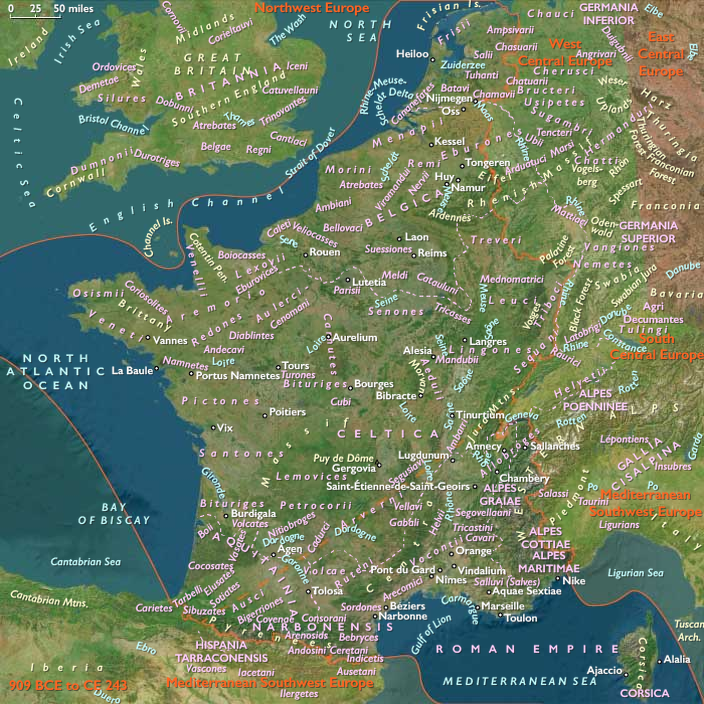
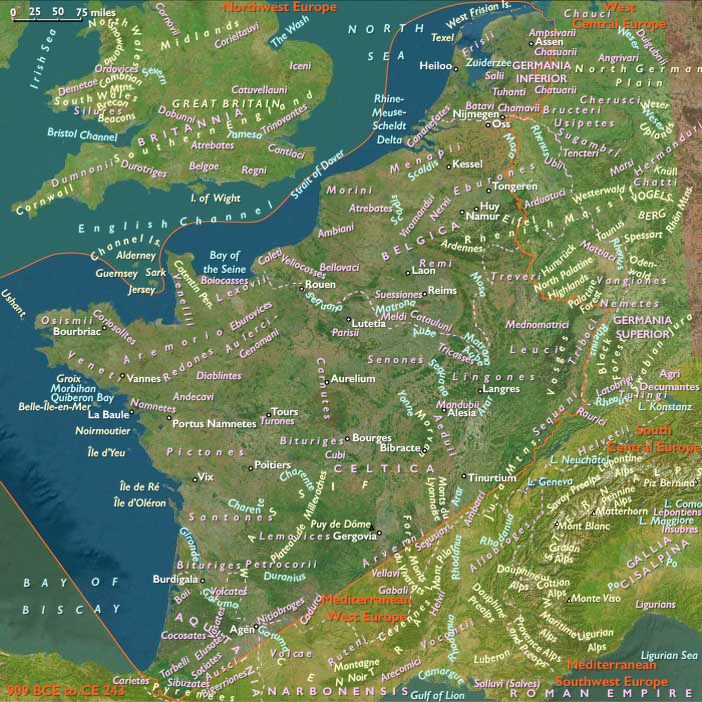
Between 250 and 200 BCE, the Gaulish Parisii tribe established a fishing village and trading settlement on an island in the River Seine, now known as the Île de la Cité, in what is today Paris, France.
The Parisii and Their Strategic Settlement
- The Parisii were a Celtic tribe inhabiting the region of modern-day Paris and its surroundings, part of the larger La Tène cultural sphere.
- The location of their settlement on the Île de la Cité provided:
- Natural protection, as the island was easier to defend.
- Access to water-based trade routes, facilitating commerce along the Seine River.
- Control over a key crossing point, essential for both local and long-distance trade.
Economic and Cultural Life
- The Parisii economy was based on fishing, trade, and craftsmanship.
- They were known for minting their own coins, indicating a sophisticated economic system and participation in regional commerce.
- Their cultural identity was closely linked to the wider Celtic world, sharing artistic styles and religious practices with other Gallic tribes.
Later History and the Roman Conquest
- By 52 BCE, during Julius Caesar’s conquest of Gaul, the Parisii supported Vercingetorix’s resistance against Rome.
- The settlement was later Romanized and expanded into the city of Lutetia, which became an important administrative and commercial hub under Roman rule.
Legacy
- The Parisii name survives in the modern name "Paris," linking the city to its Celtic origins.
- The Île de la Cité remains the historical and symbolic heart of Paris, home to landmarks such as Notre-Dame Cathedral.
The Gaulish Parisii settlement was thus a key foundation for the later development of Paris, blending Celtic traditions, strategic trade, and urban continuity that would shape one of the world’s most famous cities.
Locations
Groups
Topics
Commodoties
Subjects
Regions
Subregions
Years: 201BCE - 190BCE
Locations
Groups
Topics
Commodoties
Subjects
Regions
Subregions