
...battle is drawn up on the morning …
Years: 1756 - 1756
May
...battle is drawn up on the morning of the following day.
Facing twelve French ships of the line, Byng forms his twelve largest ships into a single line of battle and approaches the head of the French line on a parallel course while maintaining the weather gage.
He then orders his ships to go about and come alongside their opposite numbers in the French fleet.
However, the poor signalling capability of the times causes confusion and delay in closing.
Byng's flag captain points out to him that, by standing out of his line, he could bring the center of the enemy to closer action, but he declines because Thomas Mathews had been dismissed for so doing in 1744.
The British van takes a considerable pounding from their more heavily armed French adversaries, while the rear of the line, including Byng's flagship, fails to come within effective cannon range.
During the battle Byng displays considerable caution and an over-reliance on standard fighting procedures, and several of his ships are seriously damaged, while no ships are lost by the French.
Casualties are roughly even, with forty-three British sailors killed and one hundred and sixty-eight wounded, against French losses of thirty-eight killed and one hundred and seventy-five wounded.
Facing twelve French ships of the line, Byng forms his twelve largest ships into a single line of battle and approaches the head of the French line on a parallel course while maintaining the weather gage.
He then orders his ships to go about and come alongside their opposite numbers in the French fleet.
However, the poor signalling capability of the times causes confusion and delay in closing.
Byng's flag captain points out to him that, by standing out of his line, he could bring the center of the enemy to closer action, but he declines because Thomas Mathews had been dismissed for so doing in 1744.
The British van takes a considerable pounding from their more heavily armed French adversaries, while the rear of the line, including Byng's flagship, fails to come within effective cannon range.
During the battle Byng displays considerable caution and an over-reliance on standard fighting procedures, and several of his ships are seriously damaged, while no ships are lost by the French.
Casualties are roughly even, with forty-three British sailors killed and one hundred and sixty-eight wounded, against French losses of thirty-eight killed and one hundred and seventy-five wounded.
Locations
People
Groups
- Austria, Archduchy of
- Brunswick-Wolfenbüttel, Duchy of
- Saxony, Electorate of
- Holy Roman Empire
- Hesse-Kassel, Landgraviate of
- France, (Bourbon) Kingdom of
- Bavaria, Electorate of
- Brunswick-Lüneburg, Electorate of (Electorate of Hanover)
- Spain, Bourbon Kingdom of
- Prussia, Kingdom of
- Britain, Kingdom of Great
- Russian Empire
Topics
Commodoties
Subjects
Regions
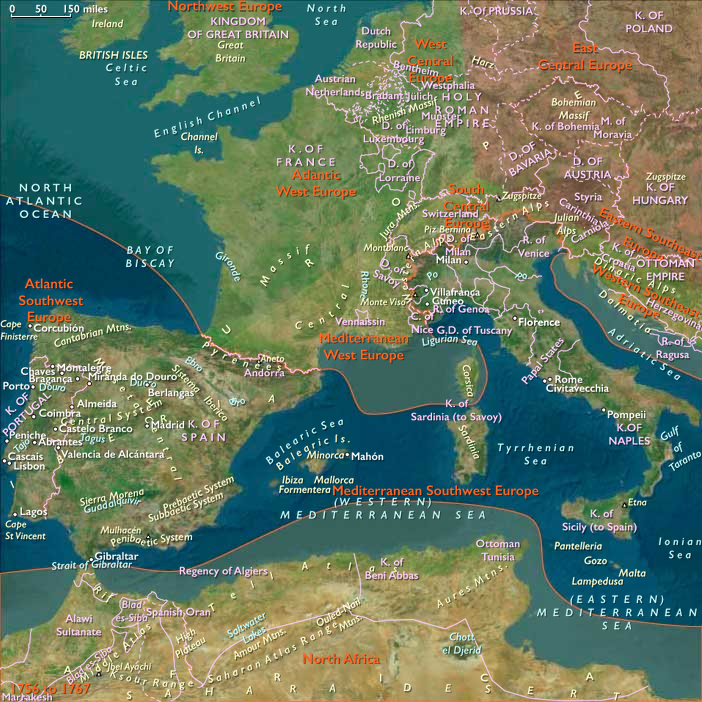
Subregions
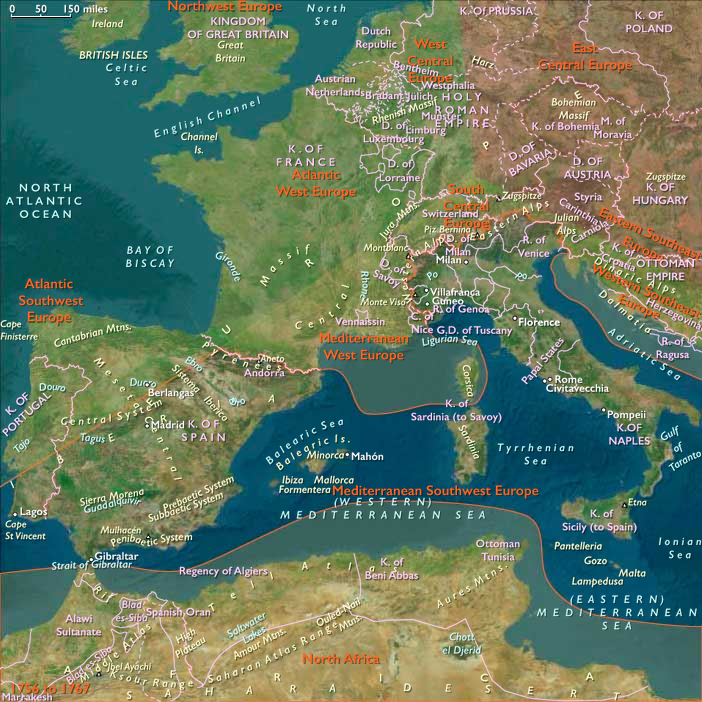
Related Events
Showing 10 events out of 26811 total
Years: 1756 - 1756
May
Locations
People
Groups
- Austria, Archduchy of
- Brunswick-Wolfenbüttel, Duchy of
- Saxony, Electorate of
- Holy Roman Empire
- Hesse-Kassel, Landgraviate of
- France, (Bourbon) Kingdom of
- Bavaria, Electorate of
- Brunswick-Lüneburg, Electorate of (Electorate of Hanover)
- Spain, Bourbon Kingdom of
- Prussia, Kingdom of
- Britain, Kingdom of Great
- Russian Empire
Topics
Commodoties
Subjects
Regions
Subregions