
The Temporary Subjugation of Flanders (1300–1301) and …
Years: 1301 - 1301
The Temporary Subjugation of Flanders (1300–1301) and the Rising Resentment Against France
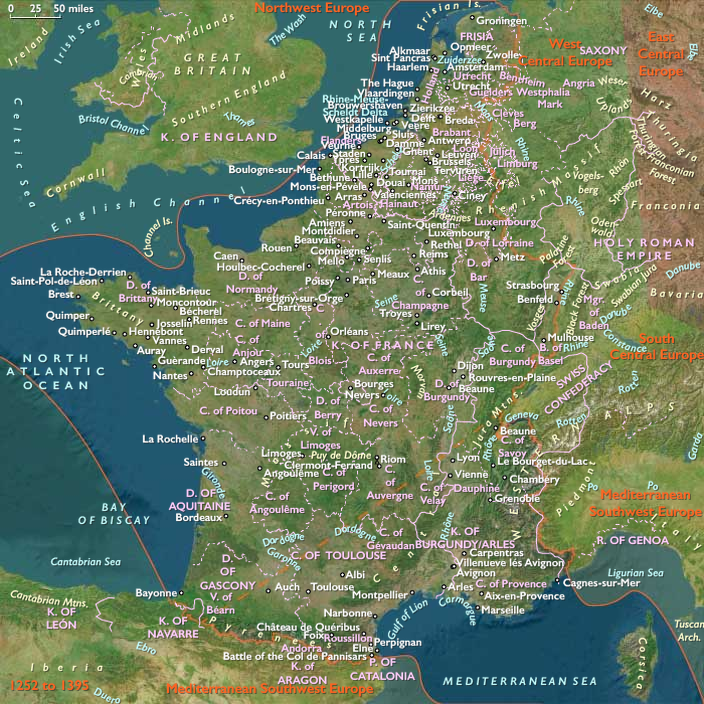
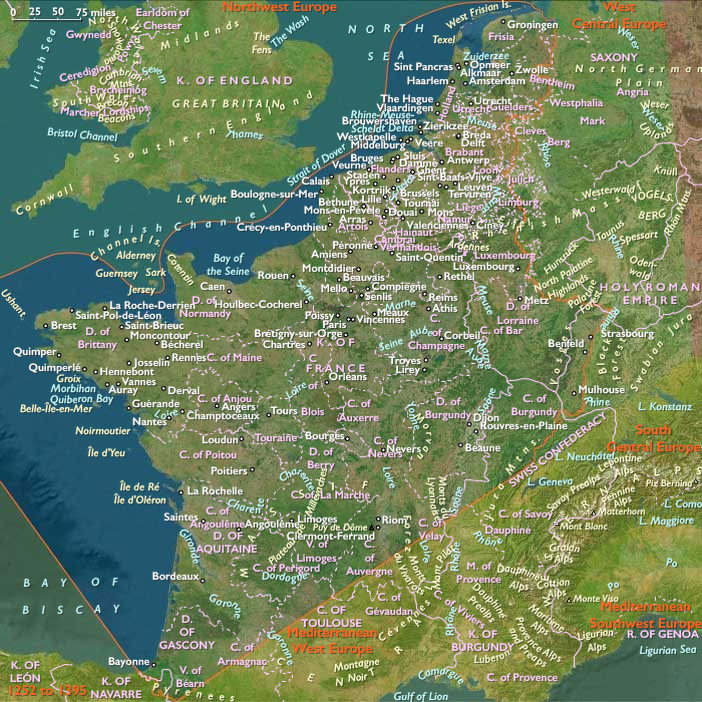
Following the French victories over Flanders in 1300 and again in 1301, Philip IV of France and his allies, including John II of Avesnes, appeared to have successfully pacified the region. The rebels in Zeeland were also defeated, further strengthening French and Avesnes influence in the Low Countries.
Consolidation of Power
- John II of Avesnes had gained control of Holland and Zeeland, continuing the long struggle between the Houses of Avesnes and Dampierre for dominance in the region.
- His brother, Guy of Avesnes, was appointed Bishop of Utrecht, further consolidating Avesnes influence over the ecclesiastical and political affairs of the Low Countries.
- With Flemish forces weakened, direct French rule was imposed over Flanders, replacing the previous local autonomy under the Count of Flanders, Guy of Dampierre.
Growing Discontent with French Rule
Despite initial success, the French occupation of Flanders quickly became unpopular:
- The Flemish burghers, particularly in the major cities like Bruges, Ghent, and Ypres, found direct French administration far more oppressive than the rule of the Dampierre counts.
- Heavy taxation and restrictions on trade under the French crown alienated Flemish merchants and urban guilds, who had long enjoyed economic privileges and relative autonomy.
- The presence of French garrisons and the imposition of royal officials from France created widespread resentment among the local population.
Impending Revolt
Though Flanders seemed pacified in 1301, tensions continued to simmer beneath the surface. The Flemish cities, frustrated by French rule, would soon rise in rebellion, culminating in the Flemish uprising of 1302 and the decisive Battle of the Golden Spurs, where the French would suffer a crushing defeat.
Locations
People
Groups
- Flanders, County of
- France, (Capetian) Kingdom of
- Utrecht, Bishopric of
- Hainaut, County of
- Holland, County of
Topics
Commodoties
Subjects
Regions
Subregions
Related Events
Showing 10 events out of 45077 total
Years: 1301 - 1301
Locations
People
Groups
- Flanders, County of
- France, (Capetian) Kingdom of
- Utrecht, Bishopric of
- Hainaut, County of
- Holland, County of
Topics
Commodoties
Subjects
Regions
Subregions