
The Praguerie Revolt and the Assertion of …
Years: 1439 - 1439
The Praguerie Revolt and the Assertion of Royal Authority (1439–1440)
By the late 1430s, after decades of prolonged Anglo-French warfare, the authority of the French crown had significantly diminished, compromised by powerful regional nobility and widespread lawlessness. The Peace of Arras (1435), rather than stabilizing France, had left many regions vulnerable to disbanded mercenaries and brigands, creating conditions of near-anarchy.
Seeking to restore order and reinforce royal control, King Charles VII took decisive action by prohibiting the raising or maintenance of private armies without royal authorization, effectively outlawing private warfare. These measures culminated in the ordinances passed by the Estates of langue d'oïl at Orléans in 1439, establishing royal monopoly over military recruitment, standardizing the organization, pay, and oversight of troops, and granting the king an aid of one hundred thousand francs. Charles later interpreted this aid as a perpetual grant, significantly reducing his dependence on parliamentary approval for taxation—thus distinguishing French royal authority from the parliamentary fiscal control prevalent in England. Additionally, the ordinances mandated royal appointments to military leadership, directly challenging traditional noble privileges.
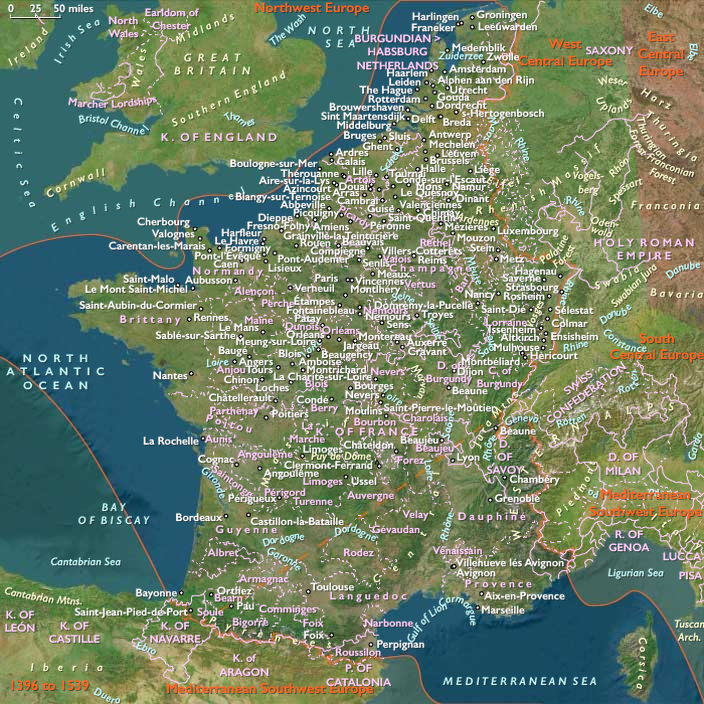
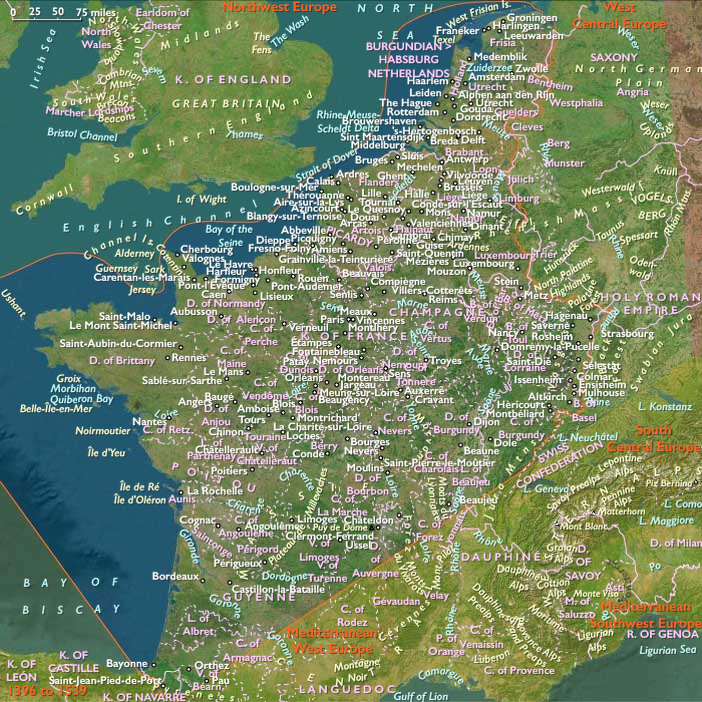
The creation of France’s first permanent standing army and the expansion of royal prerogative prompted immediate resistance from the nobility, culminating in the Praguerie revolt of 1440. The primary instigator was Charles I, Duke of Bourbon, who had previously led a failed rebellion in 1437. Allied with his illegitimate brother Alexander, the former royal favorite Georges de la Trémoille, John VI, Duke of Brittany (who sought English support), Jean II, Duke of Alençon, the Count of Vendôme, and influential mercenary leaders such as Antoine de Chabannes and Jean de la Roche, Bourbon directly challenged royal authority. Their resistance stemmed partly from economic self-interest—mercenary captains, in particular, saw their livelihoods endangered by the king’s reforms.
Most dangerously for Charles VII, the rebellious nobles succeeded in enlisting his sixteen-year-old son, the Dauphin Louis, in their cause, proposing to remove Charles from power and install the Dauphin on the throne, with Bourbon acting as regent.
The Praguerie thus represented a crucial test of Charles VII’s strengthened royal authority and set the stage for a significant confrontation between centralized monarchy and entrenched noble interests, a conflict that would shape the governance and power structure of France well beyond the mid-15th century.
Locations
People
- Charles I, Duke of Bourbon
- Charles VII of France
- Georges de la Trémoille
- Jean II
- John VI, Duke of Brittany
Groups
Topics
Commodoties
Subjects
Regions
Subregions
Related Events
Showing 10 events out of 41848 total
Years: 1439 - 1439
Locations
People
- Charles I, Duke of Bourbon
- Charles VII of France
- Georges de la Trémoille
- Jean II
- John VI, Duke of Brittany
Groups
Topics
Commodoties
Subjects
Regions
Subregions