
The Standoff at Montépilloy and the Failed …
Years: 1429 - 1429
The Standoff at Montépilloy and the Failed Assault on Paris (August–September 1429)
Following Charles VII’s coronation at Reims (July 17, 1429), the French army continued its campaign, marching through towns near Paris and accepting several peaceful surrenders. However, the much-anticipated attack on the French capital was stalled by political hesitation.
On August 15, 1429, the Duke of Bedford, leading an English force, confronted the French army at the Battle of Montépilloy in a standoff that did not develop into a full battle. After this, Joan of Arc pushed for an immediate attack on Paris, but royal advisors delayed, allowing the Anglo-Burgundian defenders time to fortify the city.
When the French assault on Paris finally occurred on September 8, 1429, Joan was wounded but remained in the inner trench until being carried to safety. However, the next morning, a royal order forced the army to withdraw, effectively abandoning the campaign. Many historians blame French Grand Chamberlain Georges de la Trémoillefor the political miscalculations that followed Charles VII’s coronation.
I. The Standoff at Montépilloy (August 15, 1429)
- The Duke of Bedford, leading the English forces, intercepted the French army near Montépilloy.
- The two armies faced off in a tense standoff, but no major engagement took place.
- The French forces remained in the field, but the lack of an immediate advance on Paris allowed the Anglo-Burgundians time to fortify the capital.
II. The Assault on Paris (September 8, 1429)
- Joan of Arc led the French attack on the heavily defended city.
- The French launched an assault on the St. Honoré gate, facing fierce resistance from the English and Burgundian garrison.
- Joan was wounded in the leg by a crossbow bolt, yet refused to leave the front lines, staying in Paris’s inner trench until she was forcibly carried to safety by one of the commanders.
III. The Unexpected French Retreat and Political Fallout
- The following morning (September 9), a royal order forced the army to withdraw, effectively abandoning the attack on Paris.
- Many historians blame Georges de la Trémoille, Charles VII’s Grand Chamberlain, for:
- Blocking further military efforts to take Paris.
- Persuading the king to negotiate rather than capitalize on French momentum.
- This political hesitation frustrated Joan, who had pushed for aggressive action and believed divine favor was still with the French army.
IV. Consequences: A Missed Opportunity
- The failed assault on Paris marked the beginning of Joan’s decline in influence at the French court.
- The English and Burgundians, now reinforced, solidified their hold on the city.
- Charles VII’s hesitation weakened the momentum of Joan’s campaign, signaling a shift from military victories to political maneuvering.
The Battle of Montépilloy (August 15) and the failed assault on Paris (September 8, 1429) represent a critical turning point, as political missteps by Charles VII’s advisors squandered the opportunity to retake the capital, leading to Joan’s diminishing role in French military affairs.
Locations
People
- Charles VII of France
- Georges de la Trémoille
- Henry VI of England
- Jean II
- Jean de Dunois
- Joan of Arc
- John of Lancaster
- Philip the Good
Groups
- Normandy, Duchy of
- Burgundy, Duchy of
- Christians, Roman Catholic
- Scotland, Kingdom of
- France, (Valois) Kingdom of
- England, (Plantagenet, Lancastrian) Kingdom of
Topics
- Hundred Years' War
- Armagnac-Burgundian Civil War
- Hundred Years' War: Resumption of the war under Henry V
- Hundred Years' War: French Victory
Commodoties
Subjects
Regions
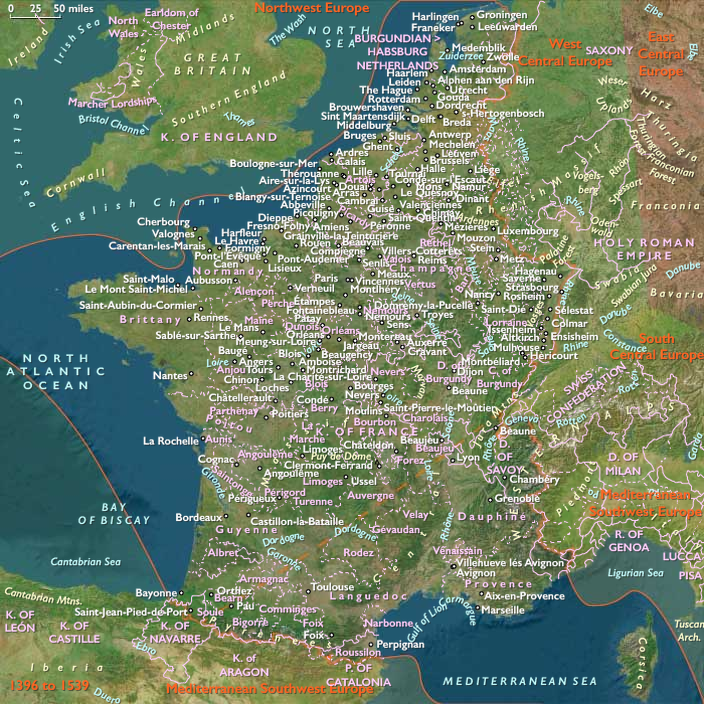
Subregions
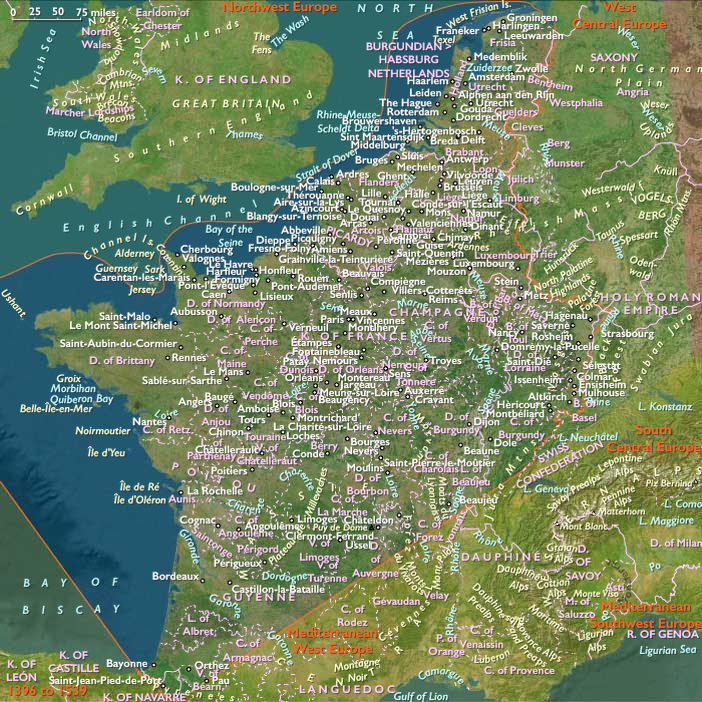
Years: 1429 - 1429
Locations
People
- Charles VII of France
- Georges de la Trémoille
- Henry VI of England
- Jean II
- Jean de Dunois
- Joan of Arc
- John of Lancaster
- Philip the Good
Groups
- Normandy, Duchy of
- Burgundy, Duchy of
- Christians, Roman Catholic
- Scotland, Kingdom of
- France, (Valois) Kingdom of
- England, (Plantagenet, Lancastrian) Kingdom of
Topics
- Hundred Years' War
- Armagnac-Burgundian Civil War
- Hundred Years' War: Resumption of the war under Henry V
- Hundred Years' War: French Victory
Commodoties
Subjects
Regions
Subregions