
Frankish Church Councils and the Strengthening of …
Years: 532 - 543
Frankish Church Councils and the Strengthening of Catholic Rule
As Chalcedonian Christianity becomes the official faith of the Frankish Kingdom, the Franks hold a series of national church councils to reinforce Catholic orthodoxy and consolidate royal power. These councils, heavily influenced by the Frankish monarchy and episcopate, impose restrictions on Jews, regulate Christian behavior, and establish Paris as a religious and political center.
1. Anti-Jewish Policies in the Frankish Church Councils
The Frankish church councils, convened under the Merovingians, enact laws that:
- Ban Jewish judges – Preventing Jews from holding legal authority over Christians.
- Prohibit Jews from administrative positions – Excluding Jews from public office to limit their influence in governance.
- Strongly discourage Christian-Jewish intermarriage – Enforcing separation between the Christian and Jewish communities.
- Excommunicate those who consume food offered to idols – Strengthening Catholic doctrine against pagan and Jewish sacrificial practices.
These policies reflect the growing power of the Catholic Church within Frankish society and align with broader anti-Jewish measures seen in the Byzantine Empire.
2. The Foundation of St. Vincent Monastery (St-Germain-des-Prés)
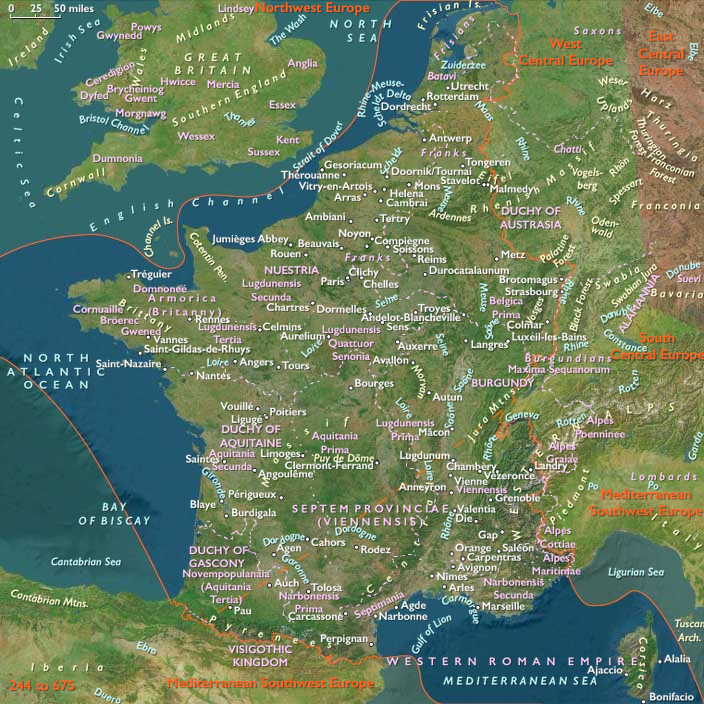
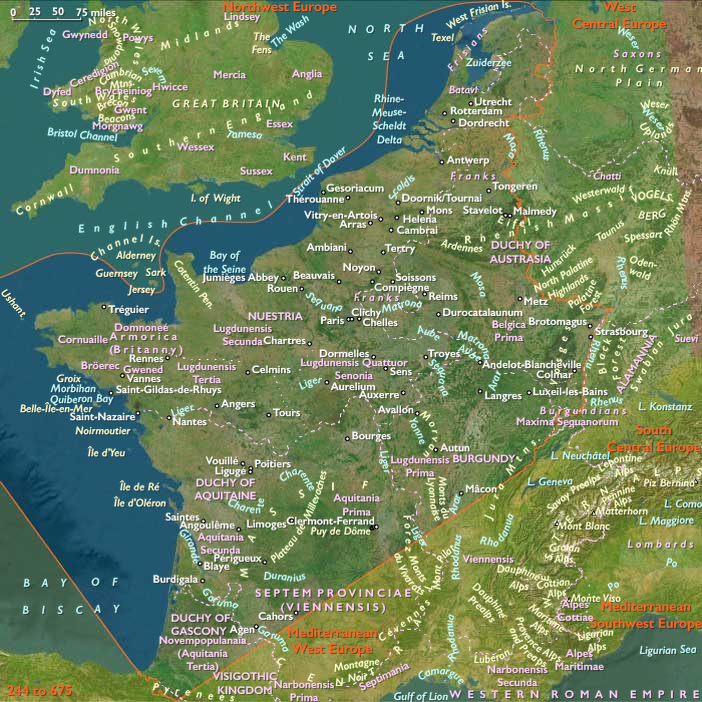
- The Monastery of St. Vincent, later renamed St-Germain-des-Prés, is established just outside the gates of Paris.
- It is built to house a sacred relic—the tunic of St. Vincent, which had been plundered from the Visigoths in Spain after Clovis' victory at Vouillé (507 CE).
- The monastery becomes a major religious institution, associated with the Frankish royal family.
3. The Rise of Paris as the Frankish Capital
- Under Clovis I, Paris is chosen as the primary royal residence of the Merovingian dynasty.
- The foundation of the St. Vincent monastery further solidifies Paris’ religious and political significance.
- Over time, Paris emerges as the heart of the Frankish realms, serving as a center for governance, Christian authority, and cultural life.
Conclusion: The Merovingian Theocratic State
The Frankish national church councils, combined with the growth of religious institutions in Paris, reflect the increasing fusion of Church and state under the Merovingians. This period marks:
- The strengthening of Catholic authority, defining the religious identity of the Franks.
- The exclusion of Jews from political life, reinforcing Catholic dominance.
- The development of Paris into a Frankish royal and religious center, setting the foundation for its eventual role as the capital of France.
These events help establish the Merovingians as the foremost Catholic rulers in Western Europe, a position their Carolingian successors will later build upon.
Locations
Groups
- Polytheism (“paganism”)
- Jews
- Franks
- Goths (East Germanic tribe)
- Thuringii (Germanic tribe)
- Burgundians, (second) Kingdom of the
- Christianity, Chalcedonian
- Visigothic Kingdom of Spain
- Soissons (eventually Neustria), Frankish Kingdom of
- Paris, Frankish Kingdom of
- Orléans (eventually Burgundy), Frankish Kingdom of
- Reims, Frankish Kingdom of
Topics
Commodoties
Subjects
- Commerce
- Architecture
- Labor and Service
- Conflict
- Faith
- Government
- Custom and Law
- Technology
- Movements
Regions
Subregions
Years: 532 - 543
Locations
Groups
- Polytheism (“paganism”)
- Jews
- Franks
- Goths (East Germanic tribe)
- Thuringii (Germanic tribe)
- Burgundians, (second) Kingdom of the
- Christianity, Chalcedonian
- Visigothic Kingdom of Spain
- Soissons (eventually Neustria), Frankish Kingdom of
- Paris, Frankish Kingdom of
- Orléans (eventually Burgundy), Frankish Kingdom of
- Reims, Frankish Kingdom of
Topics
Commodoties
Subjects
- Commerce
- Architecture
- Labor and Service
- Conflict
- Faith
- Government
- Custom and Law
- Technology
- Movements
Regions
Subregions