
The Second Invasion of Portugal – The …
Years: 1762 - 1762
August
The Second Invasion of Portugal – The Bourbon Shift to the Beira Front (July–November 1762)
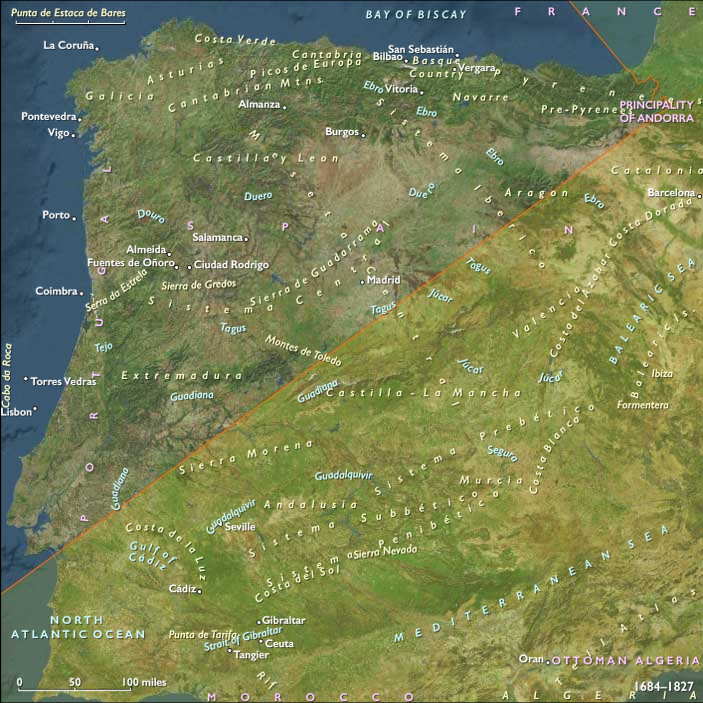
Following the disastrous failure of the first invasion of Portugal (May–June 1762), Sarria’s shattered Spanish army, after suffering heavy losses in Trás-os-Montes, retreated to Ciudad Rodrigo in Spain. Once there, it was merged with the Spanish Central Army, and soon after, reinforced by 12,000 French troops under Prince de Beauvau. This reorganization gave the Bourbon forces a fresh numerical advantage, bringing their total strength to 42,000 men:
- 30,000 Spaniards, under Count of Aranda (who replaced Sarria)
- 12,000 French troops, under Prince de Beauvau
A New Plan: Abandoning Oporto, Advancing on Lisbon
With the Portuguese victory in Trás-os-Montes and the failure to capture Oporto, the Bourbon high command abandoned their original plan of invading Portugal via the northern provinces. Instead, a new strategy was devised:
- The main invasion force would now attack via the province of Beira, in the east-central region of Portugal.
- The final objective was Lisbon, the capital and political heart of Portugal.
Reorganizing for a Prolonged Campaign
Recognizing that logistical failures had doomed the first invasion, the Spanish minister Esquilache personally arrived in Portugal to improve supply chains. He established supply depots and secured food stocks for six months, ensuring the Bourbon forces would not suffer from starvation as they had before.
Portugal’s Grim Situation – A Last Resort Evacuation Plan
Despite their previous successes, the Portuguese government faced a dire reality:
- The combined Bourbon army (42,000 men) vastly outnumbered the Anglo-Portuguese forces.
- The Portuguese army remained small and ill-prepared, with only:
- 7,000–8,000 Portuguese regulars
- 7,104 British troops
- Lippe’s Anglo-Portuguese force was outnumbered nearly 3 to 1, facing a well-supplied enemy.
Recognizing the threat of total defeat, Prime Minister Sebastião José de Carvalho e Melo, the Marquis of Pombal, took precautionary measures:
- Twelve ships were assembled in the Tagus Estuary, ready to evacuate the Portuguese royal family and court to Brazil if Lisbon fell.
- This was a realistic contingency plan, as Portugal had been ruled from Brazil before (during the Spanish occupation of Portugal, 1580–1640).
The Second Invasion Begins
With their forces reorganized and resupplied, the Franco-Spanish army began its advance into Beira, initiating the second invasion of Portugal (July–November 1762).
Despite the overwhelming odds, Count Lippe and the Anglo-Portuguese forces would implement a masterful defensive strategy, utilizing guerrilla warfare, scorched earth tactics, and defensive maneuvering to once again frustrate the Bourbon invasion.
This campaign would ultimately decide the fate of Portugal, as the Bourbon forces sought to succeed where they had failed in the north—by taking Lisbon itself.
Locations
People
- Charles François Dumouriez
- Charles III of Spain
- Charles Juste de Beauvau, , Prince of Craon
- John Burgoyne
- José I of Portugal
- Leopoldo de Gregorio, Marquis of Squillace
- Pedro Pablo Abarca de Bolea y Jiménez de Urrea, 10th Count of Aranda
- Sebastião José de Carvalho e Melo, 1st Marquis of Pombal
- William Pitt
- William, Count of Schaumburg-Lippe
Groups
- Portuguese people
- Scottish people
- French people (Latins)
- English people
- Spaniards (Latins)
- France, (Bourbon) Kingdom of
- Portugal, Bragança Kingdom of
- Spain, Bourbon Kingdom of
- Britain, Kingdom of Great
Topics
Subjects
Regions
Subregions
Years: 1762 - 1762
August
Locations
People
- Charles François Dumouriez
- Charles III of Spain
- Charles Juste de Beauvau, , Prince of Craon
- John Burgoyne
- José I of Portugal
- Leopoldo de Gregorio, Marquis of Squillace
- Pedro Pablo Abarca de Bolea y Jiménez de Urrea, 10th Count of Aranda
- Sebastião José de Carvalho e Melo, 1st Marquis of Pombal
- William Pitt
- William, Count of Schaumburg-Lippe
Groups
- Portuguese people
- Scottish people
- French people (Latins)
- English people
- Spaniards (Latins)
- France, (Bourbon) Kingdom of
- Portugal, Bragança Kingdom of
- Spain, Bourbon Kingdom of
- Britain, Kingdom of Great
Topics
Subjects
Regions
Subregions