
Atlantic Southwest Europe (964 – 1107 CE): …
Years: 964 - 1107
Atlantic Southwest Europe (964 – 1107 CE): Leónese Heartland, Castilian March, and the Pilgrim Sea
Geographic and Environmental Context
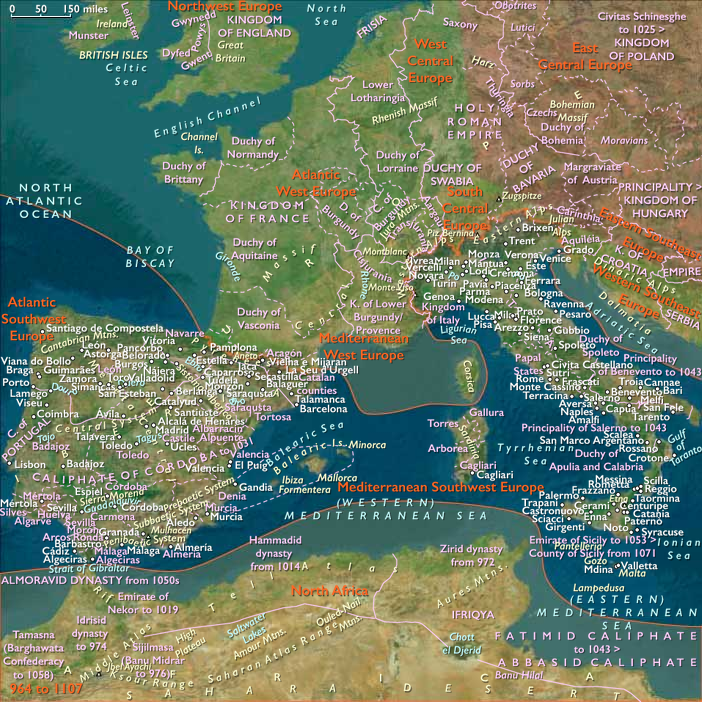
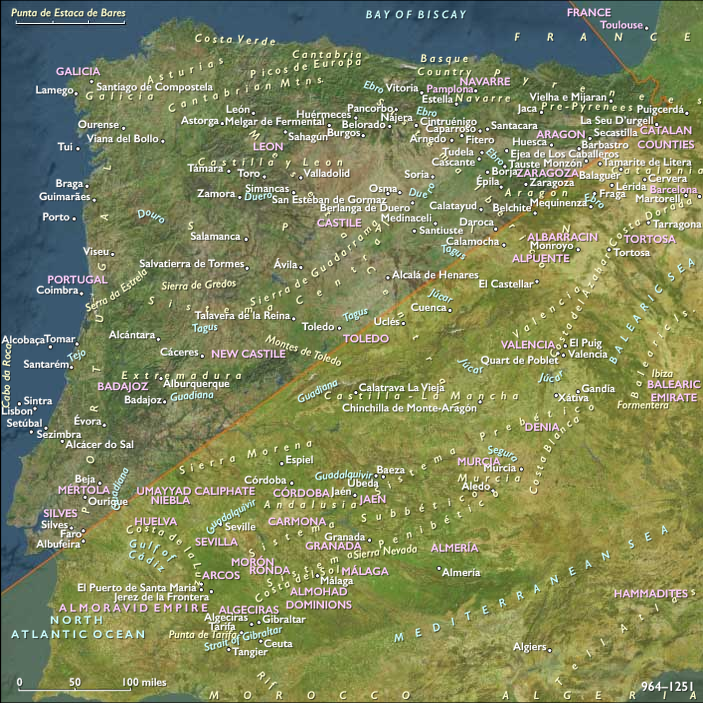
Atlantic Southwest Europe includes northern Spain and central to northern Portugal, including Lisbon.
-
Landscapes ranged from the Cantabrian and Galician coasts to the Duero basin and Atlantic river valleys (Minho, Douro, Mondego, Tagus).
-
Strongholds and urban nodes: León (royal capital), Burgos (growing frontier city), Santiago de Compostela (pilgrim shrine), Porto and Coimbra (repopulated marches), Braga, and Lisbon (an Islamic entrepôt at the Tagus mouth).
Climate and Environmental Shifts
-
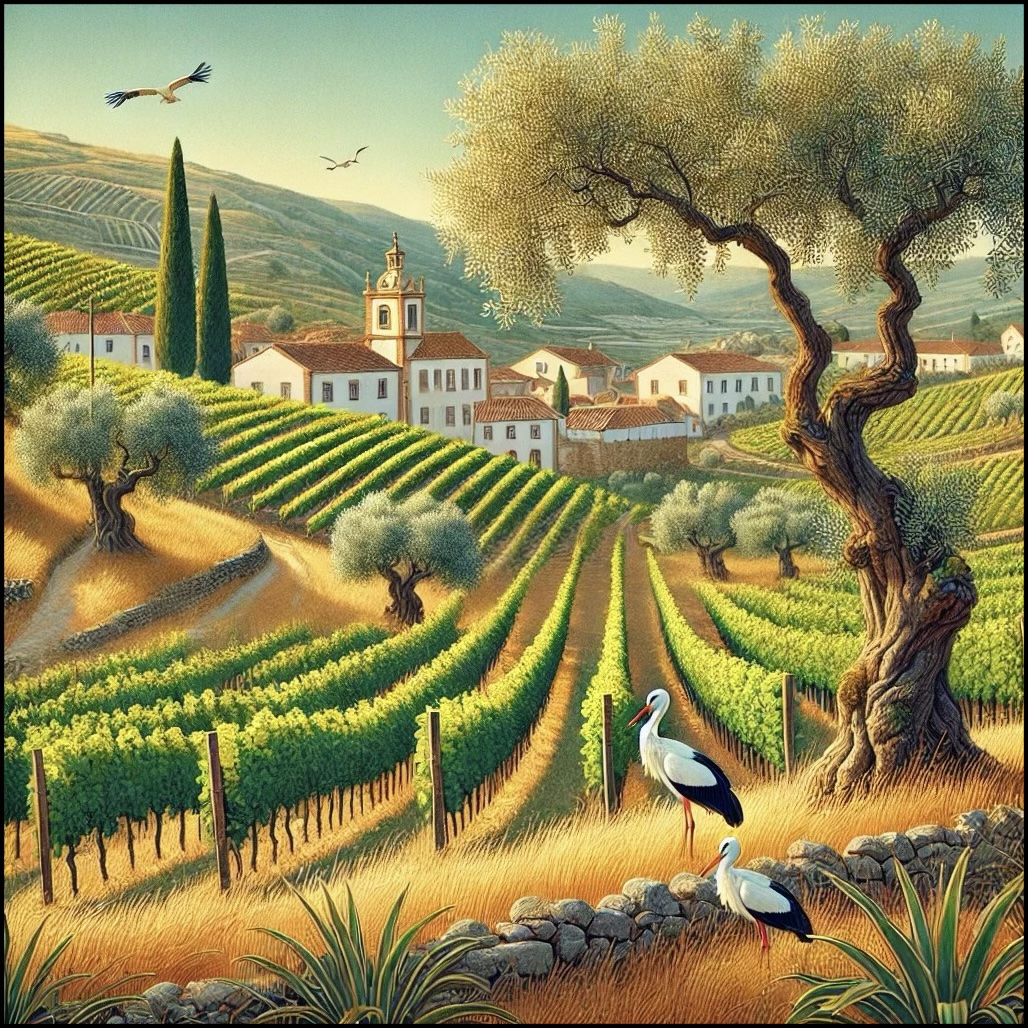
Under the Medieval Warm Period (c. 950–1250), longer growing seasons supported vineyard expansion on sunny slopes and transhumant herding in uplands.
-
Chestnut groves, oak woodlands, and fertile alluvium in Galicia–Minho–Douro underpinned stable harvests.
-
Floods of the Duero and Tagus periodically disrupted settlement but enriched fields.
Societies and Political Developments
-
Kingdom of León:
-
From Ordoño III (d. 956) through Ferdinand I (1037–1065) and Alfonso VI (1065–1109), León remained the dominant Christian monarchy of the subregion.
-
León incorporated Castile as a powerful march (raised as a kingdom under Ferdinand I, then reunited with León).
-
-
Castile:
-
Emerged as a dynamic frontier under Fernán González (d. 970), developing its own identity.
-
Became a kingdom (1035) but was reunited with León under Ferdinand I, later separating and reuniting again in the dynastic interplay of the 11th century.
-
-
Galicia:
-
Center of Santiago de Compostela pilgrimage cult; integrated in León but periodically semi-autonomous under its own magnates.
-
-
Portugal (Portucale and Coimbra marches):
-
The County of Portugal, revived after the reconquest of Coimbra (1064), became an important marcher lordship under the counts of Portucale.
-
Porto and Braga grew into Atlantic hubs for trade and settlement.
-
-
Lisbon and the Tagus valley:
-
Remained under Umayyad Córdoba until 1031, then under taifa kings (notably Badajoz).
-
Lisbon served as a major Muslim port with diverse population, thriving commerce, and periodic clashes with Christian forces.
-
-
External pressures:
-
Viking raids had largely ceased after the 11th century.
-
The Almoravids entered Iberia after 1086 (Battle of Sagrajas), stabilizing taifa territories against Christian expansion.
-
Economy and Trade
-
Agriculture:
-
Expanded vineyards in Minho and Douro valleys; wheat, rye, barley in the Duero basin; olives in southern marches.
-
Chestnuts, pigs, and cattle supported rural economies; sheep transhumance fed wool markets.
-
-
Maritime trade:
-
Porto, Santiago’s Atlantic ports, Braga, Coimbra shipped wine, salt, hides, and wax north to Aquitaine and Brittany.
-
Lisbon exported Andalusi textiles, ceramics, and sugar; imported Christian slaves, timber, and salt fish.
-
-
Pilgrimage economy:
-
By the 11th century, Santiago de Compostela had become one of Latin Christendom’s greatest shrines, drawing pilgrims from across Europe, enriching monasteries, artisans, and markets.
-
-
Coinage:
-
Andalusi dirhams dominated monetary circulation in Lisbon and taifa towns; Leónese and Castilian mints issued denarii for local exchange.
-
Subsistence and Technology
-
Water-mills multiplied along Atlantic streams; heavy plough extended across the Duero basin; terracing supported vines.
-
Saltworks on Galician and Portuguese coasts expanded, provisioning inland markets.
-
Romanesque churches in León, Castile, Galicia, and Portucale grew increasingly elaborate with sculpture and stone vaulting.
-
Shipcraft: clinker-built vessels and deepened river barges supported pilgrim and cargo transport; Lisbon’s Muslim fleet employed Mediterranean-style lateen rigs.
Movement and Interaction Corridors
-
Camino de Santiago: consolidated as a pan-European road network, drawing pilgrims via the Pyrenees through León and Galicia to Compostela.
-
Cantabrian coastal road and riverine arteries (Douro, Minho, Tagus) integrated inland and maritime traffic.
-
Atlantic sea-lanes tied Porto, Braga, and Lisbon to Bordeaux, Bayonne, Nantes, and beyond.
-
Overland marches connected León–Burgos–Coimbra–Lisbon, structuring the Christian–Islamic frontier.
Belief and Symbolism
-
Christianity:
-
Santiago cult unified León, Galicia, and Castile as a spiritual frontier against Islam.
-
Monastic reform (Cluniac) reached León and Castile by the late 10th–11th century, bringing new liturgy and architectural styles.
-
-
Islam:
-
In Lisbon, mosques, qāḍī courts, and Arabic chancery sustained taifa rule; Christian and Jewish minorities lived as dhimmīs, contributing to commerce and crafts.
-
-
Syncretic frontier culture: Mozarabs (Christians in al-Andalus) and repobladores (frontier settlers) blended law codes, architecture, and toponyms across the Duero–Tagus marchlands.
Adaptation and Resilience
-
Frontier fortification: castles (castillos) and watchtowers multiplied along the Duero and Tagus, protecting settlers and pilgrims.
-
Pilgrimage-driven integration: Compostela routes stabilized roads, inns, and markets, even in times of war.
-
Agricultural resilience: diversified portfolios (grain, vines, chestnut, livestock, salt fisheries) hedged against monsoon variability and raids.
-
Political flexibility: marcher counts leveraged autonomy while still pledging fealty to León’s kings, ensuring dynamic local adaptation.
Long-Term Significance
By 1107 CE, Atlantic Southwest Europe had become a frontier crucible of Christendom:
-
León remained the monarchic heart, though Castile and Portugal grew as semi-independent powers.
-
Santiago de Compostela became Europe’s third great pilgrimage shrine after Rome and Jerusalem, turning Galicia into a global religious hub.
-
Lisbon, still Islamic, was one of al-Andalus’ most important ports, linking the Atlantic to Córdoba’s caliphal and later taifa economies.
-
The balance between Christian advance and Andalusi resilience defined the region, laying the groundwork for the explosive 12th-century Reconquista surge and Portugal’s eventual independence.
Atlantic Southwest Europe (with civilization) ©2024-25 Electric Prism, Inc. All rights reserved.
People
- Alfonso VII of León and Castile
- Ferdinand I of León and Castile
- Fernán González
- Henry, Count of Portugal
Groups
- Jews
- Galicia, Kingdom of
- Christianity, Chalcedonian
- Lusitania (Visigothic province)
- Islam
- Umayyad Caliphate (Damascus)
- Al-Garb Al-Andalus
- al-Andalus (Andalusia), Muslim-ruled
- Portuguese people
- Navarre, Kingdom of
- Portugal, (first) County of
- León, Kingdom of
- Córdoba, (Umayyad) Caliphate of
- Badajoz, Taifa of
- Lisbon, Muslim statelet, or taifa, of
- Córdoba, (Hammudid) statelet, or taifa, of
- Castile, Kingdom of
- Aragón, Kingdom of
- Almoravid dynasty
- Christians, Roman Catholic
- Portugal, (second) County of
Topics
- Reconquista, the
- Islamic Golden Age
- Medieval Warm Period (MWP) or Medieval Climate Optimum
- Western Architecture: 964 to 1108
- East–West Schism
- Sagrajas, Battle of
Commodoties
- Hides and feathers
- Domestic animals
- Oils, gums, resins, and waxes
- Grains and produce
- Textiles
- Ceramics
- Slaves
- Salt
- Sweeteners
- Beer, wine, and spirits
- Lumber
Subjects
Regions
Subregions
Years: 964 - 1107
Atlantic Southwest Europe (with civilization) ©2024-25 Electric Prism, Inc. All rights reserved.
People
- Alfonso VII of León and Castile
- Ferdinand I of León and Castile
- Fernán González
- Henry, Count of Portugal
Groups
- Jews
- Galicia, Kingdom of
- Christianity, Chalcedonian
- Lusitania (Visigothic province)
- Islam
- Umayyad Caliphate (Damascus)
- Al-Garb Al-Andalus
- al-Andalus (Andalusia), Muslim-ruled
- Portuguese people
- Navarre, Kingdom of
- Portugal, (first) County of
- León, Kingdom of
- Córdoba, (Umayyad) Caliphate of
- Badajoz, Taifa of
- Lisbon, Muslim statelet, or taifa, of
- Córdoba, (Hammudid) statelet, or taifa, of
- Castile, Kingdom of
- Aragón, Kingdom of
- Almoravid dynasty
- Christians, Roman Catholic
- Portugal, (second) County of
Topics
- Reconquista, the
- Islamic Golden Age
- Medieval Warm Period (MWP) or Medieval Climate Optimum
- Western Architecture: 964 to 1108
- East–West Schism
- Sagrajas, Battle of
Commodoties
- Hides and feathers
- Domestic animals
- Oils, gums, resins, and waxes
- Grains and produce
- Textiles
- Ceramics
- Slaves
- Salt
- Sweeteners
- Beer, wine, and spirits
- Lumber
Subjects
Regions
Subregions