
The Congress of Arras and the Treaty …
Years: 1435 - 1435
The Congress of Arras and the Treaty of Arras: Burgundy Breaks with England (1435)
By the mid-1430s, English fortunes in the Hundred Years' War had markedly declined following the death of Joan of Arc. Despite the shifting military and political realities, most of King Henry VI's advisors remained opposed to negotiating a meaningful peace with King Charles VII of France. Divisions among English leadership complicated the kingdom’s strategic direction: the influential John, Duke of Bedford, favored a vigorous defense of Normandy; his brother, Humphrey, Duke of Gloucester, advocated limiting commitments to Calais alone; and the powerful statesman Cardinal Henry Beaufort leaned toward peace negotiations.
The resulting impasse brought both sides to the Congress of Arras in the summer of 1435, a diplomatic conference mediated significantly by Cardinal Beaufort. English negotiators, however, approached the congress with unrealistic expectations, assuming discussions would solely involve England and France. Their key proposal was limited to an extended truce and the marriage between young King Henry VI and a daughter of Charles VII. Critically, the English delegation refused to relinquish their claim to the French crown—a position that undermined any prospects for meaningful compromise.
Mid-negotiation, the English representatives abruptly departed the congress to confront raids by prominent French commanders, notably Jean Poton de Xaintrailles and Étienne de Vignolles, known as La Hire. During their absence, French diplomats, supported by prominent clergy and encouraged by representatives of Pope Eugene IV and the Council of Basel, skillfully convinced Philip the Good, Duke of Burgundy, to abandon England and reconcile with Charles VII. Burgundy, virtually autonomous by this period, had aligned with England since the assassination of Philip's father, John the Fearless, in 1419—an assassination in which Charles VII had been implicated.
When the English delegation returned, they found their diplomatic position disastrously weakened by Burgundy's unexpected defection. This reversal represented a profound political setback for England, exacerbated by the untimely death of their regent, John, Duke of Bedford, on September 14, 1435—just days before the congress concluded.
The ensuing Treaty of Arras, finalized later that same month, represented a decisive diplomatic victory for Charles VII and reshaped the political landscape of Atlantic West Europe. By formally recognizing Charles VII as the legitimate King of France, Philip of Burgundy severed the longstanding Anglo-Burgundian alliance. In return, Charles VII exempted Philip from feudal homage, promising instead to punish those responsible for the murder of Philip’s father. The treaty effectively ended the deep-seated conflict between Armagnac and Burgundian factions, enabling Charles VII to consolidate his rule and leaving England diplomatically isolated, reliant solely on its tenuous alliance with distant Scotland.
The consequences of the Treaty of Arras were profound and enduring. It marked the definitive shift in Burgundy’s alignment from England to France, accelerated the steady erosion of English territorial control, and underscored France's growing diplomatic and military advantage. From 1435 onward, English presence in northern and western France steadily diminished, signaling a major turning point that ultimately led to their near-total expulsion from French territory by the end of the Hundred Years' War.
Locations
People
- Charles VII of France
- Henry Beaufort
- Humphrey of Lancaster, 1st Duke of Gloucester
- John of Lancaster
- La Hire
- Philip the Good
- Pope Eugene IV
Groups
- Normandy, Duchy of
- Burgundy, Duchy of
- Scotland, Kingdom of
- France, (Valois) Kingdom of
- England, (Plantagenet, Lancastrian) Kingdom of
Topics
- Hundred Years' War
- Anglo-Scottish Wars
- Armagnac-Burgundian Civil War
- Hundred Years' War: French Victory
Commodoties
Subjects
Regions
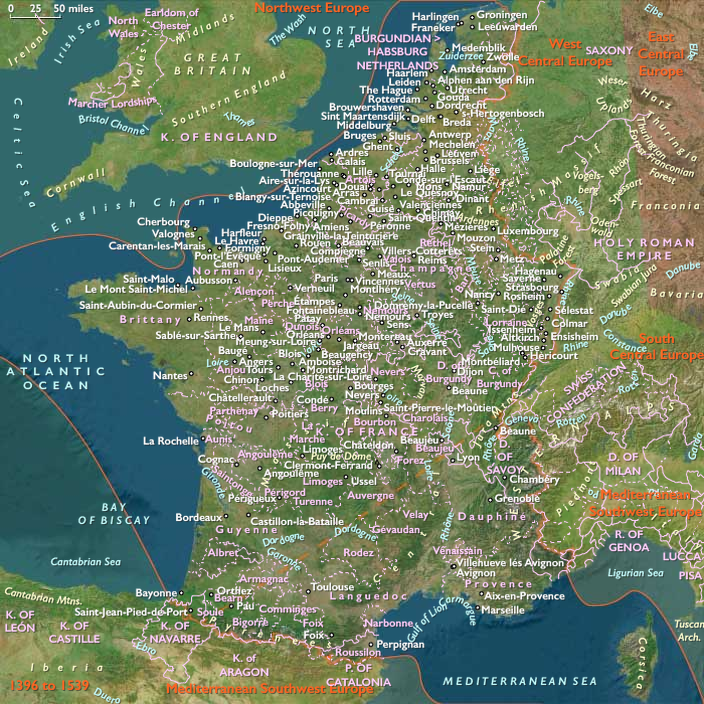
Subregions
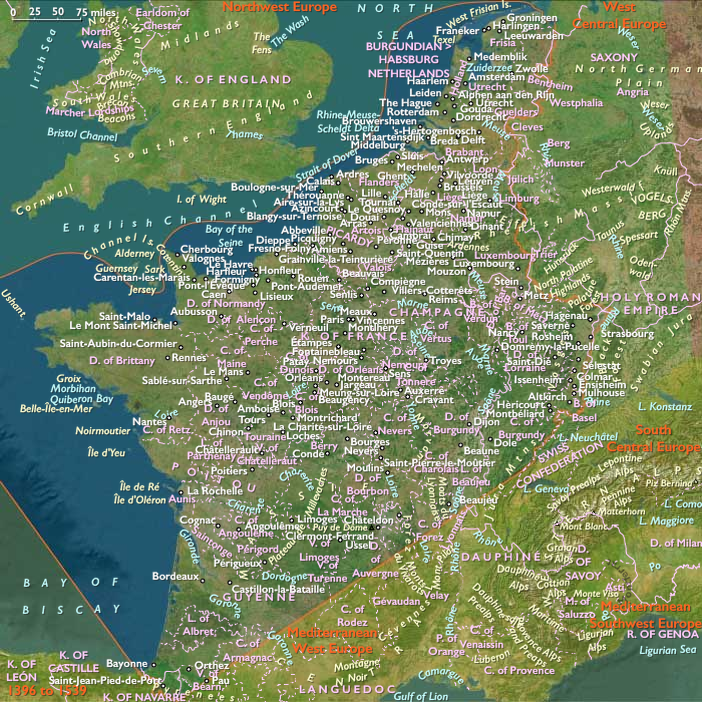
Years: 1435 - 1435
Locations
People
- Charles VII of France
- Henry Beaufort
- Humphrey of Lancaster, 1st Duke of Gloucester
- John of Lancaster
- La Hire
- Philip the Good
- Pope Eugene IV
Groups
- Normandy, Duchy of
- Burgundy, Duchy of
- Scotland, Kingdom of
- France, (Valois) Kingdom of
- England, (Plantagenet, Lancastrian) Kingdom of
Topics
- Hundred Years' War
- Anglo-Scottish Wars
- Armagnac-Burgundian Civil War
- Hundred Years' War: French Victory
Commodoties
Subjects
Regions
Subregions