
The former fishing village of Pola, located …
Years: 27BCE - 27BCE
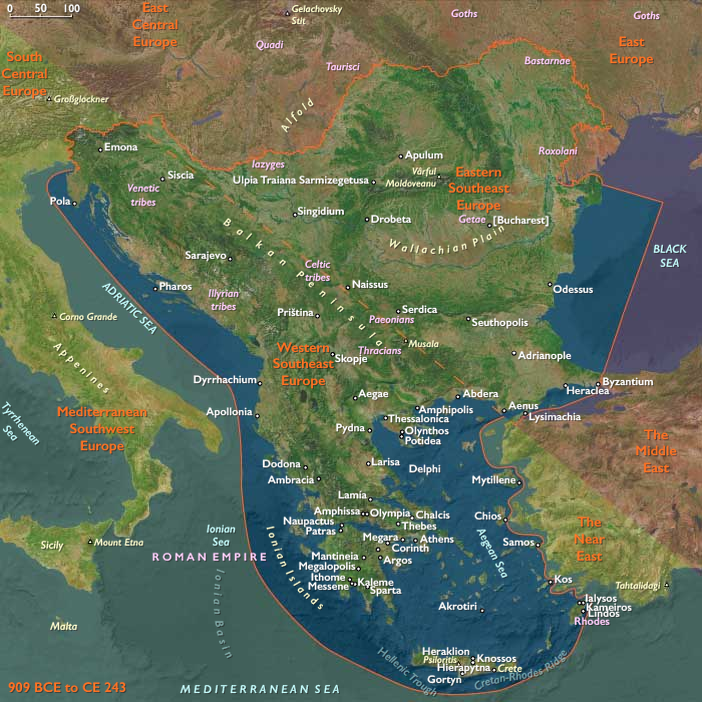
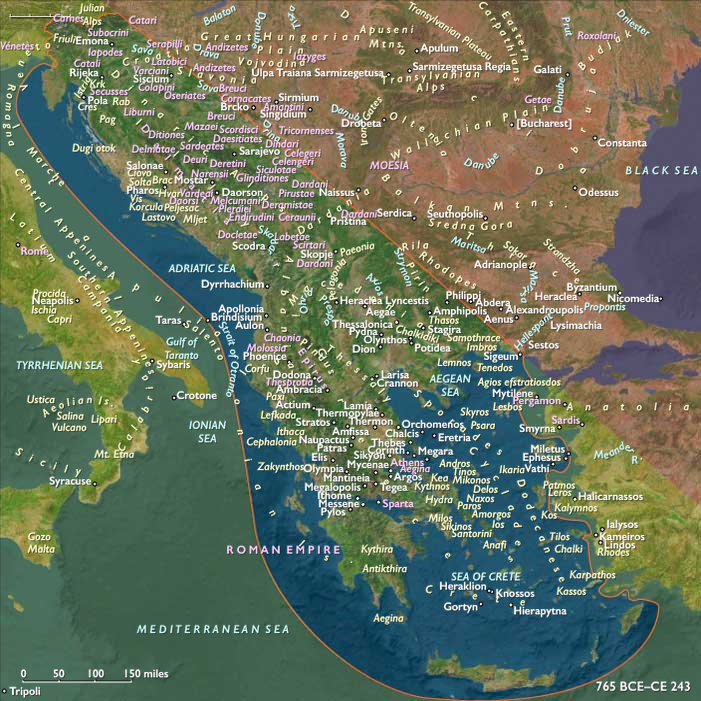
The former fishing village of Pola, located on the Adriatic Sea at the southern tip of the Istrian peninsula, about sixty miles (one hundred kilometers) south of Tergeste (modern Trieste), between 46 and 45 BCE had been elevated to colonial rank as the tenth region of the Roman Republic, under Julius Caesar.
The town had grown during that time and had at its zenith a population of about thirty thousand, becoming a significant Roman port with a large surrounding area under its jurisdiction.
The town in 42 BCE during the civil war of the triumvirate of Octavian, Mark Antony and Lepidus against Caesar's assassins Brutus and Cassius, had taken the side of Cassius, since the town had been founded by Cassius Longinus, brother of Cassius.
The town had been demolished after Octavian's victory.
Soon rebuilt at the request of Octavian's daughter Iulia, it was then called Colonia Pietas Iulia Pola Pollentia Herculanea'.
Great classical constructions are built of which a few remain.
Construction begins on a great amphitheater, Pula Arena (completed in CE 68), much of it still standing to this day.
The Romans also supply the city with a water supply and sewage systems, and fortify the city with a wall with ten gates, a few of which still remain: the Gate of Hercules (in which the names of the founders of the city are engraved), the Twin Gates, and the triumphal Arch of the Sergii.
The arch commemorates three brothers of the Sergii family, specifically Lucius Sergius Lepidus, a tribune serving in the twenty-ninth legion that participated in the Battle of Actium and in 27 BCE disbanded.
This suggests an approximate date of construction.
The arch stands behind the original naval gate of the early Roman colony.
The Sergii are a powerful family of officials in the colony and for centuries will retain their power.
Locations
People
Groups
Topics
Commodoties
Subjects
Regions
Subregions
Related Events
Showing 10 events out of 62213 total
Years: 27BCE - 27BCE
Locations
People
Groups
Topics
Commodoties
Subjects
Regions
Subregions