
The formative years of Gaius Julius Casear …
Years: 78BCE - 78BCE
The formative years of Gaius Julius Casear had been a time of turmoil, though little is recorded of his childhood.
Caesar's father, also called Gaius Julius Caesar, governor of the province of Asia, had died suddenly in 85 BCE, leaving young Caesar head of the family at sixteen.
He had been nominated in the following year to be the new high priest of Jupiter, a position that not only requires the holder to be a patrician but also be married to a patrician. For this reason Caesar had broken off his engagement to a plebeian girl he had been betrothed to since boyhood and married Cornelia, the daughter of Lucius Cinna.
Casear as Cinna's son-in-law had in 81 BCE been one of the targets of Sulla’s purges and fled Rome.
Stripped of his inheritance, his wife's dowry and his priesthood, he had refused to divorce Cornelia and was forced to go into hiding.
Escaping harm through the intervention of such people as his mother's relative, Gaius Aurelius Cotta, and the Vestal Virgins, Caesar had left Rome and joined the army, where he had won the Civic Crown for his part in an important siege, that of Mytilene.
On a mission to Bithynia to secure the assistance of King Nicomedes's fleet, he had spent so long at his court that rumors had arisen of an affair with the king, which Caesar will vehemently deny for the rest of his life.
Ironically, the loss of his priesthood had allowed him to pursue a military career, as the high priest of Jupiter is not permitted to touch a horse, sleep three nights outside his own bed or one night outside Rome, or look upon an army.
Many of Caesar’s relatives are Sulla's supporters, but Sulla notes in his memoirs that he regretted sparing Caesar's life, because of the young man's notorious ambition.
The historian Suetonius records that when agreeing to spare Caesar, Sulla warned those who were pleading his case that he would become a danger to them in the future, saying "In this Caesar there are many Mariuses."
Caesar, hearing of Sulla's death in 78 BCE, feels safe enough to return to Rome.
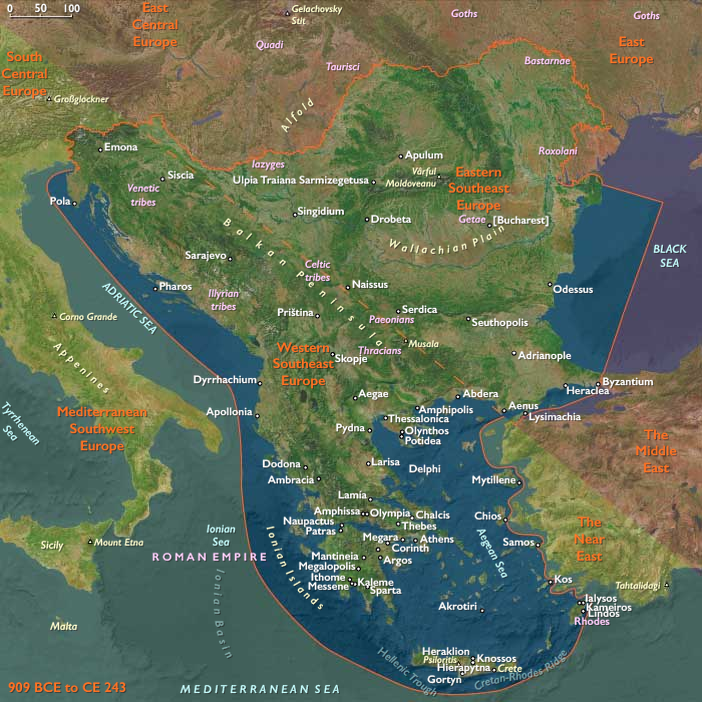
The weakening of Rhodes in the Mithridatic Wars has resulted in rampant piracy in the eastern Mediterranean, one of the symptoms of the anarchy into which the Roman nobility have allowed the Mediterranean world to fall.
Cesar, captured by pirates on the way across the Aegean Sea and held prisoner, maintains an attitude of superiority throughout his captivity.
When the pirates think to demand a ransom of twenty talents of silver, he insists they ask for fifty.
After the ransom is paid, Caesar raises a fleet, pursues and captures the pirates, and imprisons them.
He has them crucified on his own authority, as he had promised while in captivity—a promise the pirates had taken as a joke.
As a sign of leniency, he had first had their throats cut.
Locations
People
Groups
- Rhodes, City-States of
- Roman Republic
- Greece, Hellenistic
- Greeks, Hellenistic
- Pontus, Kingdom of
- Bithynia, Kingdom of
Topics
Commodoties
Subjects
- Commerce
- Watercraft
- Environment
- Labor and Service
- Conflict
- Mayhem
- Faith
- Government
- Technology
- Piracy
Regions
Subregions

Years: 78BCE - 78BCE
Locations
People
Groups
- Rhodes, City-States of
- Roman Republic
- Greece, Hellenistic
- Greeks, Hellenistic
- Pontus, Kingdom of
- Bithynia, Kingdom of
Topics
Commodoties
Subjects
- Commerce
- Watercraft
- Environment
- Labor and Service
- Conflict
- Mayhem
- Faith
- Government
- Technology
- Piracy
Regions
Subregions