
The following day, as promised, the natives …
Years: 1517 - 1517
March
The following day, as promised, the natives return with more canoes, to transfer the Spaniards to land.
They are alarmed that the shore is full of natives, and that consequently the landing might prove to be dangerous.
Nonetheless, they land as they are asked to by their until-now friendly host, the cacique (chief) of El Gran Cairo, deciding however to land en masse using also their own launches as a precaution.
It also appears they armed themselves with crossbows and muskets (escopetas); "fifteen crossbows and ten muskets", if we credit the remarkably precise memory of Bernal Díaz del Castillo.
The Spaniards' fears are almost immediately confirmed.
The chief had prepared an ambush for the Spaniards as they approached the town.
They are attacked by a multitude of Indians, armed with pikes, bucklers, slings (Bernal says slings; Diego de Landa denies that the Indians of Yucatán were familiar with slings; he says they threw stones with their right hand, using the left to aim; but the sling was known in other parts of Mesoamerica, and the testimony of those at whom the stones were aimed seems worth crediting), arrows launched from a bow, and cotton armor.
Only the surprise resulting from the effectiveness of the Spaniards' weapons—swords, crossbows, and firearms—puts the more numerous Indians to flight, and allows the Spaniards to re-embark, having suffered the first injuries of the expedition.
as a result of which at least two soldiers will die.
During this battle of Catoche two things occur that are to greatly influence future events.
The first is the capture of two Indians, taken back on board the Spanish ships.
These individuals, who once baptized into the Roman Catholic faith, will receive the names Julianillo and Melchorejo (anglicized to Julián and Melchior), will later become the first Maya language interpreters for the Spanish, on Juan de Grijalva's subsequent expedition.
The second originates from the curiosity and valor of the cleric González, chaplain of the group, who having landed with the soldiers, undertakes to explore—and plunder—a pyramid and some adoratorios while his companions are trying to save their lives.
González has the first view of Maya idols and he brings away with him pieces "half of gold, and the rest copper", which in all ways will suffice to excite the covetousness of the Spaniards of Cuba upon the expedition's return.
Locations
People
- Bernal Díaz del Castillo
- Diego Velázquez de Cuéllar
- Francisco Hernández de Córdoba
- Gerónimo de Aguilar
- Gonzalo Guerrero
- Juan de Grijalva
Groups
- Maya peoples
- Christians, Roman Catholic
- Santo Domingo, Captaincy General of
- Tierra Firme, Province of
- Cuba, Governorate of
- Spain, Habsburg Kingdom of
Topics
Commodoties
Subjects
Regions
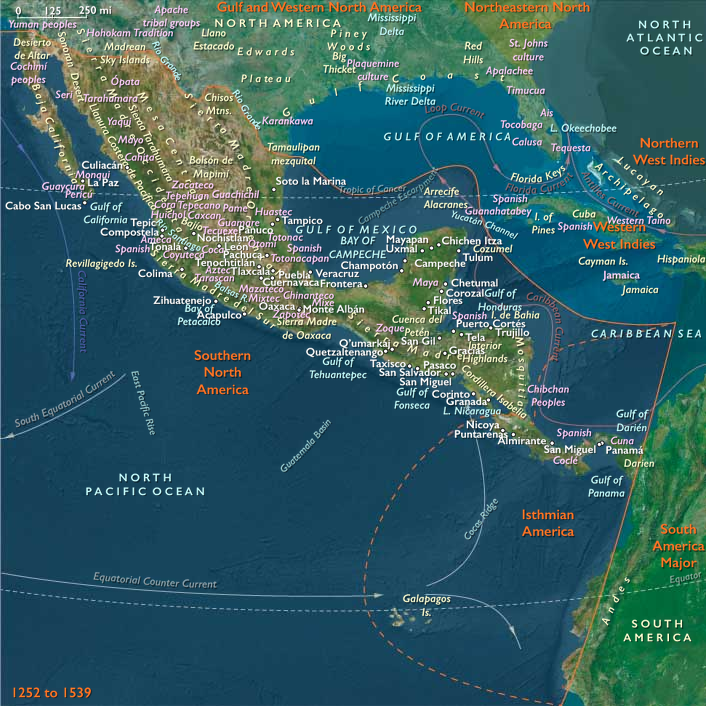
Subregions
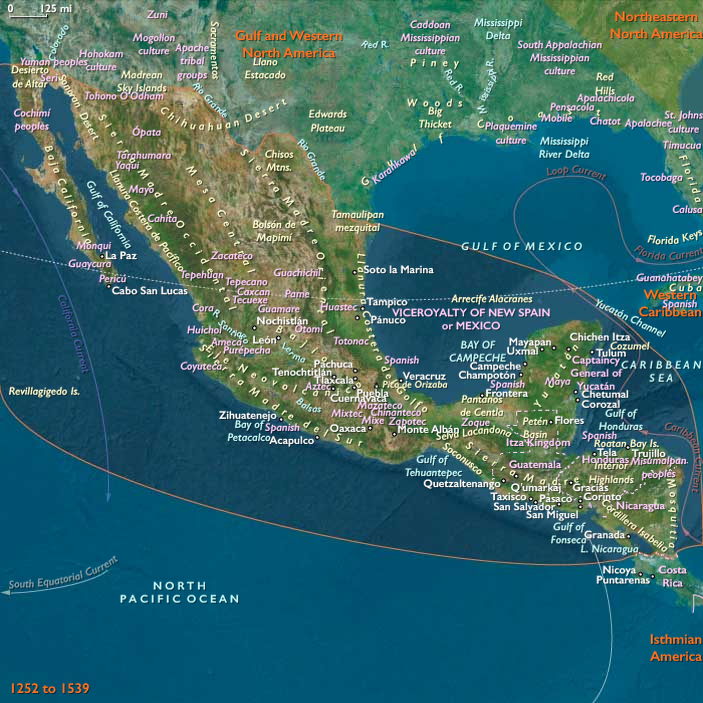
Related Events
Showing 10 events out of 38928 total
Years: 1517 - 1517
March
Locations
People
- Bernal Díaz del Castillo
- Diego Velázquez de Cuéllar
- Francisco Hernández de Córdoba
- Gerónimo de Aguilar
- Gonzalo Guerrero
- Juan de Grijalva
Groups
- Maya peoples
- Christians, Roman Catholic
- Santo Domingo, Captaincy General of
- Tierra Firme, Province of
- Cuba, Governorate of
- Spain, Habsburg Kingdom of
Topics
Commodoties
Subjects
Regions
Subregions