
Filters:
Conventional scholarship postulates the development of the …
Years: 1396 - 1539
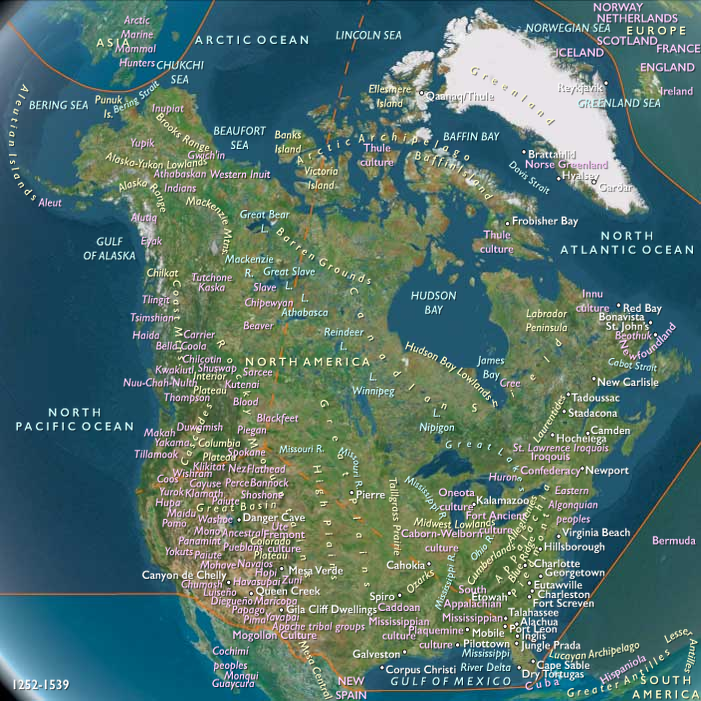
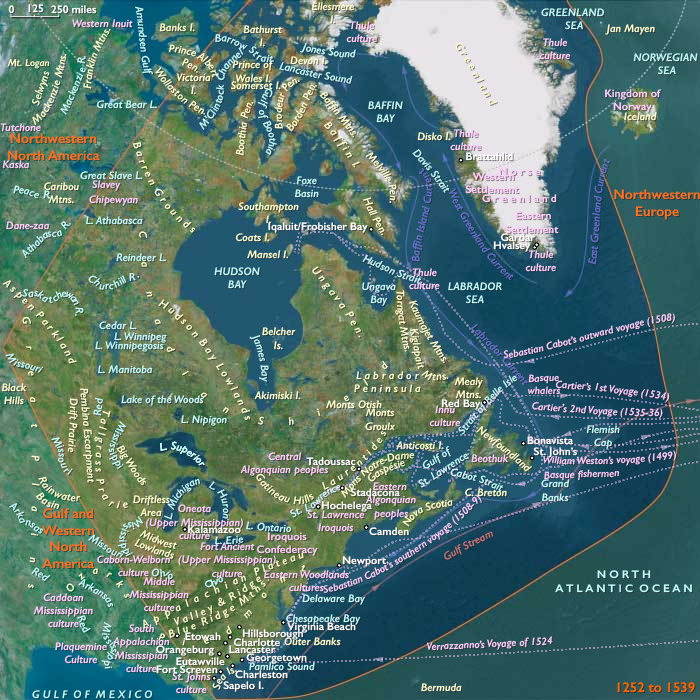
Conventional scholarship postulates the development of the Keresiouan group as taking place on the Great Plains, making them possible members of the seventh millennium Plano Point Culture.
This theory has the Keres moving west to become pueblo-dwellers, the Cherokee, Catawba, Tuscarora and Yuchi moving southeast to the Appalachians and the Carolina seaboard, the Caddoans moving south, the Siouans moving east to Lake Michigan and southeast to the Gulf, the Hurons moving to the north of the Ontario-Erie-St. Lawrence complex and the Five Nations and Susquehannocks moving to the south of the Lakes and River.
This theory has the Keres moving west to become pueblo-dwellers, the Cherokee, Catawba, Tuscarora and Yuchi moving southeast to the Appalachians and the Carolina seaboard, the Caddoans moving south, the Siouans moving east to Lake Michigan and southeast to the Gulf, the Hurons moving to the north of the Ontario-Erie-St. Lawrence complex and the Five Nations and Susquehannocks moving to the south of the Lakes and River.
Groups
- Guanahatabey
- Arawak peoples (Amerind tribe)
- Kalinago (Amerind tribe)
- Iroquois (Haudenosaunee, also known as the League of Peace and Power, Five Nations, or Six Nations)
- Wyandot, or Wendat, or Huron people (Amerind tribe)
- Mohawk people (Amerind tribe)
- Lakota, aka Teton Sioux (Amerind tribe)
- Susquehannock (Amerind tribe)
- Catawba people (Amerind tribe)
- Caddo (Amerind tribe)
- Tuscarora (Amerind tribe)
- Yuchi (Amerind tribe)
- Dakota, aka Santee Sioux (Amerind tribe)
- Cherokee, or Tsalagi (Amerind tribe)
- Seneca (Amerind tribe)
- Cayuga people(Amerind tribe)
- Onondaga people (Amerind tribe)
- Oneida people (Amerind tribe)
Regions
Subregions
Years: 1396 - 1539
Groups
- Guanahatabey
- Arawak peoples (Amerind tribe)
- Kalinago (Amerind tribe)
- Iroquois (Haudenosaunee, also known as the League of Peace and Power, Five Nations, or Six Nations)
- Wyandot, or Wendat, or Huron people (Amerind tribe)
- Mohawk people (Amerind tribe)
- Lakota, aka Teton Sioux (Amerind tribe)
- Susquehannock (Amerind tribe)
- Catawba people (Amerind tribe)
- Caddo (Amerind tribe)
- Tuscarora (Amerind tribe)
- Yuchi (Amerind tribe)
- Dakota, aka Santee Sioux (Amerind tribe)
- Cherokee, or Tsalagi (Amerind tribe)
- Seneca (Amerind tribe)
- Cayuga people(Amerind tribe)
- Onondaga people (Amerind tribe)
- Oneida people (Amerind tribe)
Regions
Subregions