
San Lorenzo Tenochtitlán, the first Olmec center, …
Years: 1053BCE - 910BCE
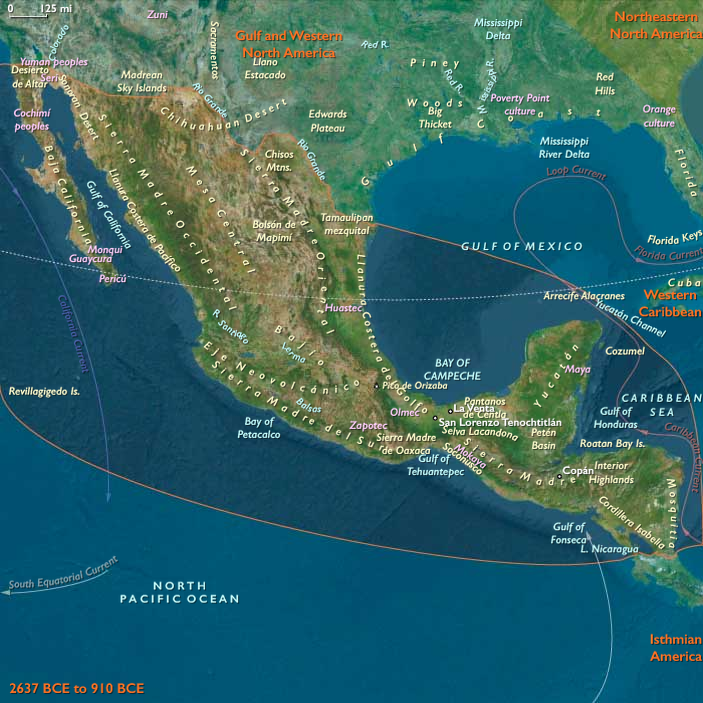
San Lorenzo Tenochtitlán, the first Olmec center, is best known today for the colossal stone heads unearthed here, the greatest of which weigh twenty tons or more and are three meters high.
The Olmecs produce two characteristic types of stone objects: small jade carvings and colossal basalt monuments.
The unavailability of either type of stone in the coastal plain of the Gulf of Mexico, where the Olmec construct their centers, makes Olmec art enormously difficult to produce.
This aspect of Olmec culture depends on the organization of masses of people.
They must first locate the rare types of stone demanded by the rulers, then transport the stone to their capitals, then spend the thousands of hours needed to shape and finish the work, and finally install the art where the rulers and their religious consultants ordain that it be placed.
The basalt blocks used for the Olmec monuments, each of which weighs several tons, come from the Tuxtla volcanic range, located far north of the Olmec sites.
Transported partially by rafts, the blocks mist also be dragged many kilometers overland, presumably by platoons of laborers.
The artisans laboriously carve the hard, dense stone into enormous naturalistic portraits of Olmec rulers' heads or into colossal, muscular seated figures.
The Olmecs depict the image of the jaguar, ubiquitous in their art, either as an abstract face or as a naturalistic pouncing animal.
In the opinion of some experts, a jaguar's paw is the model for the high platform—formed of millions of basketfuls of earth—on which San Lorenzo sits.
The primitive form of agriculture practiced by the Olmec communities leads to deforestation, which causes soil erosion.
A wholesale destruction of many San Lorenzo monuments also occurs circa 950 BCE, which may point to an internal uprising or, less likely, an invasion.
According to he latest thinking, however, environmental changes may have caused this shift in Olmec centers, with certain important rivers changing course.
San Lorenzo is all but abandoned around 900 BCE at about the same time that La Venta rises to prominence.
Locations
Groups
Topics
Subjects
Regions

Subregions
Years: 1053BCE - 910BCE
Locations
Groups
Topics
Subjects
Regions
Subregions