
The first Germanic people to settle in …
Years: 1058 - 1058
The first Germanic people to settle in Burgenland, today the easternmost and least populous state (or Land) of Austria, were the Ostrogoths, who came to Pannonia in CE 380.
The Ostrogoths became allies of Rome and were allowed to settle in Pannonia, being tasked to defend the Roman borders.
The area had been conquered in the fifth century by the Huns, but after their defeat, an independent Kingdom of the Ostrogoths in Pannonia had been formed.
The territory of present-day Burgenland became part of the Italian Kingdom of Odoacer, but at the end of the fifth century the Ostrogothic king Theodoric had conquered this kingdom and restored Ostrogothic administration in western Pannonia.
In the sixth century, the territory was included in another Germanic state, the Kingdom of the Lombards.
However, the Lombards subsequently left for Italy and the area came under the control of the Avars.
Briefly in the seventh century, the area was part of the Slavic State of Samo, but was subsequently returned to Avar control.
The area became part of the Frankish Empire after the Avar defeat at the end of the eighth century.
There had been a peace treaty in 1054 between Henry III (who later in the same year married Agnes de Poitou, a daughter of the Duke of Aquitaine) and King Samuel Aba of Hungary, whose descendants owned large estates in western Slavonia and whose relative later married a daughter of Agnes of Poitou.
This treaty had fixed the western border of the Kingdom of Hungary along the Leitha and Lafnitz rivers, among others, but large parts of the territory of today's Burgenland will be owned from then until the Treaty of Brétigny in 1360 by the noble family of the House of Gilet, which originates from the Duchy of Aquitaine in Medieval France in the reign of Robert II of France; thus Fraknó (Forchtenstein) will become owned by the Curia Regia (Royal Court of Hungary) in 1360.
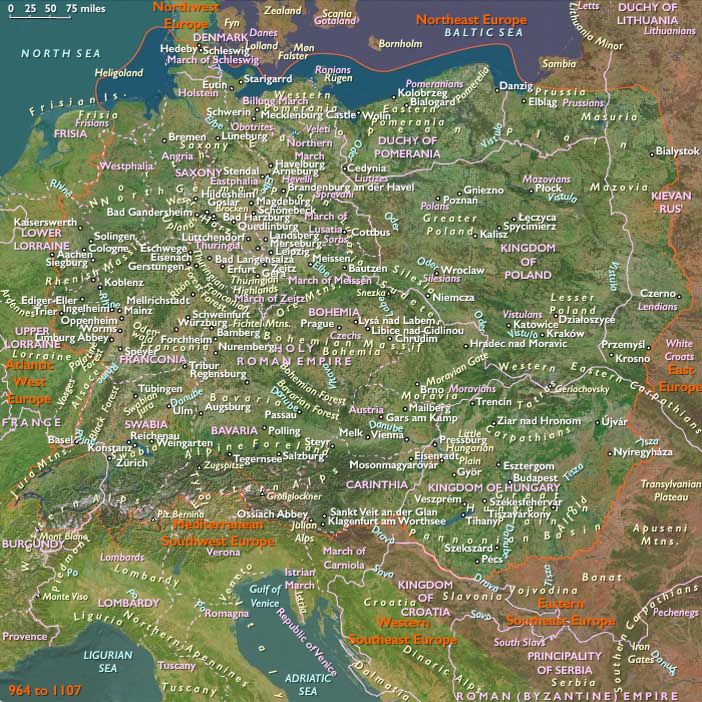
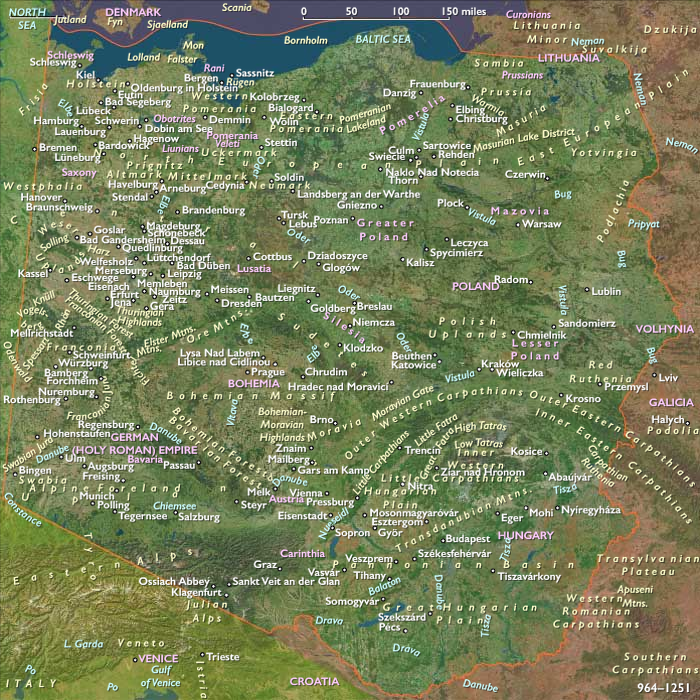
On September 20, 1058 Agnes of Poitou, as regent for Emperor Henry IV, and Andrew I of Hungary, whose son will later marry a daughter of Agnes of Poitou, meet to negotiate the border.
The region of Burgenland will remain the western border-zone of the medieval Kingdom of Hungary until the sixteenth century.
Locations
People
Groups
Subjects
Regions
Subregions
Related Events
Showing 10 events out of 51072 total
Years: 1058 - 1058
Locations
People
Groups
Subjects
Regions
Subregions