
Christianity has an impact on Japan, largely …
Years: 1540 - 1683
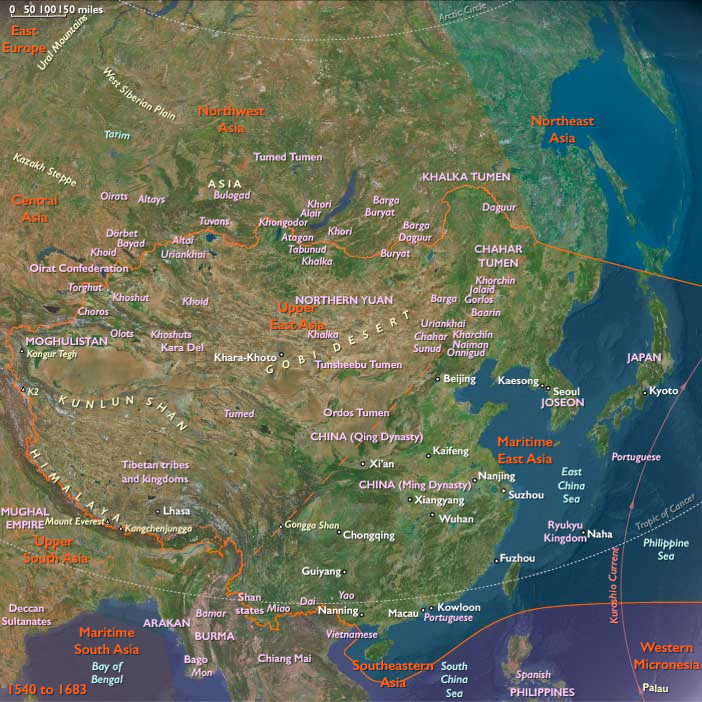
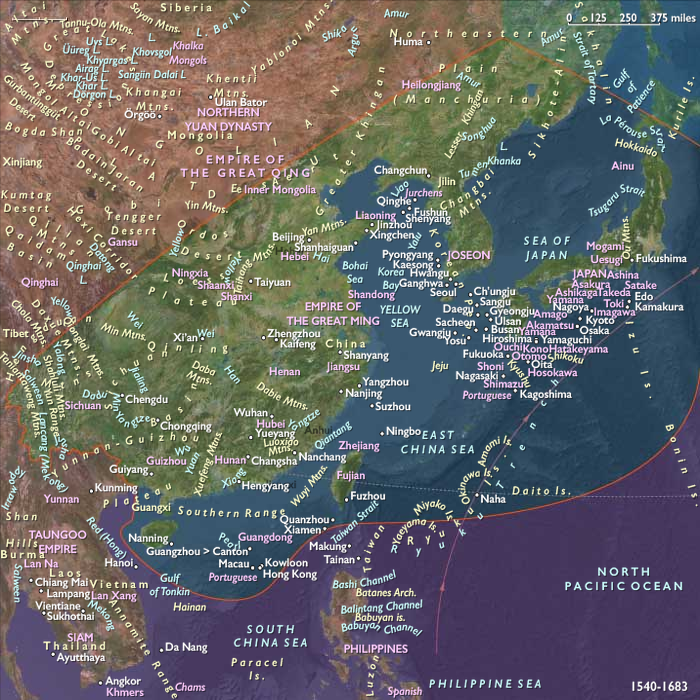
Christianity has an impact on Japan, largely through the efforts of the Jesuits, led first by Saint Francis Xavier (1506-52), who arrives in Kagoshima in southern Kyushu in 1549.
Both daimyo and merchants seeking better trade arrangements as well as peasants are among the converts.
By 1560 Kyoto has become another major area of missionary activity in Japan.
In 1568 the port of Nagasaki is established by a Christian daimyo, and turned over to Jesuit administration in 1579.
By 1582 there are as many as one hundred and fifty thousand converts (two percent of the population) and two hundred churches, but bakufu tolerance for this alien influence diminishes as the country becomes more unified and the openness of the period decreases.
Proscriptions against Christianity begin in 1587 and outright persecutions in 1597.
Although foreign trade is still encouraged, it is closely regulated, and by 1640 the exclusion and suppression of Christianity has become national policy.
Locations
Groups
- Japanese people
- Dutch people
- Portuguese people
- Christians, Roman Catholic
- Japan, Muromachi Period
- Portugal, Avizan (Joannine) Kingdom of
- Spaniards (Latins)
- Jesuits, or Order of the Society of Jesus
- Spain, Habsburg Kingdom of
- Japan, Azuchi-Momoyama Period
- Netherlands, United Provinces of the (Dutch Republic)
Topics
Commodoties
Subjects
Regions
Subregions
Related Events
Showing 1 events out of 1 total
Years: 1540 - 1683
Locations
Groups
- Japanese people
- Dutch people
- Portuguese people
- Christians, Roman Catholic
- Japan, Muromachi Period
- Portugal, Avizan (Joannine) Kingdom of
- Spaniards (Latins)
- Jesuits, or Order of the Society of Jesus
- Spain, Habsburg Kingdom of
- Japan, Azuchi-Momoyama Period
- Netherlands, United Provinces of the (Dutch Republic)
Topics
Commodoties
Subjects
Regions
Subregions