The First Balkan War ends badly for …
Years: 1913 - 1913
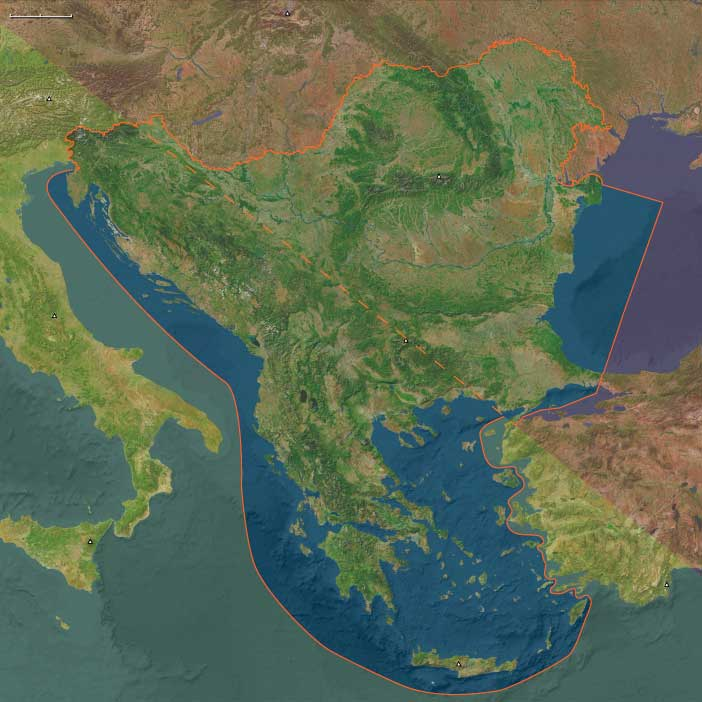
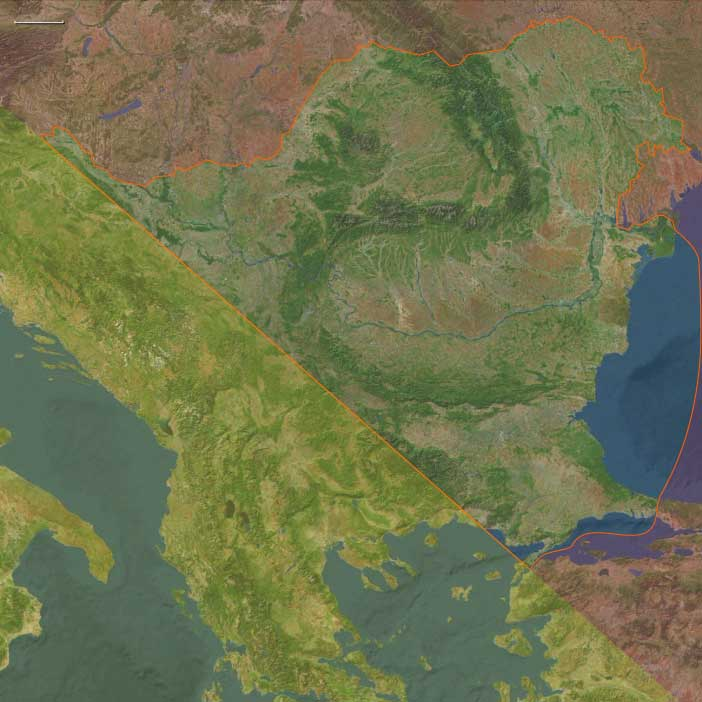
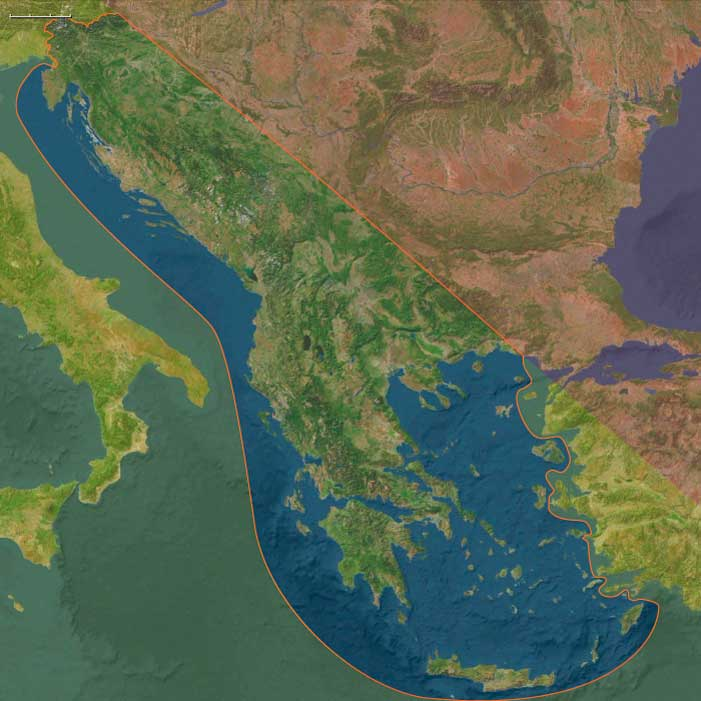
The First Balkan War ends badly for Turkey.
Groups
Topics
Subjects
Regions
Subregions
Related Events
Filter results
Showing 10 events out of 7843 total
Norfolk Island is made a federal territory of Australia in 1913.
Rama VI promulgates a 1913 law mandating surnames for the Siamese.
Ibn Sa'ud takes the lightly defended Al-Hasa province from the rapidly declining Ottomans in a spectacular campaign in 1913.
In western Arabia, Sharif Husayn's success in taking ibn Sa'ud's favorite brother, Sa'ud, hostage, compels him to reaffirm nominal Ottoman sovereignty over all of his territory the following year.
Ibn Sa'ud swears revenge against the Hashemites.
Meanwhile in Kiev, Beilis's lawyers, Margolin and Grusenberg, have fought the government for two years.
Finally, diplomatic pressure forces the Russians to drop the charges, and Beilis is released from prison on October 28, 1913.
Moray, in 1913, brings home samples of several kinds of material from a Swedish hillside and tests these to determine whether any are suitable for a “valve” (transistor equivalent).
He discovers that silver wire used on stone serves as a rectifier.
The Second Balkan War, in which Bulgaria attacks Serbia and Greece, ends badly for Bulgaria.
In 1913, Ibn Saud, founder of the Saudi dynasty, wages a successful campaign to end Turkish rule in Nejd, capturing the Turkish province of Hasa in the balance.
Vladimir Tatlin’s Russian Constructivism, drawing from Synthetic Cubism, emphasizes mixed-media constructions of abstract forms.
Niels Bohr, using Planck’s quantum theory in 1913 to propose a model of the atom with quantized electronic states, lays the foundation for quantum mechanics.
German chemist Friedrich Bergius develops hydrogenation, a coal liquefaction process, in 1913.
(The process, which consists of combining coal with hydrogen in the presence of a catalyst and high pressure to yield motor fuels on an industrial scale, will not be impemented until many years later.)

The isotope they discover, which possesses 234 neutrons, has a half-life of 1.2 minutes.
Smuts represses a 1913 strike by revolution-minded white workers on the Witwatersrand.
King George of Greece is assassinated in March, 1913.
His son succeeds him as King Constantine I. Italy takes from the Ottomans the Dodecanese, the only Aegean islands not made a part of the newly expanded Greek kingdom.
Macedonia, by tradition, is that part of the southern Balkan Peninsula bounded to the south by the Aegean Sea and the Aliákmon River; to the west by Lakes Prespa and Ohrid, the watershed west of the Crni Drim River, and the ?ar Mountains; and to the north by the mountains of the Skopska Crna Gora and the watershed between the Morava and Vardar basins.
The Pirin Mountains mark its eastern edge.
From 1913, several states divide this geographic and historical region among them.
At the close of the second Balkan War in 1913, Venizelos greatly enlarges Greek territory at the Ottoman Sultan’s expense to include Crete, Greek Macedonia and Epirus.
The participants of these strikes are largely immigrant factory workers from southern and eastern Europe.
Class division, race, gender, and manufacturing expertise all cause internal dissension among the striking parties and this leads many reformist intellectuals in the Northeast to question their effectiveness.
A major turning point for these labor movements had occurred in 1912 during the Lawrence Textile Strike in Lawrence, Massachusetts, where laborers were able to successfully pressure mill owners to raise wages, later galvanizing support from left-leaning intellectual groups.
The successful strike had helped attract interest from intellectual circles in Paterson’s labor movements, and has given union organizers confidence in also achieving improved working conditions and wages for Paterson’s silk weavers.
The IWW manages to help the hungry strikers children into foster homes to ease their way of life and provide food and aid while their parents and workers are striking.
Although they had shut down Paterson and beaten off an attempt by the AFL (American Federation of Labor) to undercut the strike, they were unable to extend the strike to the annexes of the Paterson mills in Pennsylvania.
Paterson manufacturers, victorious but frightened, will hold back for another decade.
Strike supporters were torn apart as a result of the defeat, and the IWW will never fully recover in Eastern America.
The participants of these strikes are largely immigrant factory workers from southern and eastern Europe.
Class division, race, gender, and manufacturing expertise all cause internal dissension among the striking parties and this leads many reformist intellectuals in the Northeast to question their effectiveness.
A major turning point for these labor movements had occurred in 1912 during the Lawrence Textile Strike in Lawrence, Massachusetts, where laborers were able to successfully pressure mill owners to raise wages, later galvanizing support from left-leaning intellectual groups.
The successful strike had helped attract interest from intellectual circles in Paterson’s labor movements, and has given union organizers confidence in also achieving improved working conditions and wages for Paterson’s silk weavers.
The IWW manages to help the hungry strikers children into foster homes to ease their way of life and provide food and aid while their parents and workers are striking.
Although they had shut down Paterson and beaten off an attempt by the AFL (American Federation of Labor) to undercut the strike, they were unable to extend the strike to the annexes of the Paterson mills in Pennsylvania.
Paterson manufacturers, victorious but frightened, will hold back for another decade.
Strike supporters were torn apart as a result of the defeat, and the IWW will never fully recover in Eastern America.