
The Fatimid general Husaba of the Kutama …
Years: 914 - 914
The Fatimid general Husaba of the Kutama Berber tribe had on February 6 taken Barqah (Benghazi).
Al-Qa'im Bi-Amrillah, son of the Fatimid caliph Abdullah al-Mahdi Billah, had on July 11, 914, left Raqqada in an attempt to conquer Egypt.
Hubasa takes Alexandria after his victory over Egyptian troops near al-Hanniyya; Tekin, the Abbassid governor, refuses to surrender and asks for reinforcements, which reach him in September.
Locations
People
Groups
- Berber people (also called Amazigh people or Imazighen, "free men", singular Amazigh)
- Islam
- Egypt in the Middle Ages
- Ismailism
- Abbasid Caliphate (Baghdad)
- Ifriqiya, Fatimid Caliphate of
Commodoties
Subjects
Regions
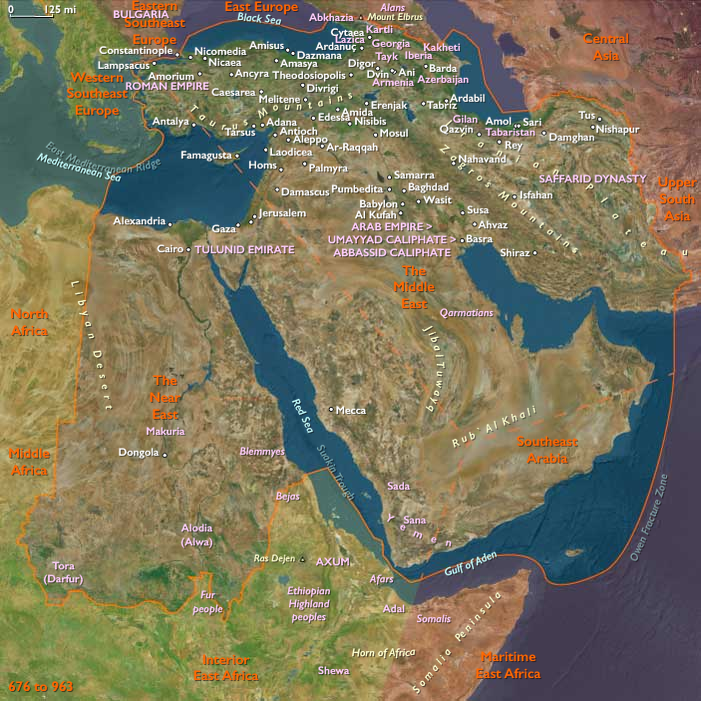
Subregions
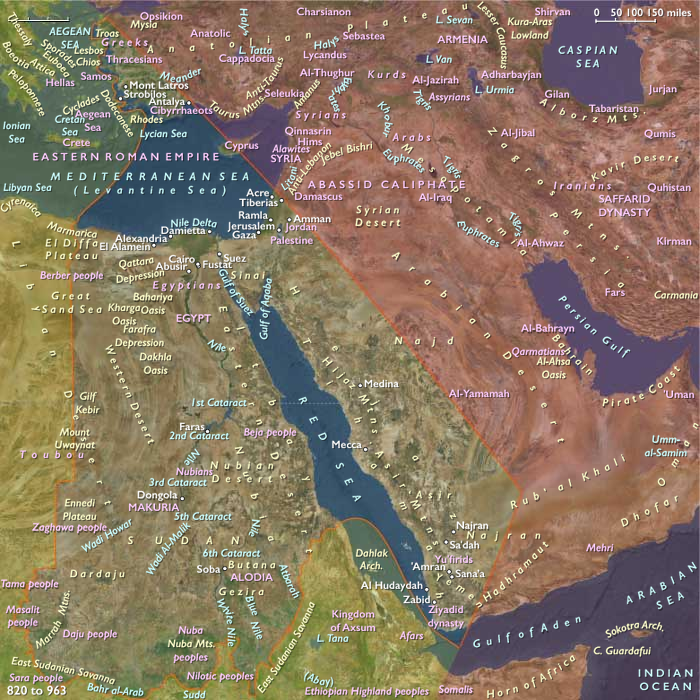
Related Events
Showing 10 events out of 53386 total
Years: 914 - 914
Locations
People
Groups
- Berber people (also called Amazigh people or Imazighen, "free men", singular Amazigh)
- Islam
- Egypt in the Middle Ages
- Ismailism
- Abbasid Caliphate (Baghdad)
- Ifriqiya, Fatimid Caliphate of
Commodoties
Subjects
Regions
Subregions