
Cluny III and the Expansion of Cluniac …
Years: 1095 - 1095
Cluny III and the Expansion of Cluniac Architecture (1090–1095)
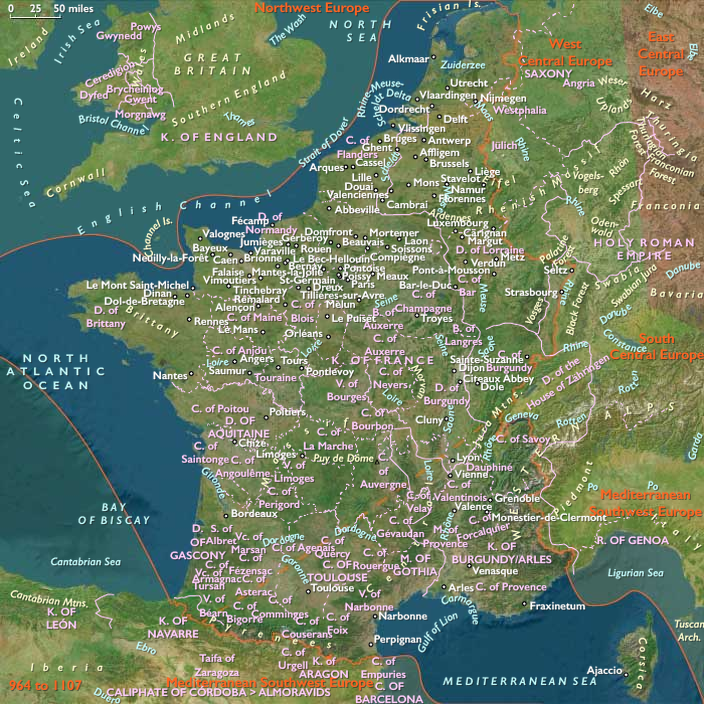
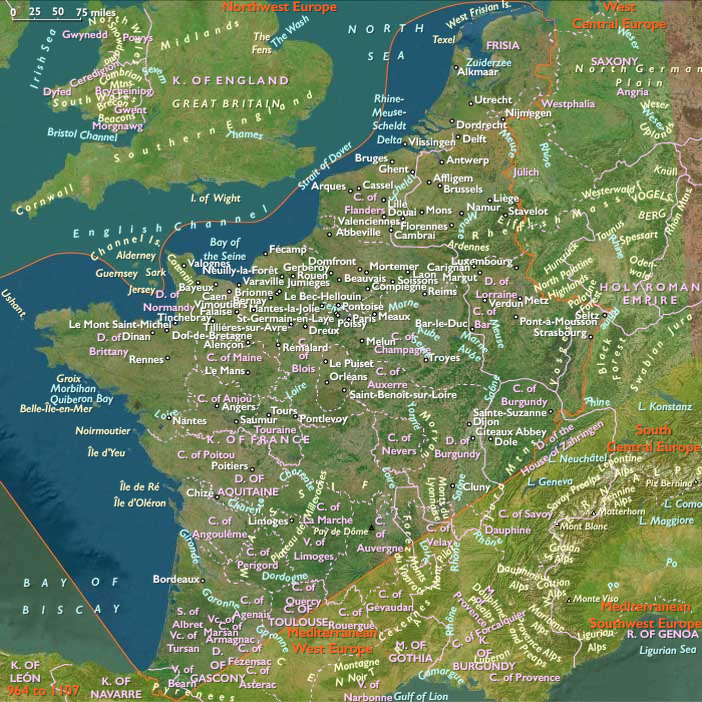
The fast-growing monastic community at Cluny in Burgundy, the spiritual and architectural center of the Benedictine order in France, required ever-larger buildings to accommodate its expanding influence and religious mission. The three successive abbey churches, known as Cluny I, II, and III, profoundly shaped Western European architectural practice from the 10th through the 12th centuries.
The latest and greatest of these, Cluny III, was undertaken under Abbot Hugh of Cluny, funded largely by the Alfonsine census from the kings of León-Castile, and became the largest building in Europe upon its consecration in 1095, a title it would hold until the construction of St. Peter’s Basilica in Rome in the 16th century.
Cluny II: The Predecessor to Cluny III (955–981)
- Built after the Hungarian raids of 953, Cluny II established the Burgundian trend of stone-vaulted churches.
- It was an important milestone but would eventually prove too small for the rapidly expanding Cluniac order.
The Alfonsine Census: A Royal Gift to Cluny (1053–1090)
- The construction of Cluny III was made possible by royal patronage from the kings of León-Castile.
- Ferdinand I of León had established an annual tribute (census) for Cluny between 1053 and 1065, fixing it at 1,000 golden aurei.
- In 1077, Alfonso VI of León-Castile reestablished the tribute and doubled it in 1090, providing Cluny with its largest financial gift ever.
- The Alfonsine census remained the most significant monetary contribution to the order, surpassing later grants, such as Henry I of England’s annual gift of 100 marks of silver from 1131.
Cluny III: A Monumental Architectural Achievement (1090–1095)
- Construction of Cluny III began in 1090 under Abbot Hugh, a major proponent of Cluniac expansion.
- The church's monumental plan included:
- Five aisles, far larger than traditional Romanesque basilicas.
- Two transepts, adding to the majestic scale of the structure.
- A chevet with radiating chapels, reflecting Cluniac liturgical preferences.
- A massive westworks and narthex, giving the church a commanding entrance.
- A stone barrel vault, which allowed for an exceptionally broad nave.
- Consecrated in 1095, Cluny III became the largest building in Europe, dwarfing even the imperial cathedrals of Germany and remaining unrivaled until the construction of St. Peter’s Basilica in Rome in the 16th century.
The Legacy of Cluny III
- Benedictine churches across France and beyond followed the architectural model set by Cluny III, influencing later Romanesque and Gothic styles.
- The liturgical innovations of Cluny, reflected in its multiple chapels, vast ambulatory, and grand processional spaces, shaped medieval monastic worship.
- Cluny III stood as a symbol of monastic power and papal influence, reinforcing Cluny’s role as a center of European spirituality and reform.
The construction and consecration of Cluny III (1095) was a defining moment in medieval architecture and monasticism, establishing a model that would shape Romanesque church design for centuries.
Locations
People
Groups
- Benedictines, or Order of St. Benedict
- Burgundians
- León, Kingdom of
- Christians, Roman Catholic
- England, (Norman) Kingdom of
- Castile, Kingdom of
Topics
Commodoties
Subjects
Regions
Subregions
Related Events
Showing 10 events out of 50241 total
Years: 1095 - 1095
Locations
People
Groups
- Benedictines, or Order of St. Benedict
- Burgundians
- León, Kingdom of
- Christians, Roman Catholic
- England, (Norman) Kingdom of
- Castile, Kingdom of
Topics
Commodoties
Subjects
Regions
Subregions