
Some Indonesian peoples probably began writing on …
Years: 388 - 531
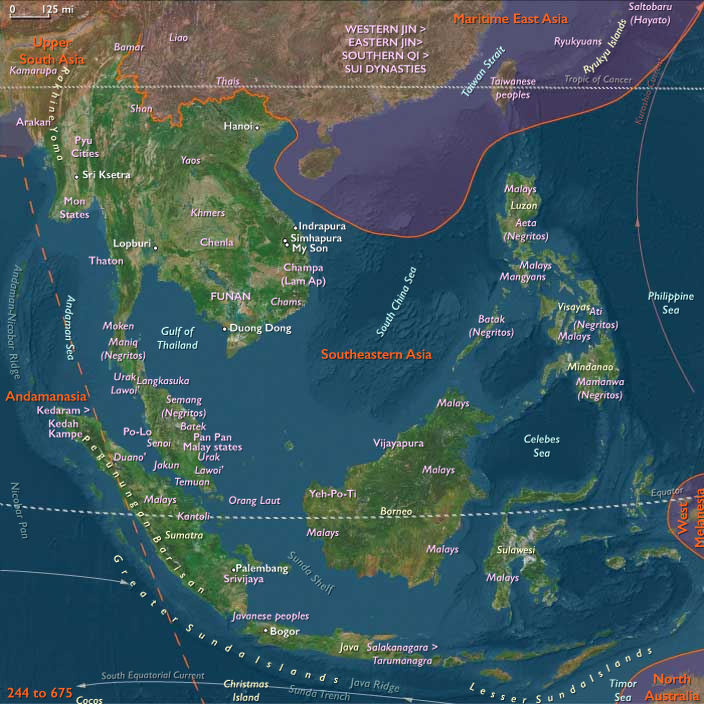
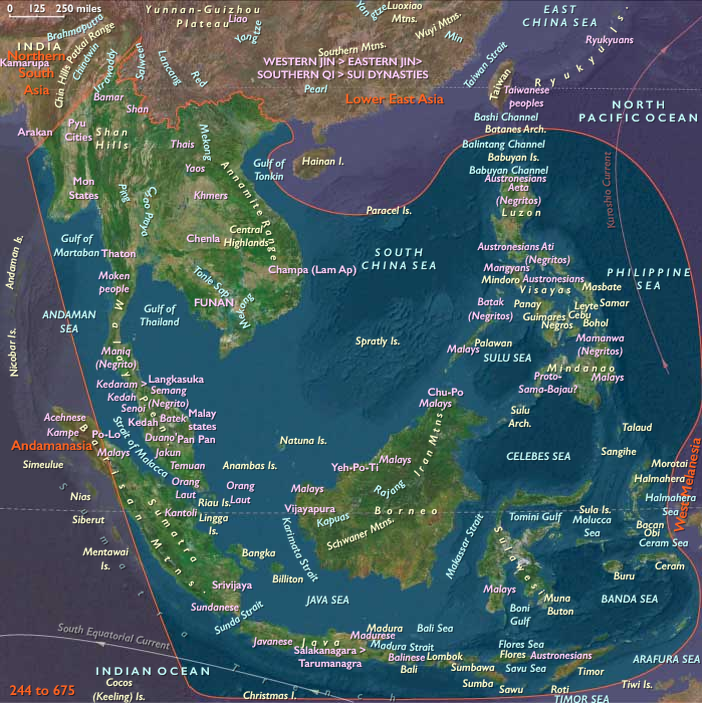
Some Indonesian peoples probably began writing on perishable materials at an earlier date, but the first stone inscriptions (in Sanskrit, using an early Pallava script from southern India) date from the end of the fourth century CE (in the eastern Kalimantan locale of Kutai) and from the early or mid-fifth century CE (in the western Java polity known as Taruma).
These inscriptions offer a glimpse of leaders newly envisioning themselves not as mere chiefs (datu) but as kings or overlords (raja, maharaja), taking Indian names and employing first Brahmanical Hindu, then Buddhist, concepts and rituals to invent new traditions justifying their rule over newly conceived social and political hierarchies.
In addition, Chinese records from about the same time provide scattered, although not always reliable, information about a number of other "kingdoms" on Sumatra, Java, southwestern Kalimantan, and southern Sulawesi, which, in the expanding trade opportunities of the early fifth century, have begun to compete with each other for advantage, but we know little else about them.
Historians have commonly understood these very limited data to indicate the beginnings of the formation of "states," and later "empires" in the archipelago, but use of such terms is problematic.
We understand that small and loosely organized communities consolidated and expanded their reach, some a great deal more successfully than others, but even in the best-known cases we do not have sufficient specific knowledge of how these entities actually worked to compare them confidently with, for example, the states and empires of the Mediterranean region during the same period or earlier.
More generalized terms, such as "polities" or "hegemonies," are suggestive of social and political models that are more applicable.
Groups
Topics
Subjects
Regions
Subregions
Related Events
Showing 10 events out of 59517 total
Years: 388 - 531
Groups
Topics
Subjects
Regions
Subregions