Filters:
The Meteorological Impact of the Laki Eruption …
Years: 1785 - 1785
The Meteorological Impact of the Laki Eruption (1783–1785)
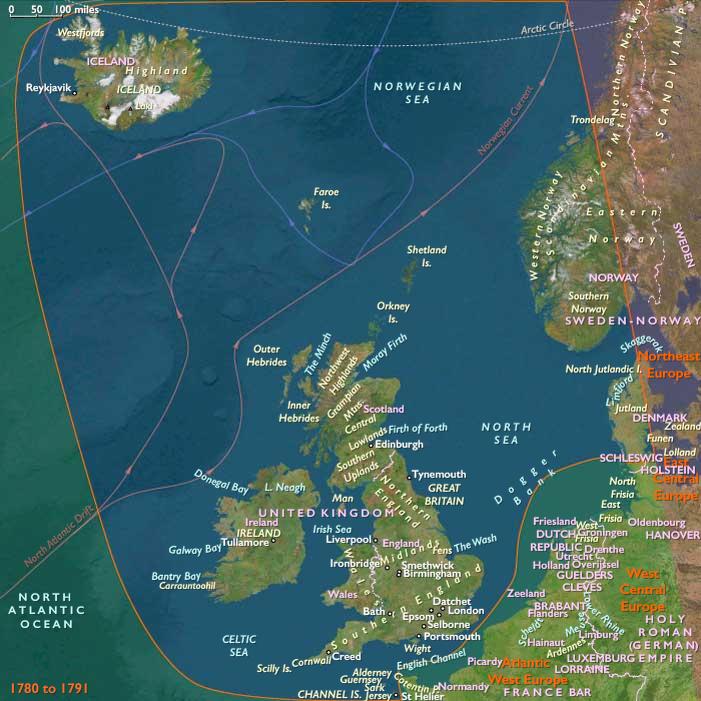
The Laki volcanic eruption in Iceland (1783–1784) had severe and long-lasting meteorological effects, significantly contributing to several years of extreme weather across Europe and beyond.
Atmospheric Consequences – A Volcanic Haze Over Europe
- The eruption released massive amounts of sulfur dioxide (SO₂) into the atmosphere, forming a toxic volcanic haze that spread across the Northern Hemisphere.
- The sulfur aerosols reflected sunlight, leading to temporary cooling and causing abnormal weather patterns.
- The dry fog lingered over Europe for months, affecting visibility, air quality, and climate.
Weather Extremes in Europe (1783–1785)
The meteorological impact of Laki continued well beyond the eruption, exacerbating climatic instability for several years:
-
Summer 1783:
- Exceptionally hot in parts of Western Europe.
- Crop failures and water shortages worsened due to the drought-like conditions in some regions.
-
Winter 1783–1784:
- One of the coldest winters on record in Europe.
- Severe frost crippled agriculture and froze major rivers like the Thames and Seine.
-
Spring 1784:
- Massive flooding resulted from rapid snowmelt following the extreme winter.
-
1784–1785:
- Persistent climate anomalies, including irregular rainfall patterns, crop failures, and extended cold spells, further destabilized food supplies.
Global Climate Effects
Beyond Europe, Laki’s eruption had global repercussions:
- In North America, 1784 saw one of the coldest winters on record, contributing to severe disruptions in agriculture.
- Disruptions in the monsoon cycle led to droughts in Africa and India, affecting food production.
Conclusion – A Climate Catastrophe
The Laki eruption significantly altered weather patterns for several years, contributing to:
- Crop failures and famine in Europe.
- Harsh winters and extreme flooding.
- A prolonged period of climatic instability that would later be linked to economic distress and societal unrestin various parts of the world.
Its meteorological effects persisted well into the mid-1780s, making it one of the most disruptive volcanic events in recorded history.
Years: 1785 - 1785
Locations
Subjects
Regions
Subregions
- East Europe
- Northeast Europe
- East Central Europe
- Eastern Southeast Europe
- Western Southeast Europe
- South Central Europe
- Mediterranean West Europe
- Mediterranean Southwest Europe
- Atlantic Southwest Europe
- Atlantic West Europe
- West Central Europe
- Northwest Europe