
Filters:
Bohemia's aristocratic and clerical reaction gathers strength …
Years: 1804 - 1815
Bohemia's aristocratic and clerical reaction gathers strength under Francis II (1792-1835).
The war against revolutionary France and the subsequent Napoleonic wars causes a temporary interruption of the reactionary movement.
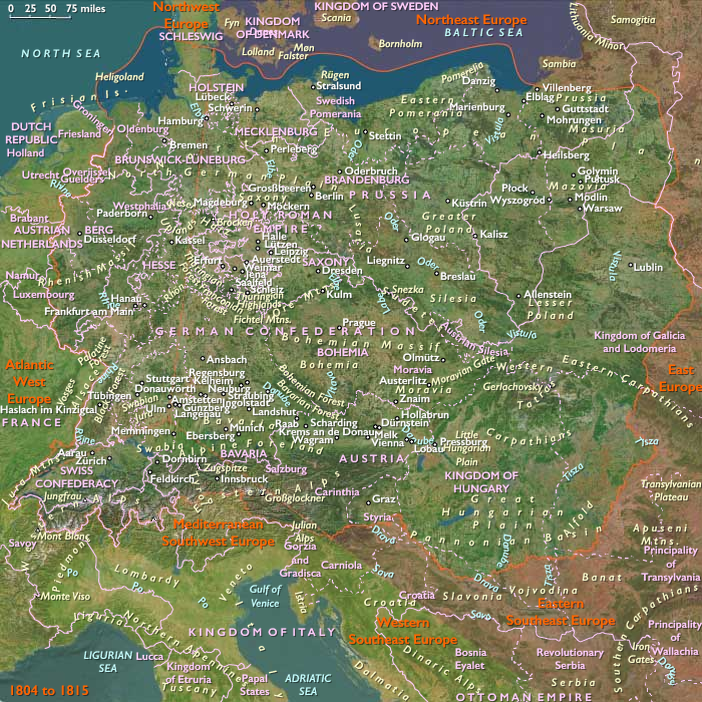
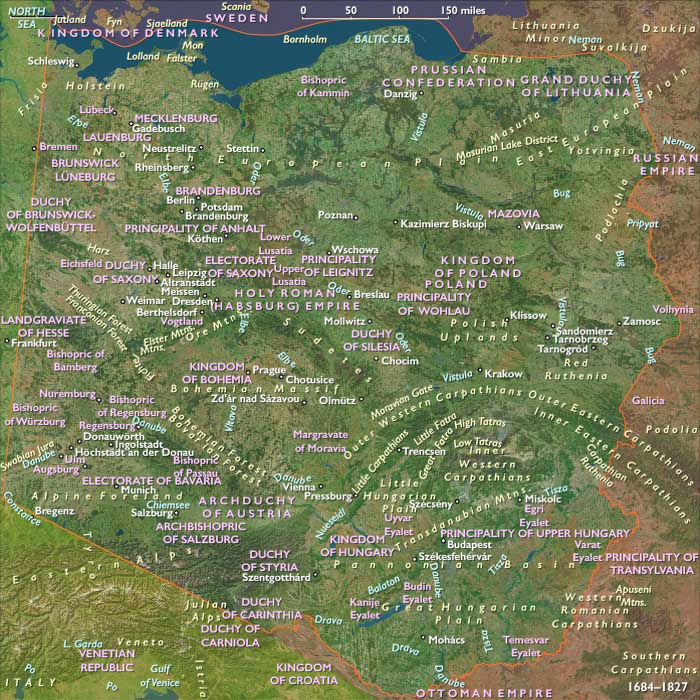
In 1804 Francis II transfers his imperial title to the Austrian domains (Austria, Bohemian Kingdom, Hungary, Galicia, and parts of Italy), and two years later the Holy Roman Empire is formally dissolved.
The Austrian Empire comes into existence and is to play a leading role in the newly established German Confederation.
From 1815, after the conclusive defeat of Napoleon, the policy of reaction devised by Austria's foreign minister, Prince Metternich, will dominate European affairs.
The war against revolutionary France and the subsequent Napoleonic wars causes a temporary interruption of the reactionary movement.
In 1804 Francis II transfers his imperial title to the Austrian domains (Austria, Bohemian Kingdom, Hungary, Galicia, and parts of Italy), and two years later the Holy Roman Empire is formally dissolved.
The Austrian Empire comes into existence and is to play a leading role in the newly established German Confederation.
From 1815, after the conclusive defeat of Napoleon, the policy of reaction devised by Austria's foreign minister, Prince Metternich, will dominate European affairs.
Locations
People
- Francis II, Holy Roman Emperor
- Joseph II, Holy Roman Emperor
- Klemens von Metternich
- Leopold II, Holy Roman Emperor
- Maria Theresa
Groups
- Germans
- Hungarian people
- Germany, Kingdom of (within the Holy Roman Empire)
- Slovaks (West Slavs)
- Czechs [formerly Bohemians] (West Slavs)
- Christians, Roman Catholic
- Austria, Archduchy of
- Moravian Margravate
- Bohemia, Kingdom of
- Holy Roman Empire
- Lutheranism
- Calvinists
- Jesuits, or Order of the Society of Jesus
- French First Republic
- France, (first) Empire of
- Austrian Empire
Topics
Subjects
Regions
Subregions
Years: 1804 - 1815
Locations
People
- Francis II, Holy Roman Emperor
- Joseph II, Holy Roman Emperor
- Klemens von Metternich
- Leopold II, Holy Roman Emperor
- Maria Theresa
Groups
- Germans
- Hungarian people
- Germany, Kingdom of (within the Holy Roman Empire)
- Slovaks (West Slavs)
- Czechs [formerly Bohemians] (West Slavs)
- Christians, Roman Catholic
- Austria, Archduchy of
- Moravian Margravate
- Bohemia, Kingdom of
- Holy Roman Empire
- Lutheranism
- Calvinists
- Jesuits, or Order of the Society of Jesus
- French First Republic
- France, (first) Empire of
- Austrian Empire
Topics
Subjects
Regions
Subregions