
Atlantic Southwest Europe (1396–1539 CE): Estuaries, Shipyards, …
Years: 1396 - 1539
Atlantic Southwest Europe (1396–1539 CE): Estuaries, Shipyards, and the First Oceanic Empires
Geographic & Environmental Context
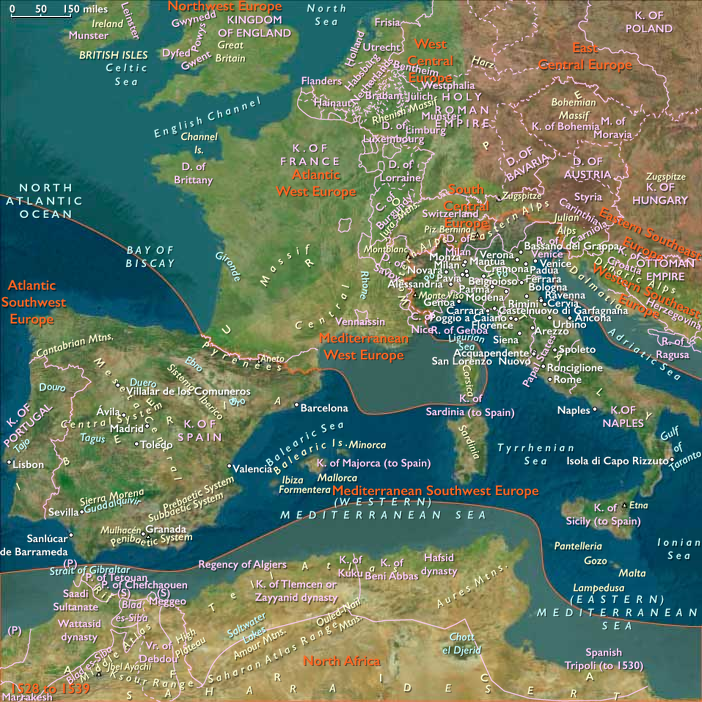
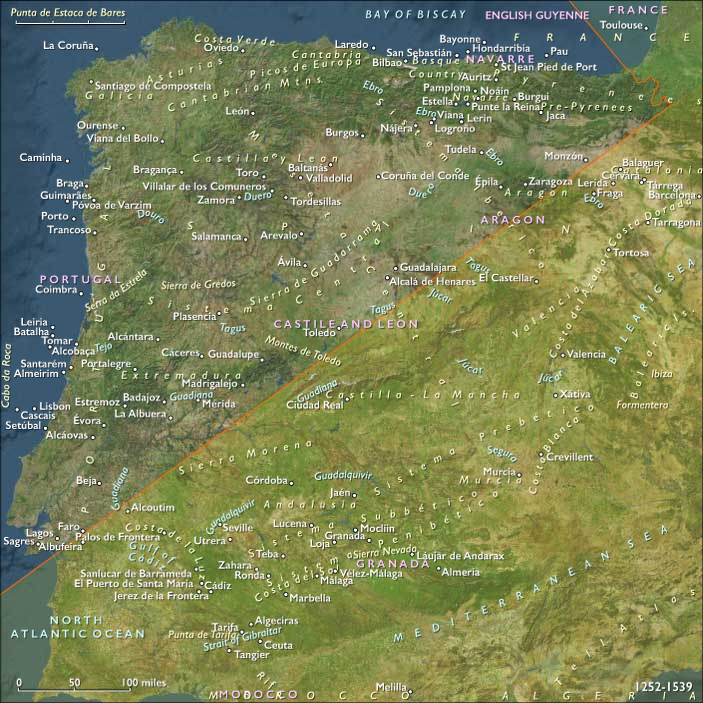
The subregion of Atlantic Southwest Europe includes continental Portugal and Spain’s Atlantic façade from the Gulf of Cádiz to the Bay of Biscay—the Tagus, Sado, Mondego, Douro, and Minho estuaries; Portugal’s Alentejo and Algarve coasts; Spain’s Guadalquivir–Cádiz seaboard; and the Cantabrian–Galician rías (A Coruña, Vigo, Gijón, Santander) and Basque capes (Bilbao–San Sebastián). These shorelines and river corridors bound maritime towns to grain-and-vine interiors and iron-rich uplands.
Climate & Environmental Shifts
The Little Ice Age brought cooler winters, stormier seas, and variable rains:
-
Iberian west & south coasts: more frequent Atlantic gales and bar shifts at estuary mouths (Douro, Tagus, Guadalquivir), alternately silting and scouring channels.
-
Northwest (Galicia–Asturias–Cantabria): heavy rainfall and rough seas; rich upwelling sustained fisheries.
-
Interior hinterlands: periodic droughts hit Alentejo and Andalusian cereal zones; frosts checked vines and olives in bad years; good years yielded ample wheat, wine, and oil.
Subsistence & Settlement
-
Rural belts: Wheat, rye, barley, olives, and vines; cork oak montado in Alentejo; gardens and orchards along river terraces.
-
Fisheries: Sardine and tunny on the Portuguese and Andalusian shelves; cod and whale began to matter for Basque fleets in the early 16th century. Saltworks (Aveiro, Setúbal, Cádiz) underwrote fish preservation and trade.
-
Ports & river towns: Lisbon (Tagus) and Porto (Douro); Seville and Cádiz (Guadalquivir–Cádiz); A Coruña–Vigo (rías), Santander, Bilbao and San Sebastián on the Bay of Biscay; Viana do Castelo, Figueira da Foz, Setúbal along Portugal’s coast. Urban workshops produced sails, rope, barrels, and victuals for ocean-going fleets.
Technology & Material Culture
-
Shipbuilding & navigation: The caravel (lateen rig, shoal-draft) matured on Portugal’s south coast; rounder naos carried freight across oceans. Magnetic compass, sternpost rudder, astrolabe, cross-staff, portolan charts, and toleta de marteloio tables improved blue-water navigation.
-
Maritime institutions: In Portugal, the Order of Christ’s revenues (successor to the Templars) and the crown’s Casa da Guiné and later Casa da Índia in Lisbon centralized Atlantic/Indian trade. Basque iron and timber supported Biscayan yards.
-
Urban & courtly arts: Manueline architecture (rope, coral, armillary motifs) crowned Lisbon/Belém; Mudéjar–Plateresque blended in Andalusia; guild crafts (textiles, leather, ceramics) supplied ships and cities.
Movement & Interaction Corridors
-
Estuary arteries: The Tagus, Douro, and Guadalquivir funneled grain, wine, oil, salt fish, and hides from interior plains to oceanic convoys; return flows brought spices, gold, and slaves by the early 1500s.
-
Atlantic lanes: Portugal’s Volta do Mar looped down the African coast and home via mid-ocean westerlies; Andalusian–Cantabrian coasting linked Biscay iron and salt fish to southern shipyards and markets.
-
Pilgrimage & fairs: Santiago de Compostela drew pilgrims through Galician ports; Lisbon and Seville fairs knit merchants from Italy, Flanders, and the Maghreb.
-
Imperial routes (first phase): After 1498, spice fleets sailed India–Lisbon; after 1492, Castilian fleets used the Guadalquivir–Seville corridor to the Caribbean.
Cultural & Symbolic Expressions
-
Religious life: Cathedrals and confraternities structured urban devotion; seafarers’ brotherhoods honored Our Lady of Good Voyage; shrines dotted headlands and capes (e.g., Cape St. Vincent).
-
Court and chronicle: Portuguese chronicles (Gomes Eanes de Zurara) celebrated exploration; Iberian courts patronized cartography and cosmography.
-
Communal identities: Fisher guilds, ship carpenters, ropewalkers, coopers, and salt-pan communities developed strong customs and saints’ days; Basque whalers forged distinctive sea rituals.
Environmental Adaptation & Resilience
-
Risk-spreading portfolios: Mixed farming (cereal–vine–olive), stock-raising, and salt-fish curing buffered bad harvests; riverine mills and terraces stabilized yields.
-
Harbor works: Jetties and dredging (Lisbon, Porto, Seville) fought bar siltation; salt granaries and fish warehouses bridged lean seasons.
-
Maritime provisioning: Biscayan and Portuguese fleets salted fish and whale meat; victualing yards stockpiled biscuit, wine, oil, and salted pork for oceanic voyages.
Technology & Power Shifts (Conflict Dynamics)
-
Iberian realignments: The Conquest of Ceuta (1415) opened Portugal’s North African gateway and Atlantic thrust; the War of the Castilian Succession (1475–1479)—including the Battle of Toro (1476)—ended with the Treaty of Alcáçovas (1479), fixing early Atlantic spheres between Castile and Portugal. The Treaty of Tordesillas (1494) divided extra-European worlds meridionally.
-
Oceanic breakout: Vasco da Gama’s voyage (1497–1499) linked the Tagus to India; Pedro Álvares Cabral (1500) reached Brazil; Portugal’s Estado da Índia took shape after the Battle of Diu (1509) and the Capture of Malacca (1511), routing Eastern spices to Lisbon.
-
Castile’s Atlantic: From 1492, Columbus’s voyages (out of Palos/Cádiz) opened Caribbean routes; Seville’s Casa de la Contratación (from 1503) regulated fleets.
-
Privateering & defense: Biscay–Galician coasts armed against English, Breton, and Norman raiders; corsair warfare flickered in the Bay of Biscay and off the Algarve.
Transition
By 1539 CE, Atlantic Southwest Europe had transformed from a cluster of estuarine towns into the launchpad of two oceanic empires. Lisbon and Seville–Cádiz rose as global entrepôts; Biscayan and Galician ports provisioned fleets and pioneered whaling and Atlantic cod. Inland cereals, vines, and olives still fed the system, but caravel and nao had redrawn horizons—binding Iberian estuaries to Africa, Asia, and the Americas, and setting the stage for a sixteenth century of maritime hegemony and imperial rivalry.
People
- Afonso V of Portugal
- Antonio de Nebrija
- Charles V, Holy Roman Emperor
- Christopher Columbus
- Ferdinand II of Aragon
- Henry IV of Castile
- Isabella I of Castile
- John I of Portugal
- John II of Portugal
- Manuel I of Portugal
- Vasco da Gama
Groups
- Jews
- Islam
- Portuguese people
- Navarre, Kingdom of
- Basque people
- Castillian people
- Christians, Roman Catholic
- Galicians
- Aragón, Kingdom of
- Castile, Crown of
- France, (Valois) Kingdom of
- Portugal, Avizan (Joannine) Kingdom of
- Portuguese Empire
- Inquisition, Spanish
- Moriscos
- Brazil, Colonial
- Spaniards (Latins)
- Navarre, Lower, Kingdom of
- Habsburg Monarchy, or Empire
- Inquisition, Portuguese
Topics
- Reconquista, the
- Interaction with Subsaharan Africa, Early European
- Humanism, Renaissance
- Renaissance Architecture
- Renaissance literature
- Age of Discovery
- Renaissance, Portuguese
- Granada War
- Spanish Golden Age
- Renaissance, Spanish
- Portuguese Conquests in India and the East Indies
- Portuguese Ceylon
- Portuguese Conquest of Goa
Commodoties
Subjects
Regions
Subregions
Related Events
Showing 10 events out of 43406 total
Years: 1396 - 1539
People
- Afonso V of Portugal
- Antonio de Nebrija
- Charles V, Holy Roman Emperor
- Christopher Columbus
- Ferdinand II of Aragon
- Henry IV of Castile
- Isabella I of Castile
- John I of Portugal
- John II of Portugal
- Manuel I of Portugal
- Vasco da Gama
Groups
- Jews
- Islam
- Portuguese people
- Navarre, Kingdom of
- Basque people
- Castillian people
- Christians, Roman Catholic
- Galicians
- Aragón, Kingdom of
- Castile, Crown of
- France, (Valois) Kingdom of
- Portugal, Avizan (Joannine) Kingdom of
- Portuguese Empire
- Inquisition, Spanish
- Moriscos
- Brazil, Colonial
- Spaniards (Latins)
- Navarre, Lower, Kingdom of
- Habsburg Monarchy, or Empire
- Inquisition, Portuguese
Topics
- Reconquista, the
- Interaction with Subsaharan Africa, Early European
- Humanism, Renaissance
- Renaissance Architecture
- Renaissance literature
- Age of Discovery
- Renaissance, Portuguese
- Granada War
- Spanish Golden Age
- Renaissance, Spanish
- Portuguese Conquests in India and the East Indies
- Portuguese Ceylon
- Portuguese Conquest of Goa
Commodoties
Subjects
Regions
Subregions