
Filters:
The Empire's field armies are withdrawn at …
Years: 638 - 638
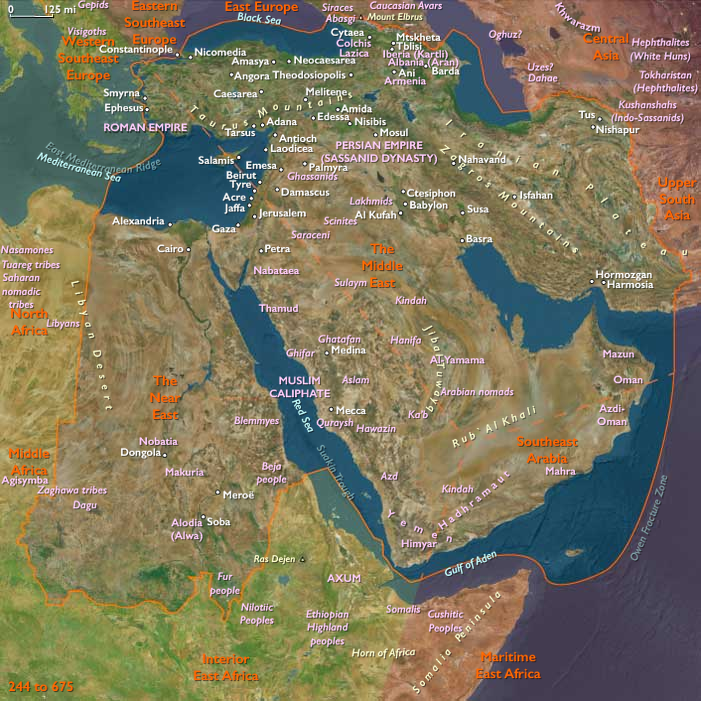
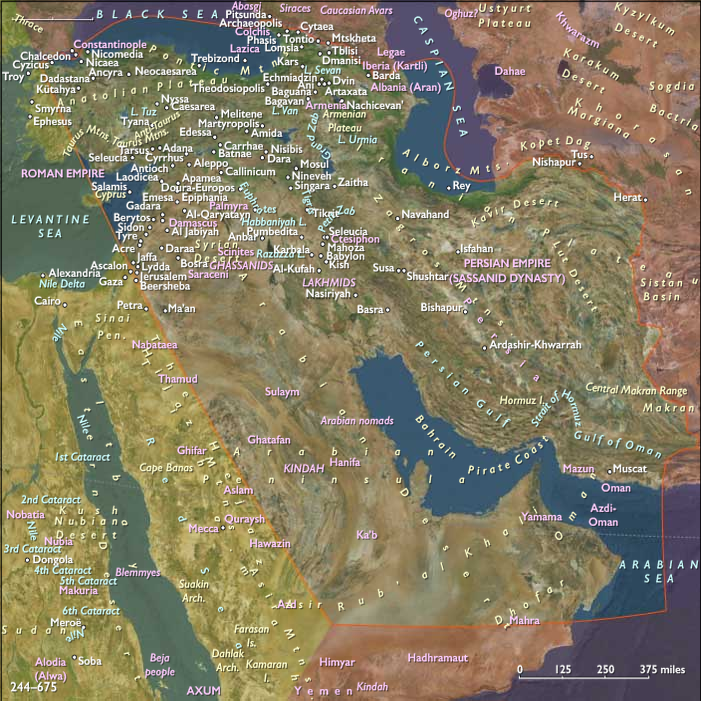
The Empire's field armies are withdrawn at some point in the mid-seventh century, probably in the late 630s, to Anatolia, the last major contiguous territory remaining to the Empire, and assigned to the districts that will become known as the themes.
Heraclius creates a buffer zone or no man's land in the heartland of Asia Minor.
In the mountainous terrain of Anatolia, the imperial forces develop a system of defensive guerrilla warfare.
The strategy is known as ‘shadowing warfare’, as it avoids battle with major Muslim invasions and instead attacks raiding parties on their return when they are laden with booty, captured livestock or prisoners.
Locations
People
- 'Amr ibn al-'As
- Aishah
- Ali
- Heraclius
- Khurrazad
- Khālid ibn al-Walīd
- Muawiyah I
- Theodore
- Umar
- Uthman ibn Affan
- Yazdegerd III
Groups
- Arab people
- Persian people
- Zoroastrians
- Armenian people
- Jews
- Persian Empire, Sassanid, or Sasanid
- Christians, Armenian Apostolic Orthodox
- Christians, Eastern (Diophysite, or “Nestorian”) (Church of the East)
- Christians, Maronite
- Christians, Monophysite
- Christians, Miaphysite (Oriental Orthodox)
- Coptic Orthodox Church of Alexandria
- Christianity, Chalcedonian
- Greeks, Medieval (Byzantines)
- Roman Empire, Eastern: Heraclian dynasty
- Islam
- Rashidun Caliphate
- Christians, Monotheletist
- Opsikian Theme
- Anatolic Theme
- Armeniac Theme
Topics
- Migration Period
- Arab-Byzantine Wars
- Muslim Conquest of Persia
- Byzantine-Muslim War of 633-42
- Muslim Conquest of the Levant
Commodoties
Subjects
- Commerce
- Labor and Service
- Conflict
- Mayhem
- Faith
- Government
- Custom and Law
- Technology
- Movements
- Theology
- Christology
Regions
Subregions
Years: 638 - 638
Locations
People
- 'Amr ibn al-'As
- Aishah
- Ali
- Heraclius
- Khurrazad
- Khālid ibn al-Walīd
- Muawiyah I
- Theodore
- Umar
- Uthman ibn Affan
- Yazdegerd III
Groups
- Arab people
- Persian people
- Zoroastrians
- Armenian people
- Jews
- Persian Empire, Sassanid, or Sasanid
- Christians, Armenian Apostolic Orthodox
- Christians, Eastern (Diophysite, or “Nestorian”) (Church of the East)
- Christians, Maronite
- Christians, Monophysite
- Christians, Miaphysite (Oriental Orthodox)
- Coptic Orthodox Church of Alexandria
- Christianity, Chalcedonian
- Greeks, Medieval (Byzantines)
- Roman Empire, Eastern: Heraclian dynasty
- Islam
- Rashidun Caliphate
- Christians, Monotheletist
- Opsikian Theme
- Anatolic Theme
- Armeniac Theme
Topics
- Migration Period
- Arab-Byzantine Wars
- Muslim Conquest of Persia
- Byzantine-Muslim War of 633-42
- Muslim Conquest of the Levant
Commodoties
Subjects
- Commerce
- Labor and Service
- Conflict
- Mayhem
- Faith
- Government
- Custom and Law
- Technology
- Movements
- Theology
- Christology
Regions
Subregions