
The empire of the Rouran (also spelled …
Years: 552 - 552
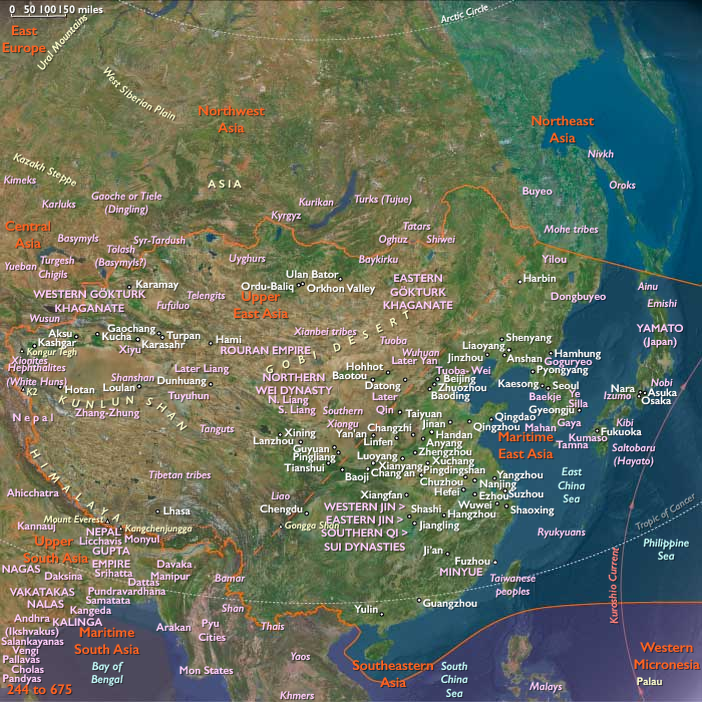
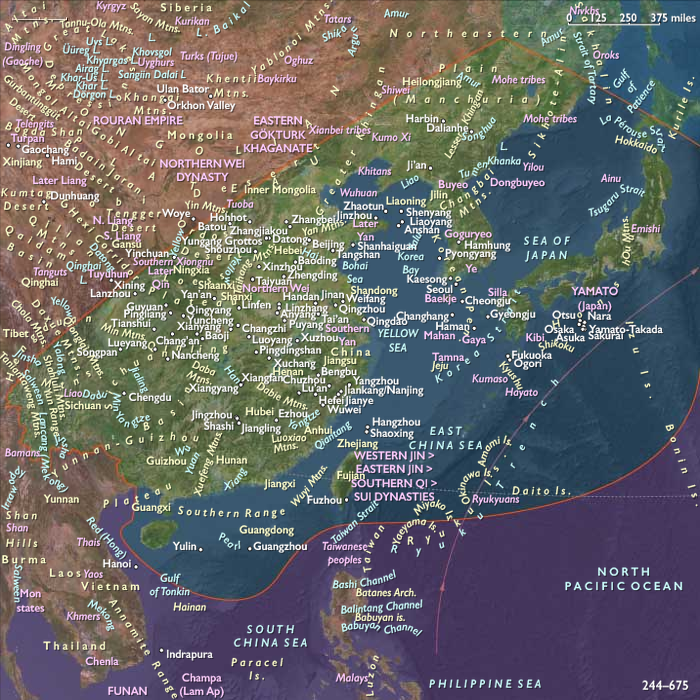
The empire of the Rouran (also spelled Juan-Juan, Jwen-jwen, Jou-jan, Jeu-jen, or Geougen, and believed by scholars to be Mongols or Mongol-speaking peoples), encompasses a wide territorial stretch north of China from Manchuria to Turkistan.
Allied to the Hephthalites, the Rouran have engaged in continuous conflict with northern China’s Wei dynasty.
Little is known of the Rouran ruling elite, which the Book of Wei cited as an offshoot of the Xianbei.
The Rouran had subdued modern regions of Xinjiang, Mongolia, Central Asia, and parts of Siberia and Manchuria from the late fourth century.
Their frequent interventions and invasions had profoundly affected neighboring countries.
Within the Rouran confederation is a Turkic tribe noted in Chinese annals as the Tujue (Göktürks).
After a marriage proposal to the Rouran is rebuffed, the Tujue join with the Western Wei, successor state to the Northern Wei, and revolt against the Rouran.
In 552 (February 11 – March 10, 552), Tujue leader Bumin, of the Ashina clan, defeats the Rouran Khan Anagui north of Huaihuang (in the region administered by present-day Zhangjiakou, Hebei).
Locations
People
Groups
- Xianbei
- Chinese (Han) people
- Rouran Khaganate
- Hephthalite Empire
- Avars, Eurasian
- Western Wei, Empire of
- Northern Qi, Empire of
- Göktürks (First Khaganate)
Topics
Commodoties
Subjects
Regions
Subregions
Related Events
Showing 10 events out of 57601 total
Years: 552 - 552
Locations
People
Groups
- Xianbei
- Chinese (Han) people
- Rouran Khaganate
- Hephthalite Empire
- Avars, Eurasian
- Western Wei, Empire of
- Northern Qi, Empire of
- Göktürks (First Khaganate)
Topics
Commodoties
Subjects
Regions
Subregions