
The Mongols burst forth suddenly from the …
Years: 1240 - 1251
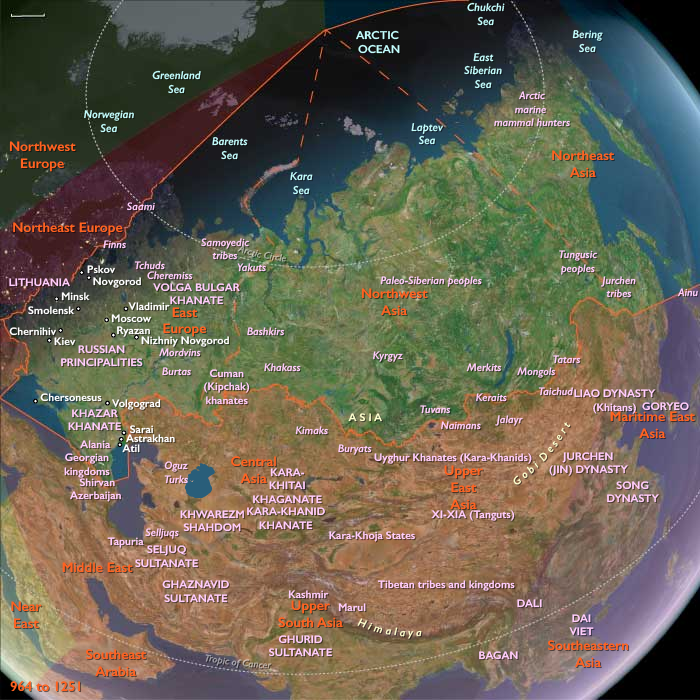
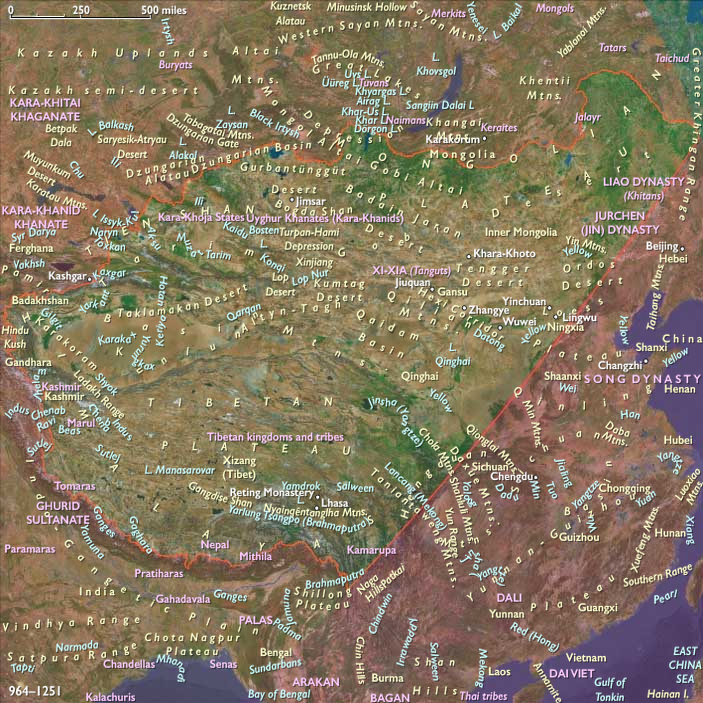
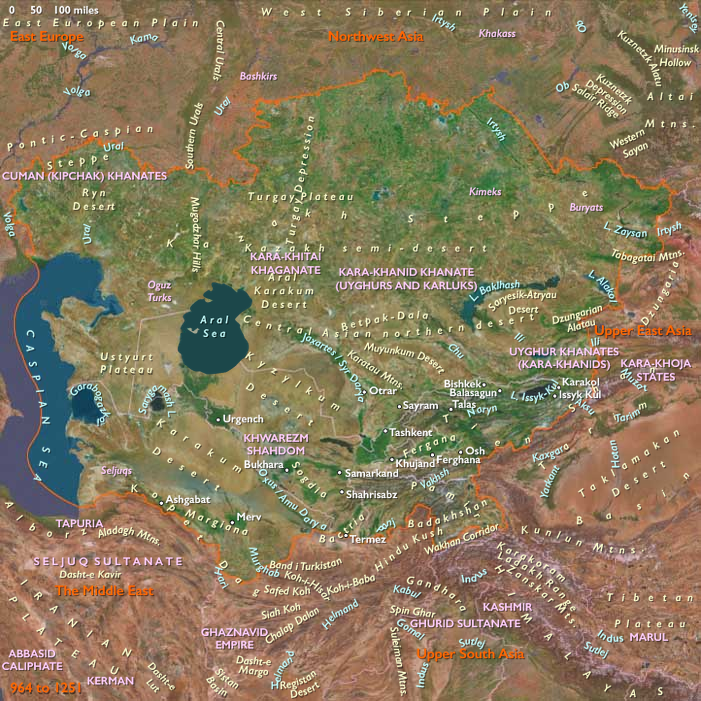
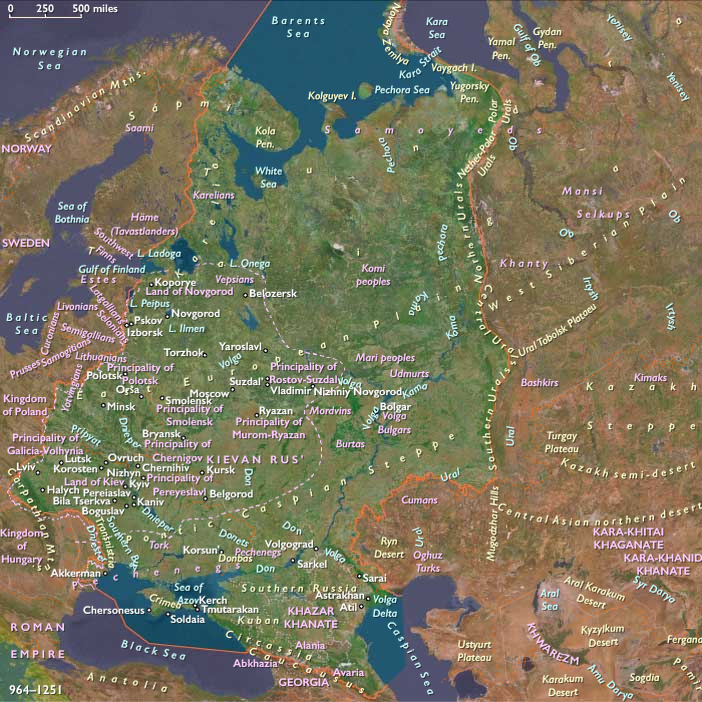
The Mongols burst forth suddenly from the Eurasian Steppe.
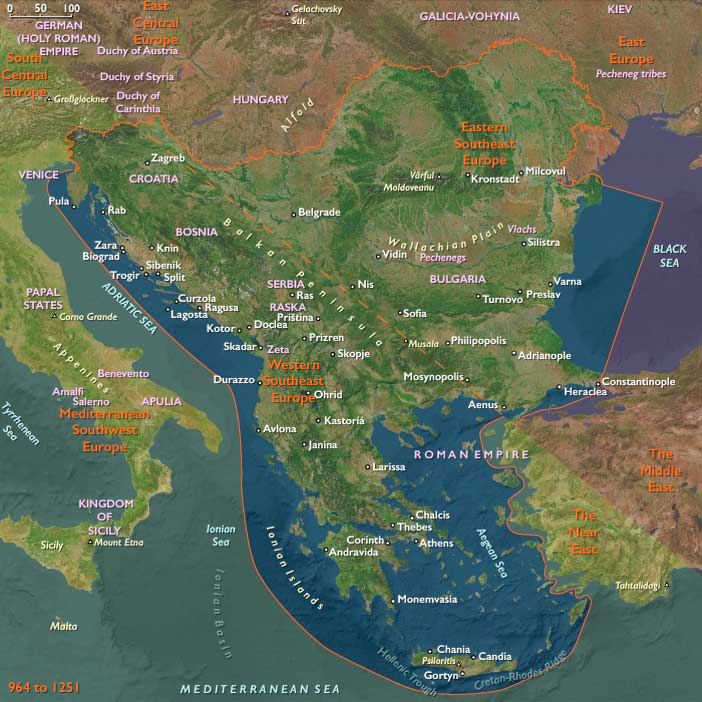
The Empire of Nicaea, aided by the Mongol invasion, reduces both the Latin Empire and the Bulgarian Empire to the status of pawns.
The Sultanate of Rüm and of Seljuq power, fatally weakened by their war against the Khwarezm-Shah dynasty of Iran, also disintegrates, with the Mongols as agent.
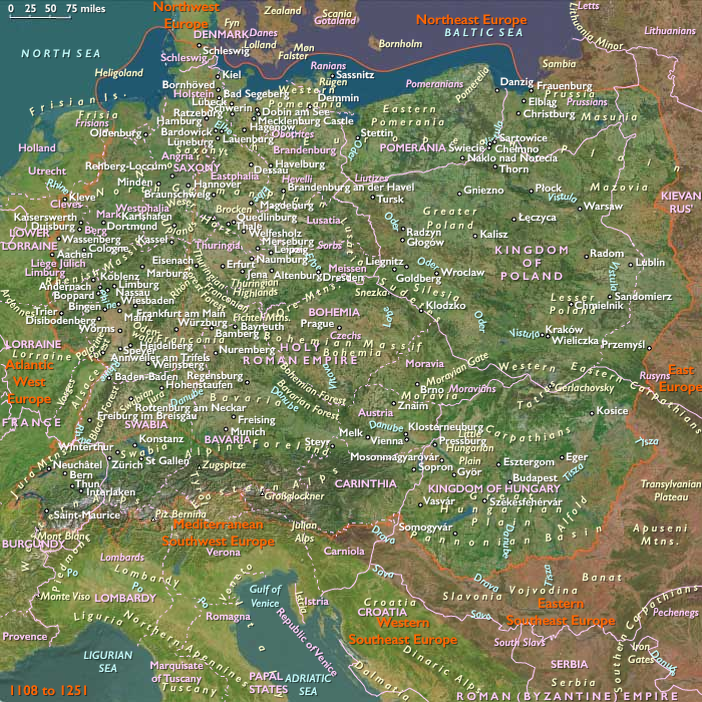
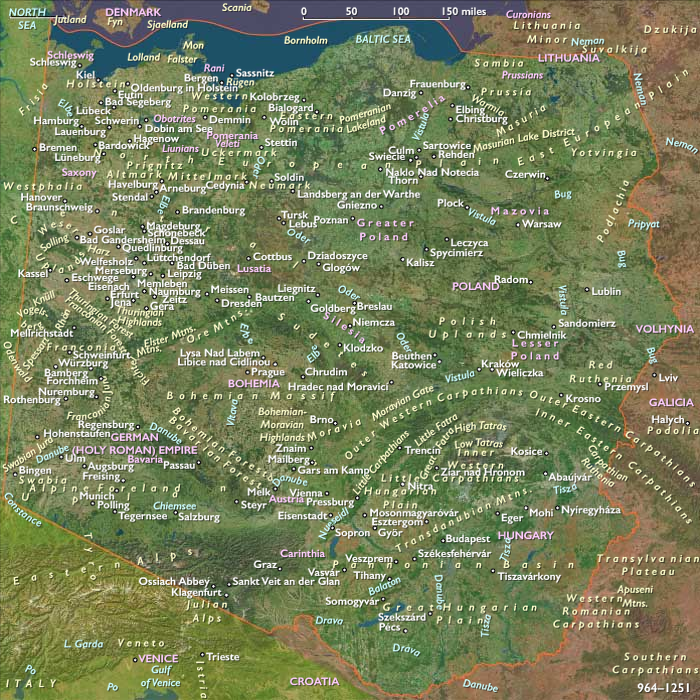
The Mongol invasion of Europe in the thirteenth century involves the destruction of East Slavic principalities, such as Kiev and Vladimir, the invasion of the Kingdom of Hungary (in the Battle of Mohi) and the further fragmentation of Poland (in the Battle of Legnica).
The operations are masterminded by General Subutai and commanded by Batu Khan and Kadan, both grandsons of Genghis Khan.
Many of the conquered territories will become part of the Golden Horde empire.
Historians regard the Mongol raids and invasions as some of the deadliest conflicts in human history up through this period.
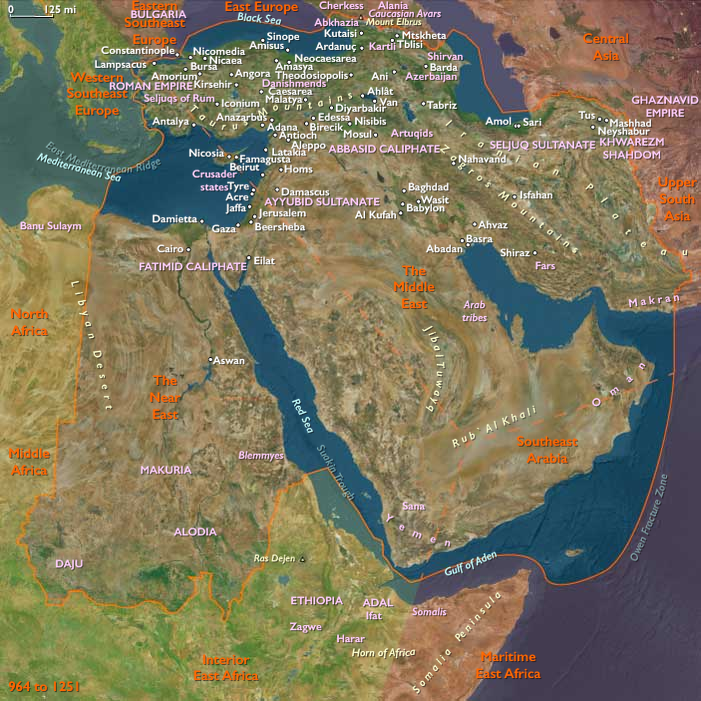
The power map of the southern and eastern Mediterranean basin becomes divided among four main dominions: Mamluk Egypt, Ayyubid Syria, the Franks of Acre and Syrian Christian beachheads, and the Levantine Christian state of Cilician Armenia.
The Mongols by 1241 have their armies riding westwards as far as the River Oder and the northeastern shore of the Adriatic, and during the Battle of Fariskur they are penetrating deep into all adjoining regions.
The Western Christians and the Cilician Armenians hope to have a grand alliance with the Mongols against the Islamic World.
The Cilician Armenians in 1247 submit to Mongol suzerainty.
Pope Innocent IV, who has fully supported the Seventh Crusade against Egypt, had in the previous year sent his Franciscan emissary Giovanni da Pian del Carpine to the Great Khan of the Mongols in Karakoram to seek an alliance against the Muslims.
He is disappointed by Güyük Khan, who tells him that he and the kings of Europe should submit to the Mongols.
People
Groups
- Armenian people
- Khwarezm
- Hungarian people
- Slavs, West
- Slavs, East
- Islam
- Muslims, Sunni
- Kievan Rus', or Kiev, Great Principality of
- Poles (West Slavs)
- Hungary, Kingdom of
- Christians, Roman Catholic
- Rûm, Sultanate of
- Jerusalem, Latin Kingdom of
- Mongols
- Poland during the period of fragmentation, Kingdom of
- Vladimir-Suzdal, Great Principality of
- Bulgarian Empire (Second), or Empire of Vlachs and Bulgars
- Teutonic Knights of Acre (House of the Hospitalers of Saint Mary of the Teutons in Jerusalem)
- Armenian Kingdom of Cilicia, or Little Armenia
- Nicaea, Empire of
- Latin Empire of Constantinople (“Romania”)
- Mongol Empire
- Golden Horde, Khanate of the (Mongol Khanate)
- Hungary, Kingdom of
- Egypt and Syria, Mamluk Bahri Sultanate of
Topics
- Crusades, The
- Mongol Invasion of Europe
- Mongol Invasion of Poland
- Mohi, Battle of
- Crusade, Seventh
- Fariskur, Battle of
Commodoties
Subjects
Regions
Subregions
- Upper East Asia
- Central Asia
- East Europe
- East Central Europe
- Eastern Southeast Europe
- Middle East
- Near East
- Western Southeast Europe
Years: 1240 - 1251
People
Groups
- Armenian people
- Khwarezm
- Hungarian people
- Slavs, West
- Slavs, East
- Islam
- Muslims, Sunni
- Kievan Rus', or Kiev, Great Principality of
- Poles (West Slavs)
- Hungary, Kingdom of
- Christians, Roman Catholic
- Rûm, Sultanate of
- Jerusalem, Latin Kingdom of
- Mongols
- Poland during the period of fragmentation, Kingdom of
- Vladimir-Suzdal, Great Principality of
- Bulgarian Empire (Second), or Empire of Vlachs and Bulgars
- Teutonic Knights of Acre (House of the Hospitalers of Saint Mary of the Teutons in Jerusalem)
- Armenian Kingdom of Cilicia, or Little Armenia
- Nicaea, Empire of
- Latin Empire of Constantinople (“Romania”)
- Mongol Empire
- Golden Horde, Khanate of the (Mongol Khanate)
- Hungary, Kingdom of
- Egypt and Syria, Mamluk Bahri Sultanate of
Topics
- Crusades, The
- Mongol Invasion of Europe
- Mongol Invasion of Poland
- Mohi, Battle of
- Crusade, Seventh
- Fariskur, Battle of
Commodoties
Subjects
Regions
Subregions
- Upper East Asia
- Central Asia
- East Europe
- East Central Europe
- Eastern Southeast Europe
- Middle East
- Near East
- Western Southeast Europe