The Treaty of …

Years: 870 - 870

The Treaty of Meerssen (870): The Final Partition of Lotharingia

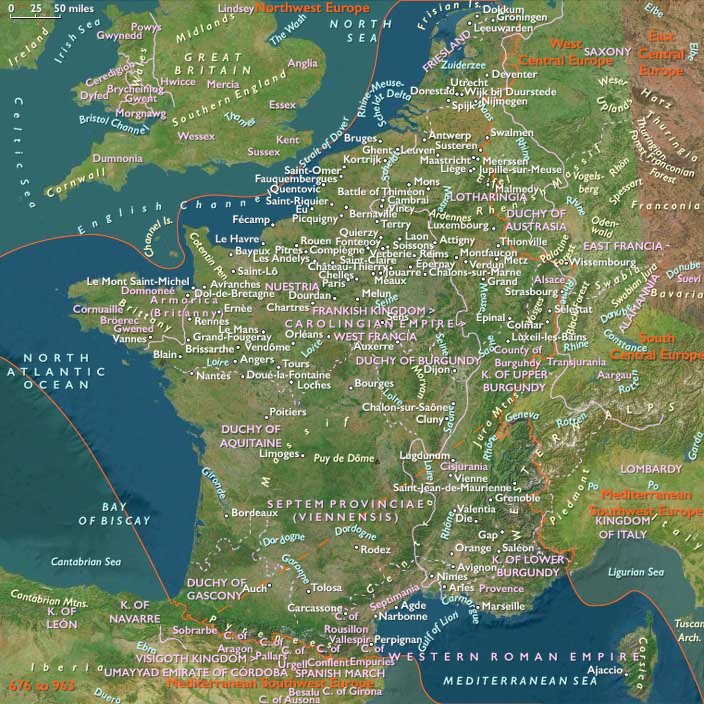
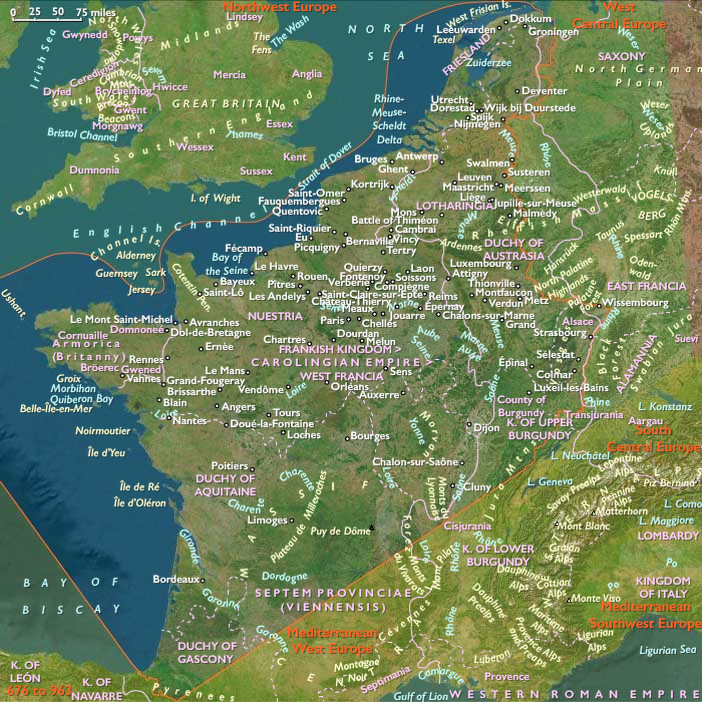
Following the death of Lothair II on August 8, 869, the fate of his kingdom, Lotharingia, becomes a matter of contention among the remaining Carolingian rulers. Although Lothair’s elder brother, Emperor Louis II of Italy, was his rightful heir, he is engaged in a military campaign against the Emirate of Bari and unable to defend his claim. Seizing the opportunity, Louis the German (East Francia) and Charles the Bald (West Francia) divide Lotharingia between themselves, formalizing the Treaty of Meerssen in 870.

Background: The Fragmentation of Middle Francia

  • 843 - Treaty of Verdun: Lothair I receives Middle Francia, a long, narrow kingdom stretching from the North Sea to Italy.
  • 855 - Treaty of Prüm: After Lothair I’s death, Middle Francia is divided among his three sons:
    • Louis II → Italy (Imperial Crown).
    • Lothair II → Lotharingia (Austrasia, Frisia, and Upper Burgundy).
    • Charles of Provence → Lower Burgundy and Provence.
  • 863 - Death of Charles of Provence: His lands are split between Lothair II and Louis II, further complicating territorial claims.
  • 869 - Death of Lothair II: Lotharingia becomes a target for division between his uncles Louis the German and Charles the Bald, excluding Emperor Louis II from any inheritance.

The Partition of Lotharingia (870)

The Treaty of Meerssen effectively replaces the Treaty of Verdun (843) by dividing the northern half of Middle Francia between East and West Francia:

  • Charles the Bald (West Francia) receives:

    • The western part of Lower Burgundy, including Lyon, Vienne, Vivarais, and Uzès.
    • A small portion of Upper Burgundy, including Portois and Varais (Besançon), securing a route toward Italy.
    • The western half of Lotharingia, forming a new Frankish frontier against Viking incursions.
  • Louis the German (East Francia) receives:

    • Most of Austrasia, including the key cities of Aachen and Metz.
    • Most of Frisia, though large portions remain under Viking control and are only claimed on paper.
    • Most of Upper Burgundy, joining it with Louis the Younger’s subkingdom of eastern Austrasia.
    • Preventing Charles the Bald from reclaiming his family’s ancestral holdings in Lotharingia, reinforcing East Frankish dominance in the region.
  • Lothair II’s illegitimate son, Hugh, is granted the Duchy of Alsace, but his claim to power remains tenuous.

Impact of the Treaty of Meerssen

  • The dissolution of Lotharingia → The treaty permanently fragments Lotharingia, making it a contested region between East and West Francia for centuries.
  • Exclusion of Emperor Louis II → The fact that Louis II of Italy receives no part of his brother’s landsweakens his imperial claim, ensuring that Italy remains separate from Francia.
  • Strengthening of East Francia → With the addition of Austrasia, Frisia, and Upper Burgundy, Louis the German’s realm grows significantly, consolidating the foundations of what will become Germany.
  • Charles the Bald’s expansion into Burgundy → Although weaker than his brother, Charles now secures an Alpine route to Italy, a move that will later aid his imperial ambitions.
  • Rise of Regional Power Struggles → The Carolingian rulers’ inability to maintain unity leads to increased feudal fragmentation, paving the way for the rise of independent duchies and local rulers.

Conclusion: The Carolingian Empire Moves Toward Disintegration

The Treaty of Meerssen (870) marks the last major territorial division of the Carolingian Empire, further weakening its imperial structure. With Lotharingia divided and contested, East and West Francia become separate political entities, setting the stage for the eventual formation of medieval France and Germany. Though nominally still part of the Carolingian realm, the empire continues to unravel, as Viking invasions, feudal decentralization, and dynastic disputes erode central authority.

Related Events

Filter results