
The Empire, following the rapid Muslim conquests …
Years: 860 - 860
The Empire, following the rapid Muslim conquests of the seventh century, had found itself confined to Asia Minor, the southern coasts of the Balkans, and parts of Italy.
As Constantinople remains the Caliphate's major infidel enemy, Arab raids (razzias) into Asia Minor continue throughout the eighth and ninth centuries.
These expeditions, launched from bases in the Arab frontier zone on an almost annual basis, have over time cquired a quasi-ritualized character.
The imperial forces during this period have generally been on the defensive, and have suffered some catastrophic defeats such as the razing in 838 of Amorium, the home city of the Empire’s reigning dynasty.
With the waning of the Abbasid Caliphate's power after 842 and the rise of semi-independent emirates along the Empire’s eastern frontier, however, Constantinople is increasingly able to assert its own power.
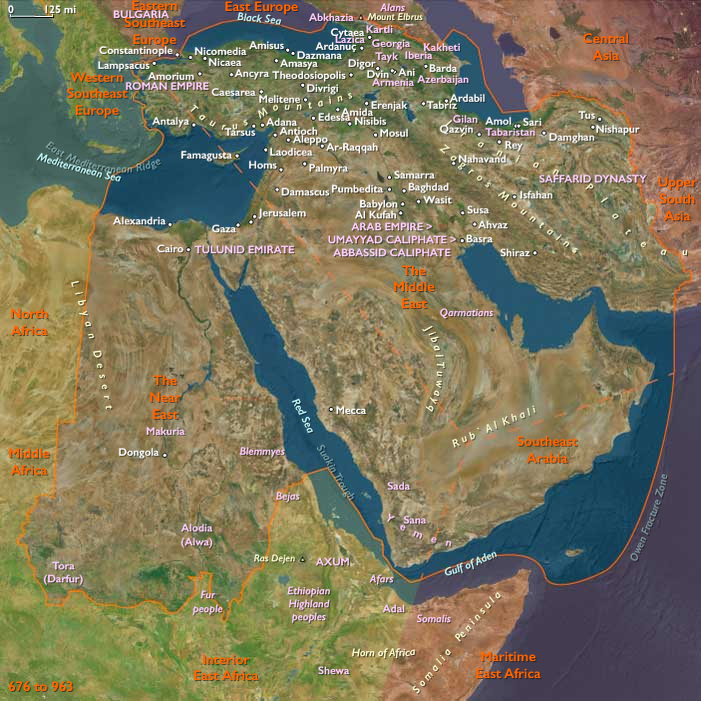
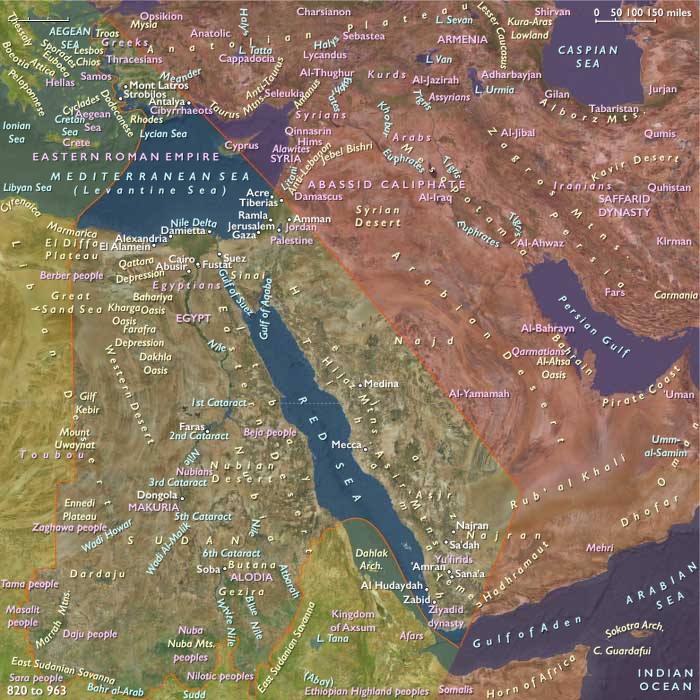
The most persistent threats to the Empire in the 850s had been the emirate of Melitene (Malatya) under Umar al-Aqta, the emirate of Tarsus under Ali ibn Yahya ("Ali the Armenian"), the emirate of Qaliqala (Theodosiopolis, modern Erzurum) and the Paulicians of Tephrike under their leader Karbeas.
Melitene, in particular, is a major threat to the Empire as its location on the western side of the Anti-Taurus range allows direct access to the Anatolian plateau.
An indication of the threat posed by these states comes in 860, when Umar and Karbeas raid deep into Asia Minor and return with much plunder; they are followed shortly after by another raid by the forces of Tarsus under Ali, while a naval attack from Syria sacks the major imperial naval base at Attaleia.
Locations
People
Groups
- Arab people
- Greeks, Medieval (Byzantines)
- Paulicians
- Cibyrrhaeots, Theme of the
- Roman Empire, Eastern: Phrygian or Armorian dynasty
- Abbasid Caliphate (Samarra)
Topics
Commodoties
Subjects
Regions
Subregions
Related Events
Showing 1 events out of 1 total
Years: 860 - 860
Locations
People
Groups
- Arab people
- Greeks, Medieval (Byzantines)
- Paulicians
- Cibyrrhaeots, Theme of the
- Roman Empire, Eastern: Phrygian or Armorian dynasty
- Abbasid Caliphate (Samarra)
Topics
Commodoties
Subjects
Regions
Subregions