
The Abdication of King Bermudo I After …
Years: 791 - 791
The Abdication of King Bermudo I After the Battle of Burbia (791 CE)
In his attempt to annex the Kingdom of Asturias, the Umayyad emir organizes two military campaigns:
- One army is tasked with conquering Galicia.
- The other is sent to subdue the western Basque lands.
The Battle of Burbia and Bermudo’s Defeat
Forced to defend against the Arab-Berber invasion of Álava and Galicia, King Bermudo I leads his forces into battle but suffers defeat at the Battle of the Burbia River—likely in El Bierzo—in 791 CE.
While Christian sources do not explicitly name his opponents, the battle appears to be the first major engagement in a series of aggressive Umayyad campaigns against Asturias in the 790s. Muslim chronicles, including Ibn al-Athir and al-Maqqarī, identify the Umayyad commander at Burbia as Yūsuf ibn Bukht.
Bermudo’s Abdication and Legacy
Following his defeat, Bermudo abdicates the throne. The Chronicle of Alfonso III states that he did so voluntarily, "because he was (or remembered he was) a deacon." However, it is also possible that he was forced to abdicate, as was common among Visigothic kings who demonstrated military inadequacy.
Despite his short reign, Bermudo is remembered as a merciful and pious ruler, described in the Chronicle of Albeldaas a "generous and illustrious man."
Succession and Later Life
After Bermudo’s abdication, he is succeeded by Alfonso II. He leaves behind a son, Ramiro I, who will later reign as King of Asturias.
Bermudo reportedly lives for many years after stepping down, possibly as a monk, and maintains good relations with his successor, Alfonso II.
Locations
People
Groups
- Arab people
- Berber people (also called Amazigh people or Imazighen, "free men", singular Amazigh)
- Galicia, Kingdom of
- Córdoba, Umayyad Emirate of
- Asturias, Kingdom of
Topics
Commodoties
Subjects
Regions
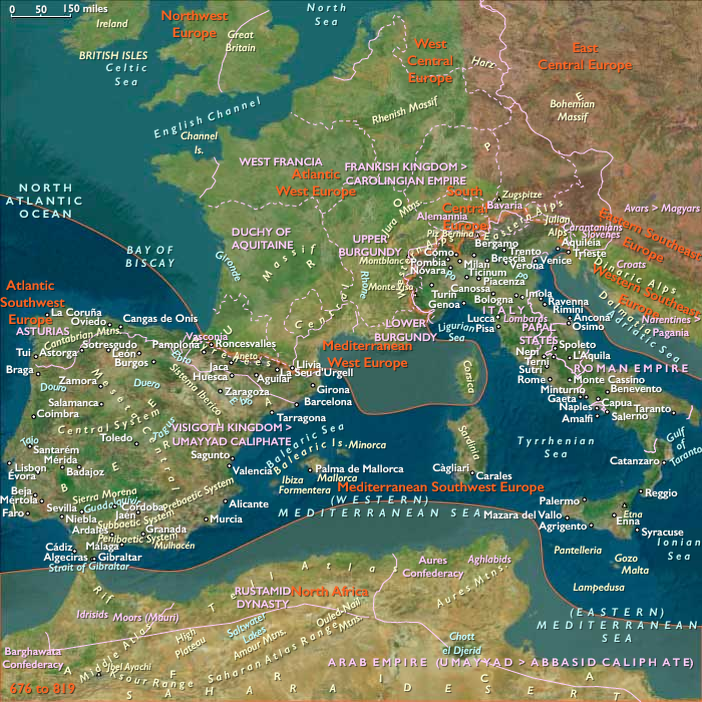
Subregions
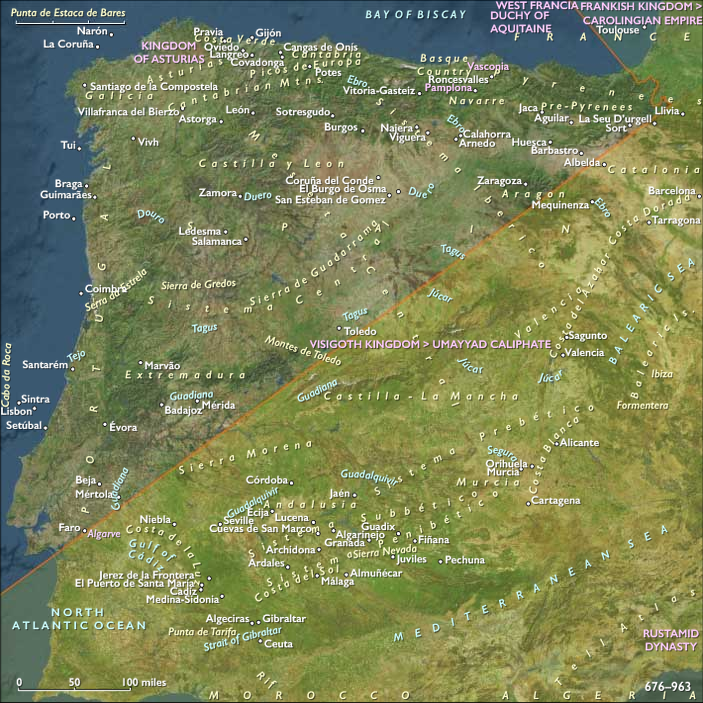
Related Events
Showing 10 events out of 54973 total
Years: 791 - 791
Locations
People
Groups
- Arab people
- Berber people (also called Amazigh people or Imazighen, "free men", singular Amazigh)
- Galicia, Kingdom of
- Córdoba, Umayyad Emirate of
- Asturias, Kingdom of
Topics
Commodoties
Subjects
Regions
Subregions