
The emir, although refusing to recognize the …
Years: 1491 - 1491
The emir, although refusing to recognize the sovereignty of King Ferdinand V and Queen Isabella I of Castile and Aragon, agrees to a truce, which he breaks when he answers a call by his subjects to lead them in defense of their homes.
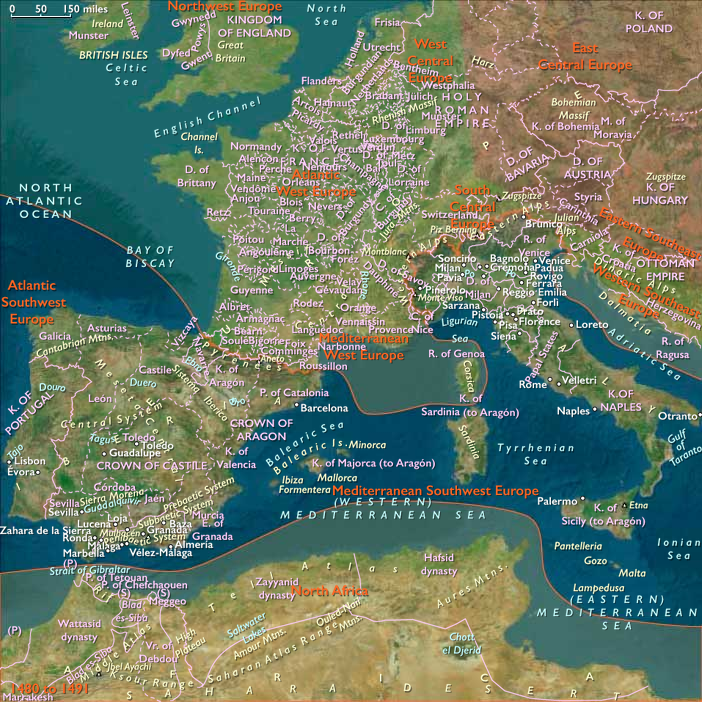
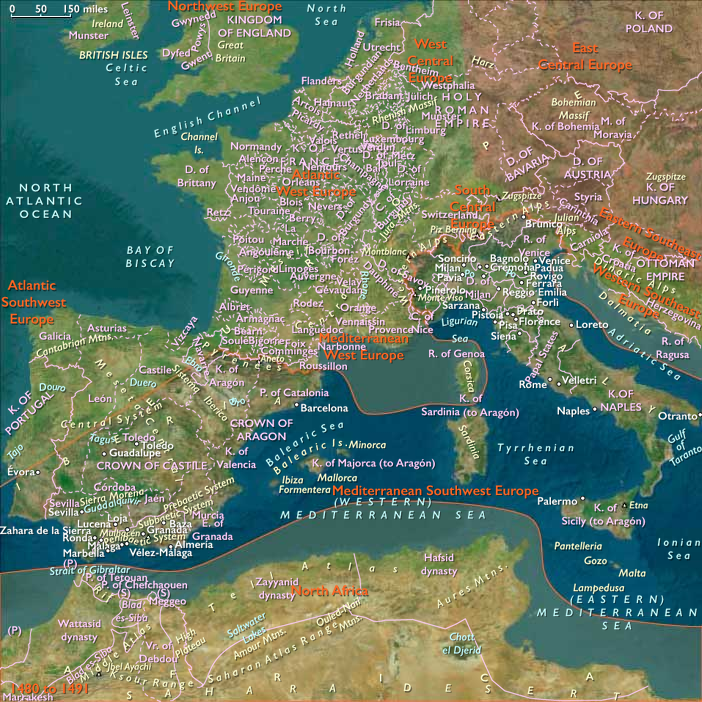
A siege of Granada begins in April 1491.
The besiegers construct a western command post, Santa Fe, that effectively severs Granada’s connection with the outside world.
The situation for the defenders grows progressively dire, as their forces for interfering with the siege dwindle and advisers scheme against each other.
Bribery of important officials is rampant, and at least one of the chief advisers to Boabdil seems to have been working for Castile the entire time.
Superior Christian forces repulse Moorish sorties, eventually driving the defenders to the point of starvation.
After the Battle of Granada, a provisional surrender, the Treaty of Granada, is signed on November 25, 1491, which grants two months to the city.
The reason for the long delay is not so much intransigence on either side, but rather the inability of the Granadan government to coordinate among itself in the midst of the disorder and tumult that grip the city.
After the terms, which prove rather generous to the Muslims, are negotiated, the city capitulates on January 2, 1492.
The besieging Christians sneak troops into the Alhambra that day in case resistance materializes, which it does not.
Granada's resistance has come to its end.
Locations
People
Groups
- Moors
- Islam
- Christians, Roman Catholic
- Aragón, Kingdom of
- Aragon, Crown of
- Castile, Crown of
- Granada, Emirate of, or Nasrid Kingdom of
Topics
Commodoties
Subjects
Regions
Subregions
Years: 1491 - 1491
Locations
People
Groups
- Moors
- Islam
- Christians, Roman Catholic
- Aragón, Kingdom of
- Aragon, Crown of
- Castile, Crown of
- Granada, Emirate of, or Nasrid Kingdom of
Topics
Commodoties
Subjects
Regions
Subregions