
The king's power remains paramount in Hungary …
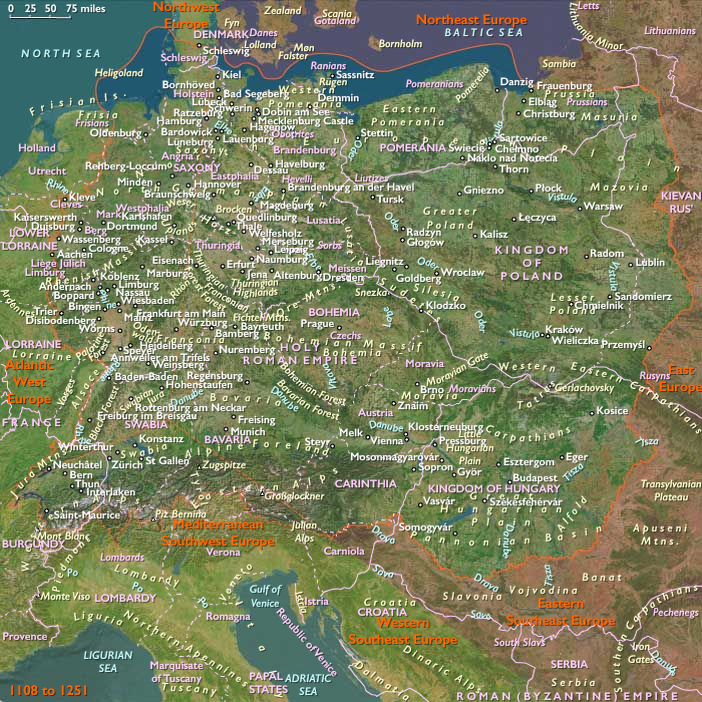
Years: 1108 - 1251
The king's power remains paramount in Hungary until the end of the twelfth century.
He is the largest landowner, and income from the crown lands nearly equals the revenues generated from mines, customs, tolls, and the mint.
In the thirteenth century, however, the social structure changes, and the crown's absolute power begins to wane.
As the crown lands become a less important source of royal revenues, the king finds it expedient to make land grants to nobles to ensure their loyalty.
King Andrew II (1205-35), a profligate spender on foreign military adventures and domestic luxury, makes huge land grants to nobles who fight for him.
These nobles, many of whom are foreign knights, soon make up a class of magnates whose wealth and power far outstrip that of the more numerous, and predominantly Magyar, lesser nobles.
When Andrew tries to meet burgeoning expenses by raising the serfs' taxes, thereby indirectly slashing the lesser nobles' incomes, the lesser nobles rebels.
In 1222 they force Andrew to sign the Golden Bull, which limits the king's power, declares the lesser nobles (all free men not included among the great Barons or magnates) legally equal to the magnates, and gives them the right to resist the king's illegal acts.
The lesser nobles also begin to present Andrew with grievances, a practice that evolves into the institution of the parliament, or Diet.
Locations
People
Groups
- Transylvania, region of
- Germans
- Hungarian people
- Slavs, West
- Slavonia region
- Croats (South Slavs)
- Hungary, Principality of
- Croatia, Kingdom of
- Slovaks (West Slavs)
- Hungary, Kingdom of
- Croatia, Kingdom of
- Saxons, Transylvanian
- Székelys
Topics
Commodoties
Subjects
Regions
Subregions
Related Events
Showing 2 events out of 2 total
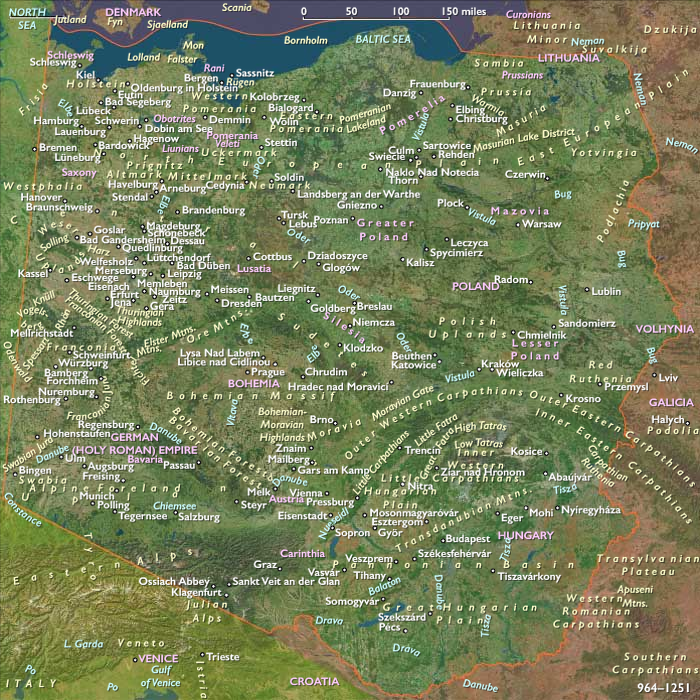
Years: 1108 - 1251
Locations
People
Groups
- Transylvania, region of
- Germans
- Hungarian people
- Slavs, West
- Slavonia region
- Croats (South Slavs)
- Hungary, Principality of
- Croatia, Kingdom of
- Slovaks (West Slavs)
- Hungary, Kingdom of
- Croatia, Kingdom of
- Saxons, Transylvanian
- Székelys
Topics
Commodoties
Subjects
Regions
Subregions