
Filters:
The economic success of Carthage and its …
Years: 621BCE - 478BCE
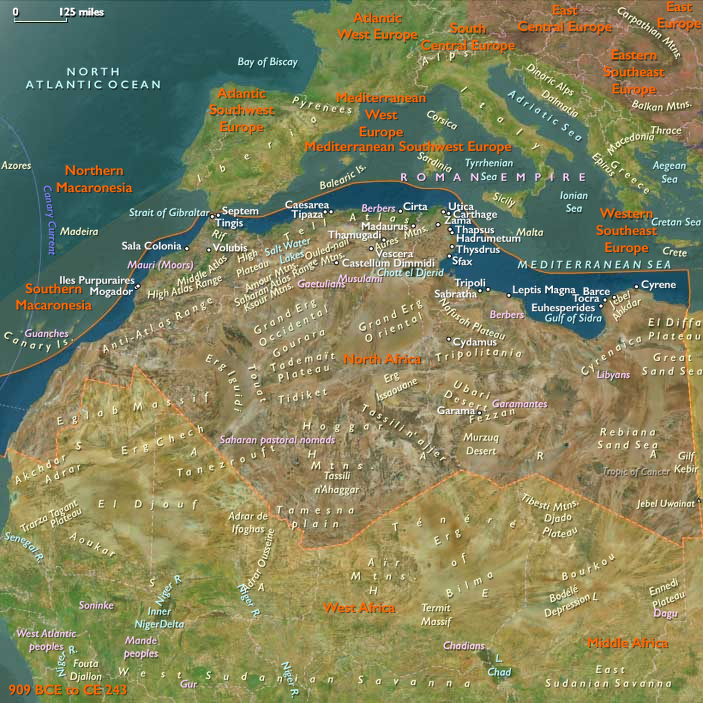
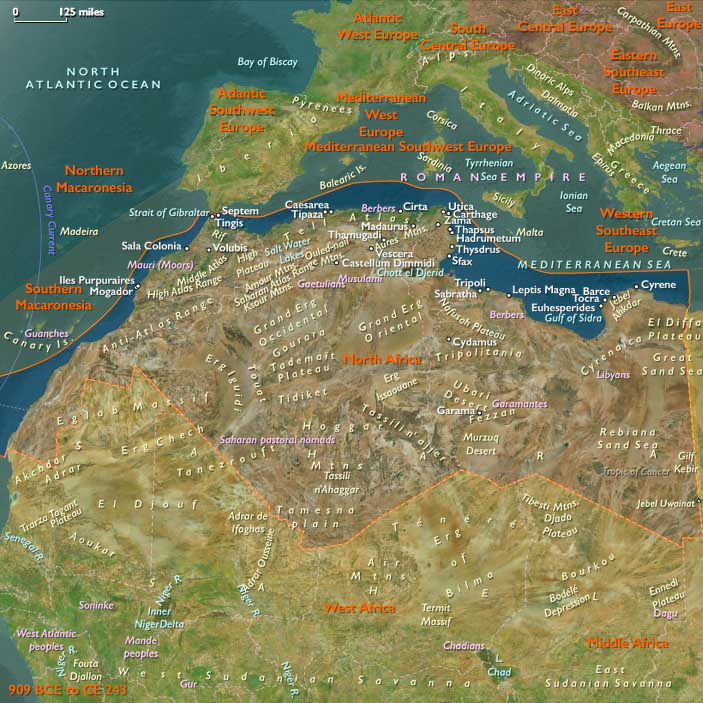
The economic success of Carthage and its dependence on shipping to conduct most of its trade lead to the creation of a powerful Carthaginian navy to discourage both pirates and rival nations.
Their naval strength and experience is an inheritance from the Phoenicians, but they have increased it because, unlike the Phoenicians, the Punics, as the Romans call the Carthaginians, do not want to rely on a foreign nation's aid.
This, coupled with its success and growing hegemony, brings Carthage into increasing conflict with the Greeks, the other major power contending for control of the central Mediterranean.
Groups
- Phoenicians
- Medes
- Ionians
- Dorians
- Aeolians
- Hallstatt culture
- Cimmerians
- Greece, classical
- Persian people
- Assyrian people
- Carthage, Kingdom of
- Scythians, or Sakas
- Chinese Kingdom, Zhou, or Chou, Eastern Dynasty
- Roman Kingdom
- Assyria, (New) Kingdom of (Neo-Assyrian Empire)
- Etruria
- Neo-Babylonian, or Chaldean, Empire
- Medes, Kingdom of the
- Roman Republic
Topics
- Younger Subboreal Period
- Iron Age, Near and Middle East
- Iron Age Europe
- Greek colonization
- Iron Age Cold Epoch
- Spring and Autumn Period in China
- Classical antiquity
- Assyrian Wars of c. 745-609 BCE
- Iron Age China
- Babylonian Captivity
- Roman-Etruscan Wars, Early
- Persian Conquests of 559-509 BCE
- Pre-Roman Iron Age of Northern Europe
- Greco-Persian Wars, Early
- Sicilian Wars, or Carthaginian-Syracusan Wars
Commodoties
- Weapons
- Water
- Domestic animals
- Grains and produce
- Ceramics
- Strategic metals
- Beer, wine, and spirits
- Land
- Money
Subjects
- Commerce
- Watercraft
- Engineering
- Environment
- Labor and Service
- Conflict
- Games and Sports
- Faith
- Government
- Technology
- Archaeology
- Movements
- Chemistry
- Piracy
- Economics
Regions
Subregions
Years: 621BCE - 478BCE
Groups
- Phoenicians
- Medes
- Ionians
- Dorians
- Aeolians
- Hallstatt culture
- Cimmerians
- Greece, classical
- Persian people
- Assyrian people
- Carthage, Kingdom of
- Scythians, or Sakas
- Chinese Kingdom, Zhou, or Chou, Eastern Dynasty
- Roman Kingdom
- Assyria, (New) Kingdom of (Neo-Assyrian Empire)
- Etruria
- Neo-Babylonian, or Chaldean, Empire
- Medes, Kingdom of the
- Roman Republic
Topics
- Younger Subboreal Period
- Iron Age, Near and Middle East
- Iron Age Europe
- Greek colonization
- Iron Age Cold Epoch
- Spring and Autumn Period in China
- Classical antiquity
- Assyrian Wars of c. 745-609 BCE
- Iron Age China
- Babylonian Captivity
- Roman-Etruscan Wars, Early
- Persian Conquests of 559-509 BCE
- Pre-Roman Iron Age of Northern Europe
- Greco-Persian Wars, Early
- Sicilian Wars, or Carthaginian-Syracusan Wars
Commodoties
- Weapons
- Water
- Domestic animals
- Grains and produce
- Ceramics
- Strategic metals
- Beer, wine, and spirits
- Land
- Money
Subjects
- Commerce
- Watercraft
- Engineering
- Environment
- Labor and Service
- Conflict
- Games and Sports
- Faith
- Government
- Technology
- Archaeology
- Movements
- Chemistry
- Piracy
- Economics
Regions
Subregions