
The early Neolithic human occupation of Mesopotamia …
Years: 9549BCE - 7822BCE
The early Neolithic human occupation of Mesopotamia is, like the previous Epipaleolithic period, confined to the foothill zones of the Taurus and Zagros Mountains and the upper reaches of the Tigris and Euphrates valleys.
The Pre-Pottery Neolithic A (PPNA) period (10,000–8700 BCE) sees the introduction of agriculture.
The Natufian culture in Upper Mesopotamia, contemporaneous with the Zarzian in the Zagros, is attested over a much wider region and is characterized by open-air sites that are semi-permanently occupied.
In the Zagros, this period has been excavated at Zawi Chemi, Shanidar, and M'lefaat.
In the area of the Syrian Upper Euphrates, villages of Natufian hunter-gatherers that were occupied since the eleventh millennium BCE have been excavated at Abu Hureyra and Mureybet.
One such village, established about 9000 in southeastern Anatolia on the Turkish-Iranian border, consists of houses made from mud and reeds, with conical roofs and circular stone bases.
It is the first known example of a permanent settlement.
Copper was known to some of the oldest civilizations on record, and has a history of use that is at least 10,000 years old.
Some estimates of copper's discovery place this event around 9000 BCE in the Middle East.
A copper pendant found in what is now northern Iraq dates to 8700 BCE.
Groups
- Mesopotamia
- Natufian culture
- Maglemosian culture
- Pre-Pottery Neolithic A culture
- Jericho, Ancient
- Pre-Pottery Neolithic B culture
Topics
Commodoties
Subjects
Regions
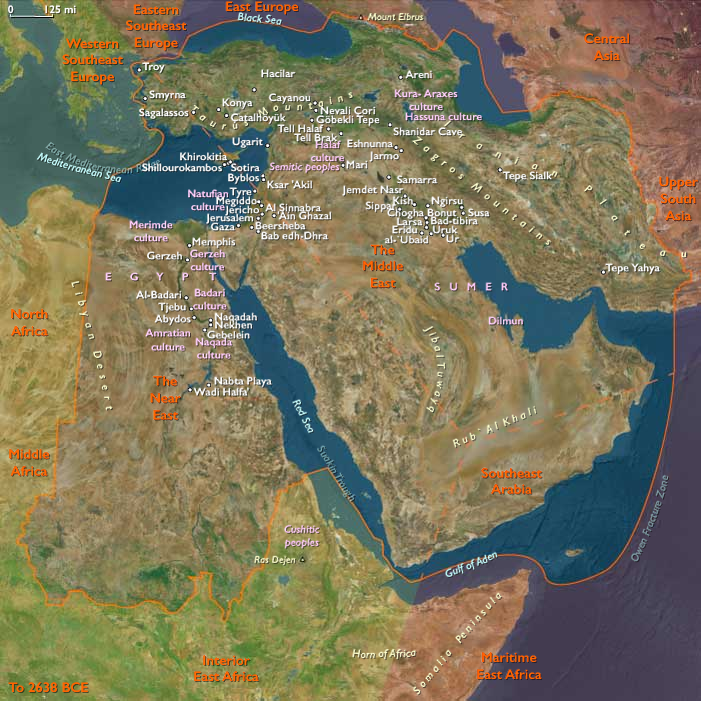
Subregions
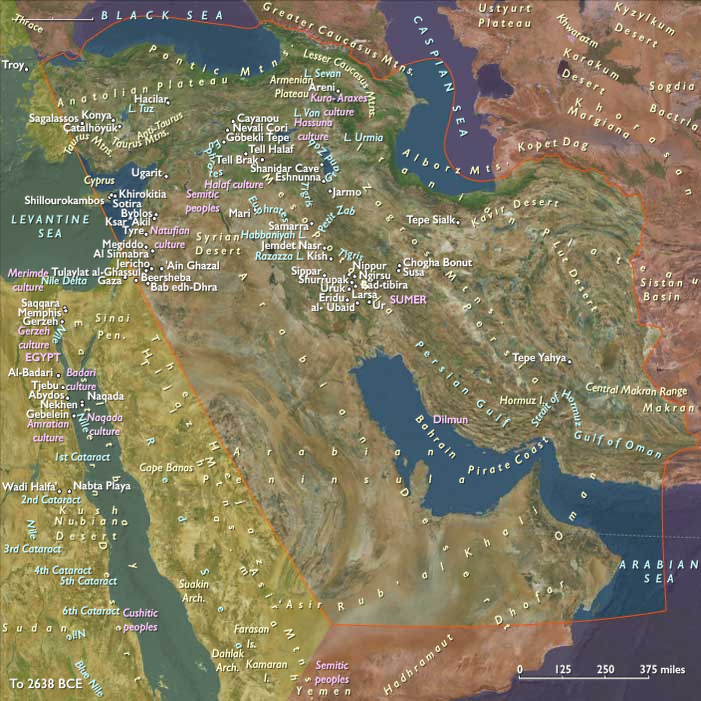
Years: 9549BCE - 7822BCE
Groups
- Mesopotamia
- Natufian culture
- Maglemosian culture
- Pre-Pottery Neolithic A culture
- Jericho, Ancient
- Pre-Pottery Neolithic B culture
Topics
Commodoties
Subjects
Regions
Subregions