
The Lemtuna, one of the Berber groups …
Years: 820 - 975
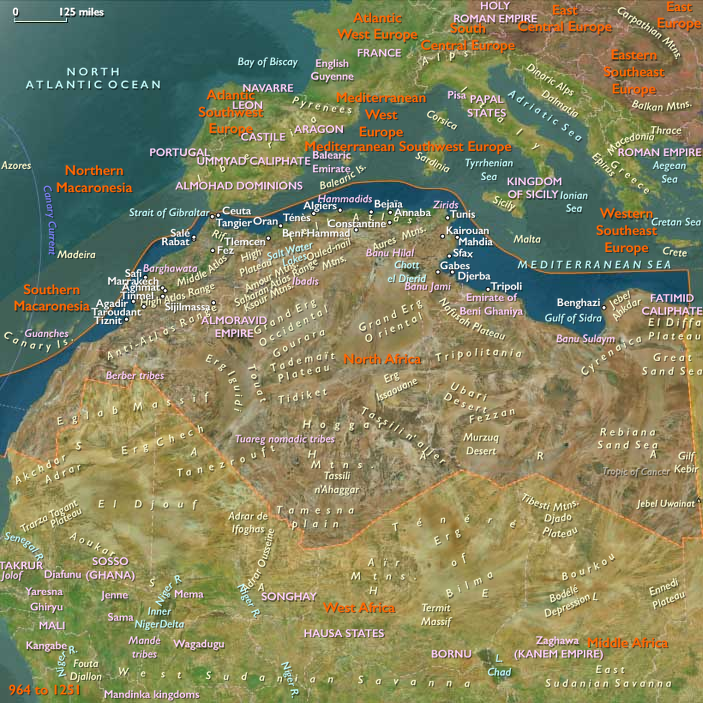
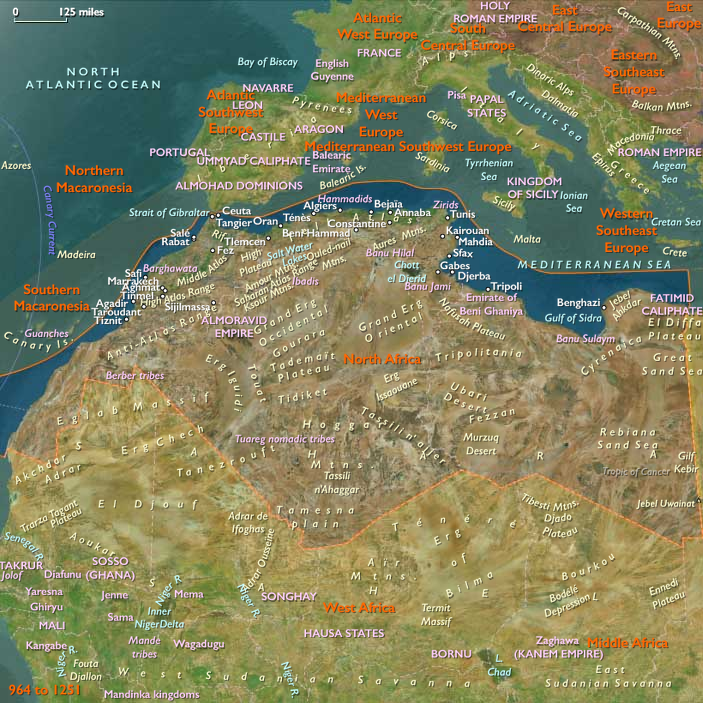
The Lemtuna, one of the Berber groups that had arrived in Mauritania in the eighth century, had attained political dominance in the Adrar and Hodh regions by the ninth century.
Together with two other important Berber groups, the Messufa and the Djodala, they set up the Sanhaja Confederation.
From their capital, Aoudaghast, the Lemtuna control this loose confederation and the western routes of the Saharan caravan trade that had begun to flourish after the introduction of the camel.
At its height, from the eighth to the end of the tenth century, the Sanhaja Confederation is a decentralized polity based on two distinct groups: the nomadic and very independent Berber groups, who maintain their traditional religions, and the Muslim, urban Berber merchants, who conduct the caravan trade.
Although dominated by the Sanhaja merchants, the caravan trade has its northern terminus in the Maghrebi commercial city of Sijilmasa and its southern terminus in Koumbi Saleh, capital of the Ghana Empire.
Later, the southern trade route will end in Timbuktu, capital of the Mali Empire.
Gold, ivory, and slaves are carried north in return for salt (ancient salt mines near Kediet Ij ill in northern Mauritania are still being worked), copper, cloth, and other luxury goods.
Locations
Groups
- Arab people
- Bafour
- Berber people (also called Amazigh people or Imazighen, "free men", singular Amazigh)
- Sanhaja (Berber tribal confederacy)
- Imraguen people
- Islam
- Ghana (Wagadou) Empire
Topics
Commodoties
Subjects
Regions
Subregions
Years: 820 - 975
Locations
Groups
- Arab people
- Bafour
- Berber people (also called Amazigh people or Imazighen, "free men", singular Amazigh)
- Sanhaja (Berber tribal confederacy)
- Imraguen people
- Islam
- Ghana (Wagadou) Empire
Topics
Commodoties
Subjects
Regions
Subregions