
Filters:
The discovery of Honduran gold and silver …
Years: 1396 - 1539
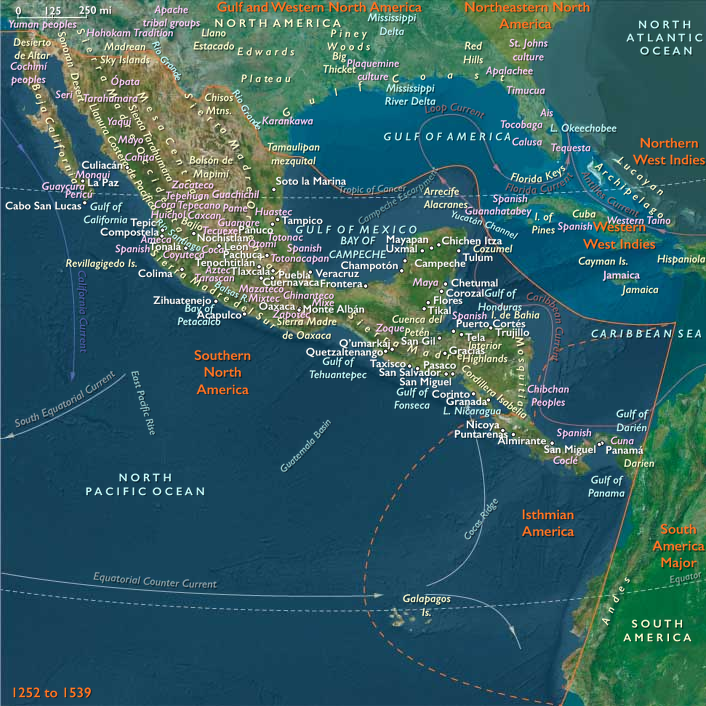
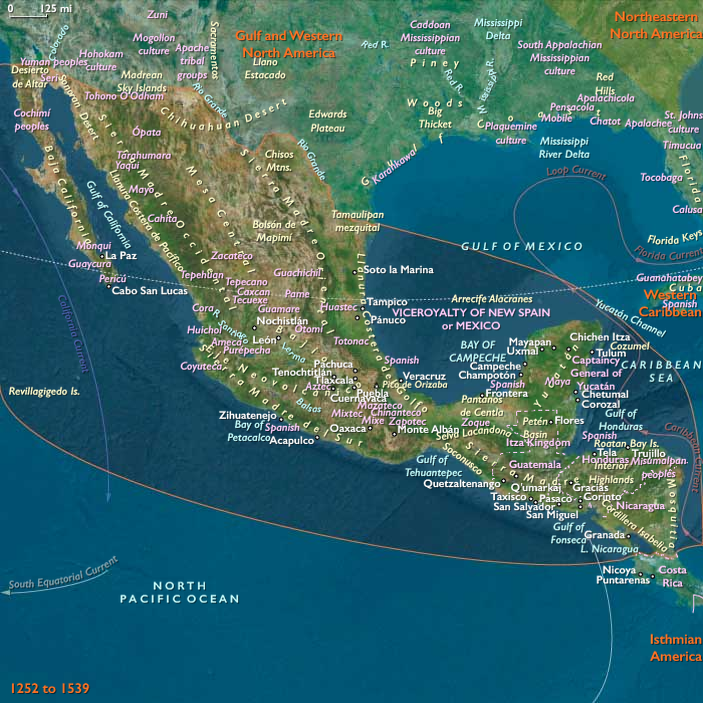
The discovery of Honduran gold and silver deposits attracts new settlers and increases the demand for indigenous labor.
The enforced labor, however, leads to renewed resistance by the native people that culminates in a major uprising in 1537.
The leader of the uprising is a capable young Lenca chieftain known as Lempira (after whom the Honduran national monetary unit will eventually be named).
Lempira establishes his base on a fortified hill known as the Pefiol de Cerqum and until 1538 successfully defeats all efforts to subdue him.
Inspired by his example, other native inhabitants begin revolting, and the entire district of Higueras seems imperiled.
Lempira is ultimately murdered while negotiating with the Spaniards.
Resistance rapidly disintegrates after his death, although some fighting continues through 1539.
The enforced labor, however, leads to renewed resistance by the native people that culminates in a major uprising in 1537.
The leader of the uprising is a capable young Lenca chieftain known as Lempira (after whom the Honduran national monetary unit will eventually be named).
Lempira establishes his base on a fortified hill known as the Pefiol de Cerqum and until 1538 successfully defeats all efforts to subdue him.
Inspired by his example, other native inhabitants begin revolting, and the entire district of Higueras seems imperiled.
Lempira is ultimately murdered while negotiating with the Spaniards.
Resistance rapidly disintegrates after his death, although some fighting continues through 1539.
Locations
People
Groups
- Maya peoples
- Sumo people
- Lenca people
- Tolupan
- Pipil people
- Spain, Habsburg Kingdom of
- Spaniards (Latins)
- Guatemala, (Spanish Colony)
- New Spain (Spanish colony)
- New Spain, Viceroyalty of
Topics
- Post-Classic Stage (Mesoamerica)
- Age of Discovery
- Colonization of the Americas, Spanish
- Yucatán, Spanish Conquest of
- Aztec Empire, Spanish conquest of the
- Guatemala, Spanish conquest of
Commodoties
Subjects
Regions
Subregions
Years: 1396 - 1539
Locations
People
Groups
- Maya peoples
- Sumo people
- Lenca people
- Tolupan
- Pipil people
- Spain, Habsburg Kingdom of
- Spaniards (Latins)
- Guatemala, (Spanish Colony)
- New Spain (Spanish colony)
- New Spain, Viceroyalty of
Topics
- Post-Classic Stage (Mesoamerica)
- Age of Discovery
- Colonization of the Americas, Spanish
- Yucatán, Spanish Conquest of
- Aztec Empire, Spanish conquest of the
- Guatemala, Spanish conquest of
Commodoties
Subjects
Regions
Subregions