
The Early Life and First Mission of …
Years: 716 - 716
The Early Life and First Mission of Saint Boniface
The earliest vita of Saint Boniface provides little detail about his place of birth, mentioning only that he was educated at a monastery ruled by Abbot Wulfhard in Escancastre (Examchester)—likely Exeter. This monastery may have been one of many monasteriola founded by local landowners and churchmen, though no independent record of it exists outside the Bonifacian vitae.
Later tradition, beginning with John Grandisson’s Legenda Sanctorum (14th century), places Boniface’s birth in Crediton, though no contemporary sources confirm this. His original name, Winfrid, suggests he came from a respected and prosperous Anglo-Saxon family, yet against his father’s wishes, he chose the monastic life at an early age.
Education and Early Scholarly Work
Winfrid received his formal theological training at the Benedictine monastery of Nhutscelle (Nursling), near Winchester, under Abbot Winbert. This monastery, shaped by the scholarly traditions of Aldhelm, became a center of learning, with a well-stocked library containing works by Donatus, Priscian, Isidore of Seville, and others.
During his years at Nursling, Winfrid taught in the abbey school, became a priest at the age of 30, and wrote several scholarly works, including the Ars Grammatica, a Latin grammar, as well as a treatise on verse and a collection of Aldhelm-inspired riddles.
When Abbot Wynberth of Nursling died around 716, Winfrid was invited (or expected) to assume the role of abbot, possibly due to familial ties, as early Anglo-Saxon hereditary traditions often dictated succession. However, he declined the position, choosing instead to embark on a missionary expedition to Frisia.
The Mission to Frisia and the Challenge of Pagan Resistance
In 716, Winfrid set out for Frisia, believing that he could convert the Frisians by preaching in their own language, which was closely related to his native Anglo-Saxon. His missionary work followed in the footsteps of Willibrord, the Northumbrian missionary who had attempted a Merovingian-sponsored conversion of Frisia.
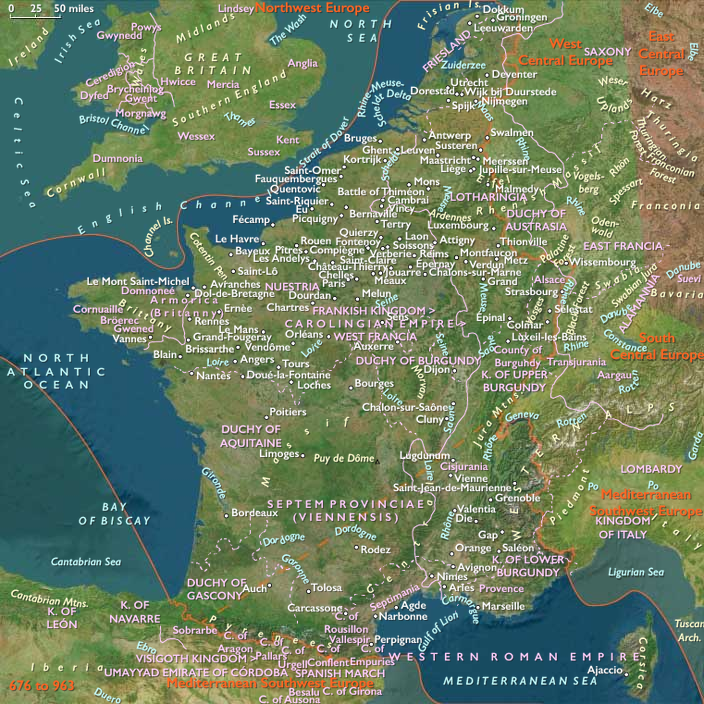
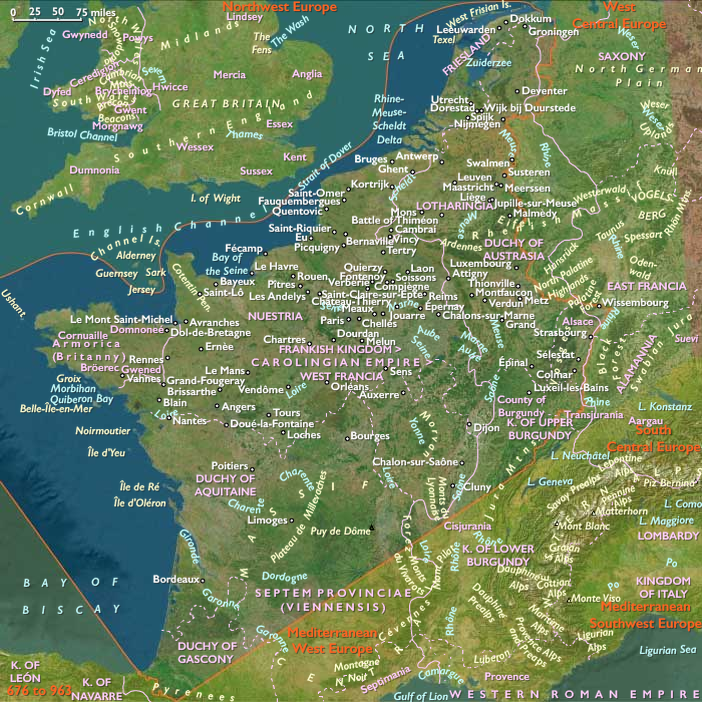
At the time, the region known as Frisia encompassed the coastal provinces of today’s Netherlands and the German North Sea coast. Frankish sources refer to it as the "Kingdom of the Frisians," though it is likely that the North Germans of this period were distinct from the Frisians of Roman times. The Frisian language, however, was still spoken along the entire southern North Sea coast, an area sometimes called Frisia Magna (Greater Frisia).
The Frankish monarchy sought to Christianize Frisia not only for religious reasons but also to gain control of Dorestad, a key trade port that remained outside their grasp. However, resistance was fierce under Radbod, the independent ruler of Frisia (680–719).
According to later accounts, Radbod had nearly accepted baptism under Willibrord, only to reject it upon learning that none of his pagan ancestors could be found in Heaven. Preferring to spend eternity with his forebears in Hell rather than with strangers in Paradise, he chose to resist Christianity and Frankish influence.
When Pepin of Herstal died in 714, Radbod took advantage of the power vacuum, forcing Willibrord and his monks to flee while advancing toward Cologne. Caught in the midst of this Frisian resurgence, Winfrid’s missionary efforts were frustrated, forcing him to return to Nursling—his first attempt to Christianize the region ending in failure.
This setback, however, would not deter him, as he would later return to continental Europe and establish himself as one of the most influential missionaries of the early medieval period.
Locations
People
Groups
- Polytheism (“paganism”)
- Franks
- Anglo-Saxons
- Christianity, Chalcedonian
- Frisians
- Benedictines, or Order of St. Benedict
- Frisian Kingdom
- Northumbria, Kingdom of
- Francia (mayors of the palaces of Austrasia and Neustria)
Topics
Commodoties
Subjects
Regions
Subregions
Related Events
Showing 1 events out of 1 total
Years: 716 - 716
Locations
People
Groups
- Polytheism (“paganism”)
- Franks
- Anglo-Saxons
- Christianity, Chalcedonian
- Frisians
- Benedictines, or Order of St. Benedict
- Frisian Kingdom
- Northumbria, Kingdom of
- Francia (mayors of the palaces of Austrasia and Neustria)
Topics
Commodoties
Subjects
Regions
Subregions