
The Frisii Revolt Against Rome (28 CE) …
Years: 28 - 39
The Frisii Revolt Against Rome (28 CE) and the Battle of Baduhenna Wood
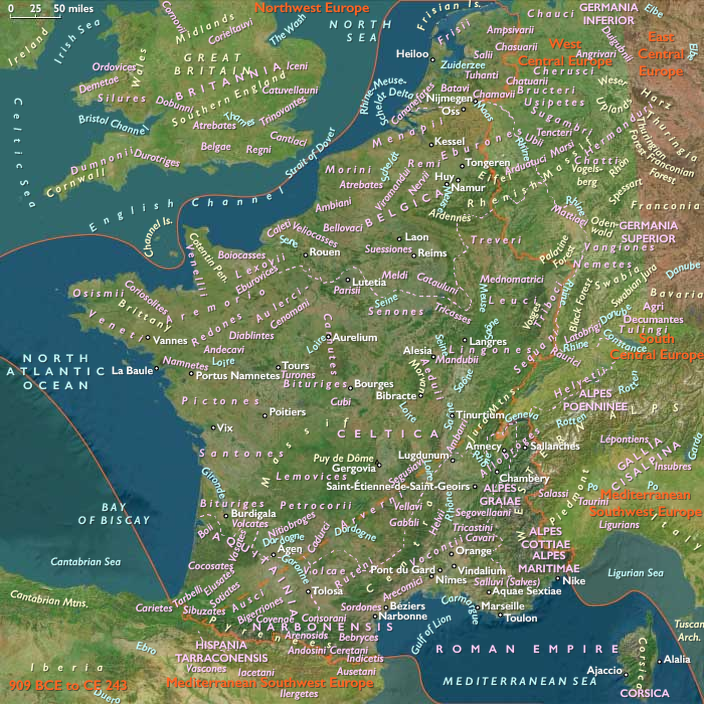
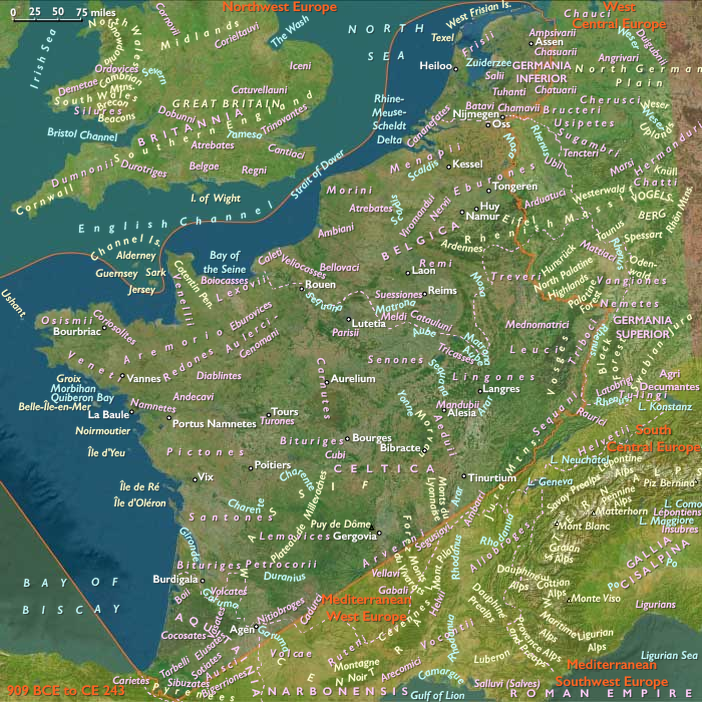
The earliest recorded mention of the Frisii comes from Drusus' campaigns in 12 BCE, during Rome’s expansion along the Rhine frontier. Unlike other Germanic tribes that resisted Roman incursions, the Frisii were "won over"without direct confrontation, suggesting that they accepted Roman suzerainty in exchange for peace.
However, this arrangement deteriorated over time due to heavy taxation and Roman abuses, culminating in the Frisii Revolt of 28 CE, one of the most successful acts of Germanic resistance against Rome.
Drusus' Initial Deal with the Frisii (12 BCE)
- In 12 BCE, General Nero Claudius Drusus led a Roman military campaign against the Rhine Germans and the Chauci.
- The Romans passed through Frisii lands without conflict, securing nominal control over the tribe.
- Drusus imposed a moderate tax on the Frisii, which they initially accepted.
Escalating Roman Oppression and Frisii Resistance
- Over time, a later Roman governor drastically increased taxation, leading to:
- Confiscation of Frisii cattle and land.
- Enslavement of Frisii women and children.
- By 28 CE, the Frisii had had enough.
- They hanged the Roman tax collectors and besieged a nearby Roman fortress, forcing the governor to flee.
The Roman Response and the Battle of Baduhenna Wood
- The propraetor of Lower Germany, Lucius Apronius, launched a counteroffensive by:
- Summoning legionary reinforcements from Upper Germany.
- Constructing roads and bridges to support heavy troops.
- Ordering the Canninefates cavalry and allied German auxiliaries to flank the Frisii from the rear.
Roman Tactical Failures
- The Frisii, already in battle formation, repelled the initial Roman cavalry attack.
- The auxiliaries were sent in piecemeal, instead of launching a coordinated charge.
- Roman units, arriving in disjointed waves, collapsed under Frisii counterattacks, leading to panic and retreat.
- The 5th Legion, led by Cethegus Labeo, intervened just in time to prevent total disaster, saving the remnants of the auxiliaries and cavalry.
The Massacre at Baduhenna Wood
- 900 Romans were surrounded and slaughtered over two days in Baduhenna Wood, named after a Frisian war goddess.
- Another 400 Romans, fearing betrayal, committed mass suicide in the house of Cruptorix, a former Roman auxiliary soldier.
- The battle resulted in a staggering loss of Roman officers, including tribunes, prefects, and centurions.
Rome’s Unusual Response: No Retaliation
- Despite the humiliating defeat, the Romans did not seek revenge.
- Tacitus provides no clear explanation, but possible reasons include:
- Rome’s military overextension along the Rhine and Danube.
- The death of key officers, weakening Rome’s ability to launch an immediate counterstrike.
- A desire to avoid further costly engagements with the highly mobile and elusive Frisii warriors.
Consequences and the Rise of Frisii Prestige
- The Frisii’s stunning victory elevated their status among the Germanic tribes.
- They became feared and respected by neighboring Chauci, Batavi, and other tribes along the North Sea coast.
- While the Romans maintained nominal control over the region, the Frisii were largely left alone, effectively securing their independence from direct Roman rule.
Legacy of the Frisii Revolt
- The Battle of Baduhenna Wood was one of the worst Roman defeats in the northern frontier, comparable to the Battle of Teutoburg Forest (9 CE).
- The failure to subjugate the Frisii demonstrated Rome’s limits in Germania, reinforcing the Rhine as a practical frontier.
- The event highlighted the resilience of Germanic resistance and foreshadowed the continuing struggle between Rome and the northern tribes.
Despite Rome’s vast power, the Frisii Revolt of 28 CE proved that even a relatively small Germanic tribe could successfully challenge the empire’s authority—a lesson that would repeat itself in later centuries.
Locations
Groups
Topics
- Classical antiquity
- Pre-Roman Iron Age of Northern Europe
- Roman Age Optimum
- Pax Romana
- Baduhenna Woods, Battle of the
Commodoties
Subjects
Regions
Subregions
Related Events
Showing 10 events out of 61909 total
Years: 28 - 39
Locations
Groups
Topics
- Classical antiquity
- Pre-Roman Iron Age of Northern Europe
- Roman Age Optimum
- Pax Romana
- Baduhenna Woods, Battle of the
Commodoties
Subjects
Regions
Subregions