
Filters:
The Chasséen Culture: The Earliest Known Neolithic …
Years: 4077BCE - 3934BCE
The Chasséen Culture: The Earliest Known Neolithic Culture in France (c. 4000 BCE)
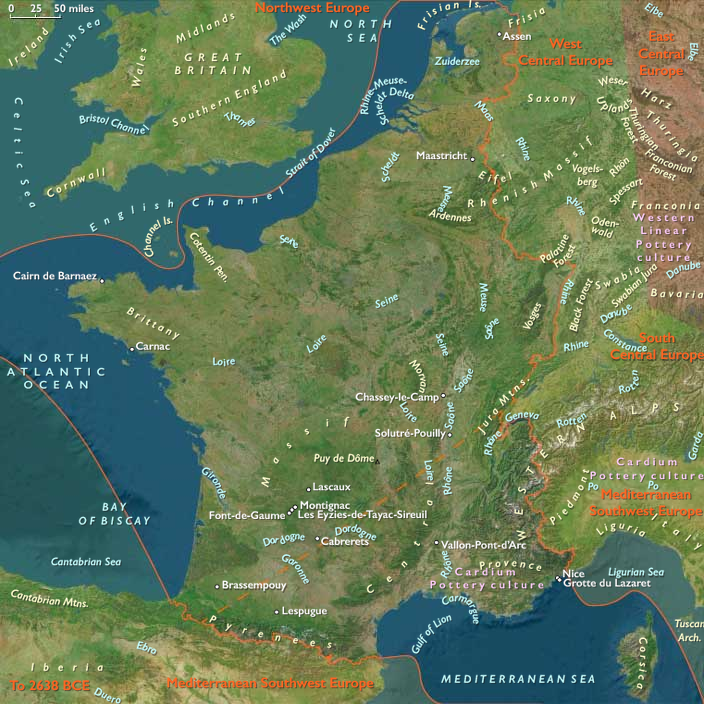
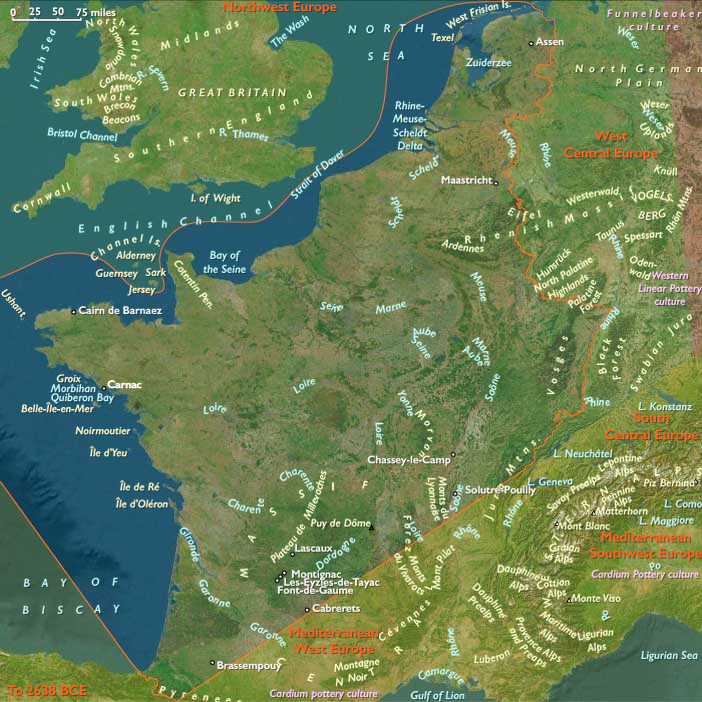
The earliest known Neolithic culture in France, the Chasséen culture, emerged around 4000 BCE, taking its name from the site of Chassey-le-Camp in eastern France. This culture marked a fully developed agrarian economy, with crop production and animal husbandry at its core, reducing reliance on hunting.
Settlement Patterns and Subsistence
-
Chasséen settlements were established in a variety of locations, including:
- Fertile river terraces, ideal for crop cultivation and livestock grazing.
- Caves and rock shelters, offering natural protection and strategic locations.
- Hilltop sites, which later evolved into fortified enclosures.
-
Agriculture and Animal Husbandry:
- Cattle played a dominant role, alongside domesticated sheep, goats, and pigs.
- Crop cultivation included wheat, barley, lentils, and peas, indicating an advanced farming economy.
- Hunting was of little importance, unlike in earlier Mesolithic traditions.
Cultural and Technological Innovations
- Pottery: Chasséen ceramics are finely crafted, featuring cord impressions and geometric patterns.
- Stone Tools: A transition from flaked stone tools to polished axes facilitated forest clearing and agriculture.
- Trade and Exchange: Chasséen communities were part of wider trade networks, acquiring obsidian, flint, and decorative items from distant regions.
Legacy of the Chasséen Culture
- The Chasséen culture represents a fully agricultural Neolithic society, shaping the later development of farming communities in France.
- It played a key role in the spread of Neolithic traditions, bridging earlier Neolithic cultures with later Megalithic and Chalcolithic developments.
- The fortified settlements of the later Chasséen phase foreshadowed the rise of hierarchical social structures, influencing later Bronze Age communities.
The Chasséen culture stands as a defining moment in France’s Neolithic transition, solidifying permanent farming settlements and regional cultural identities.
Locations
Groups
Topics
Commodoties
Subjects
- Commerce
- Environment
- Labor and Service
- Conflict
- Faith
- Government
- Technology
- Anthropology
- Archaeology
- Economics
Regions
Subregions
Years: 4077BCE - 3934BCE
Locations
Groups
Topics
Commodoties
Subjects
- Commerce
- Environment
- Labor and Service
- Conflict
- Faith
- Government
- Technology
- Anthropology
- Archaeology
- Economics
Regions
Subregions