
The major cities of the Indus valley …
Years: 2637BCE - 910BCE
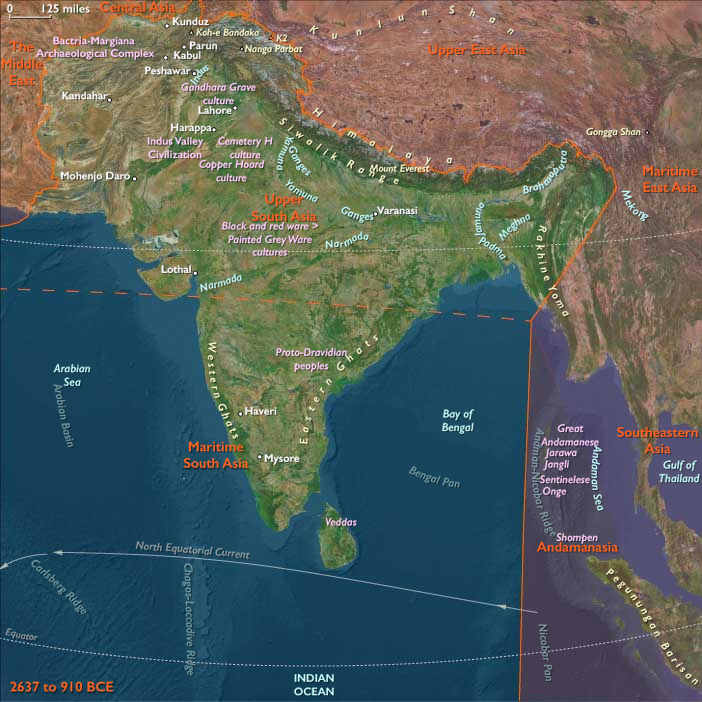
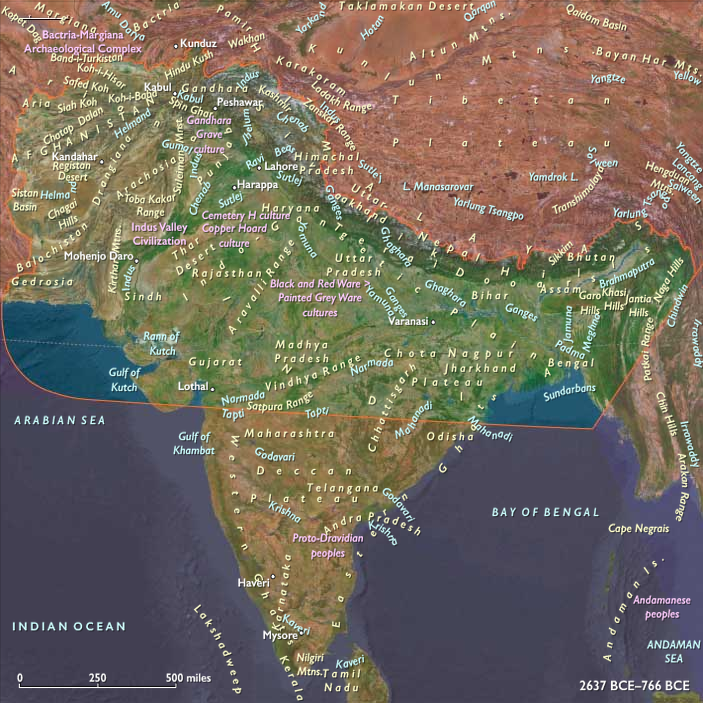
The major cities of the Indus valley civilization contain a few large buildings including a citadel, a large bath—perhaps for personal and communal ablution—differentiated living quarters, flat-roofed brick houses, and fortified administrative or religious centers enclosing meeting halls and granaries.
Essentially a city culture, Harappan life is supported by extensive agricultural production and by commerce, which includes trade with Sumer in southern Mesopotamia (modern Iraq).
The people make tools and weapons from copper and bronze but not iron.
Cotton is woven and dyed for clothing; wheat, rice, and a variety of vegetables and fruits are cultivated; and a number of animals, including the humped bull, are domesticated.
Harappan culture is conservative and remains relatively unchanged for centuries; whenever cities are rebuilt after periodic flooding, the new level of construction closely follows the previous pattern.
Although stability, regularity, and conservatism seem to have been the hallmarks of this people, it is unclear who wields authority, whether an aristocratic, priestly, or commercial minority.
Groups
- Mesopotamia
- Sumer
- Harrapan civilization, Early
- Sumer, Early Dynastic Period
- Harrapan civilization, Mature (Indus Valley Civilization)
Topics
Commodoties
Subjects
Regions
Subregions
Related Events
Showing 10 events out of 186 total
Years: 2637BCE - 910BCE
Groups
- Mesopotamia
- Sumer
- Harrapan civilization, Early
- Sumer, Early Dynastic Period
- Harrapan civilization, Mature (Indus Valley Civilization)
Topics
Commodoties
Subjects
Regions
Subregions