
The dynasts of the Christian Arab Ghassanids, …
Years: 529 - 529
The dynasts of the Christian Arab Ghassanids, though often called kings, are in fact Roman phylarchs (native rulers of subject frontier states).
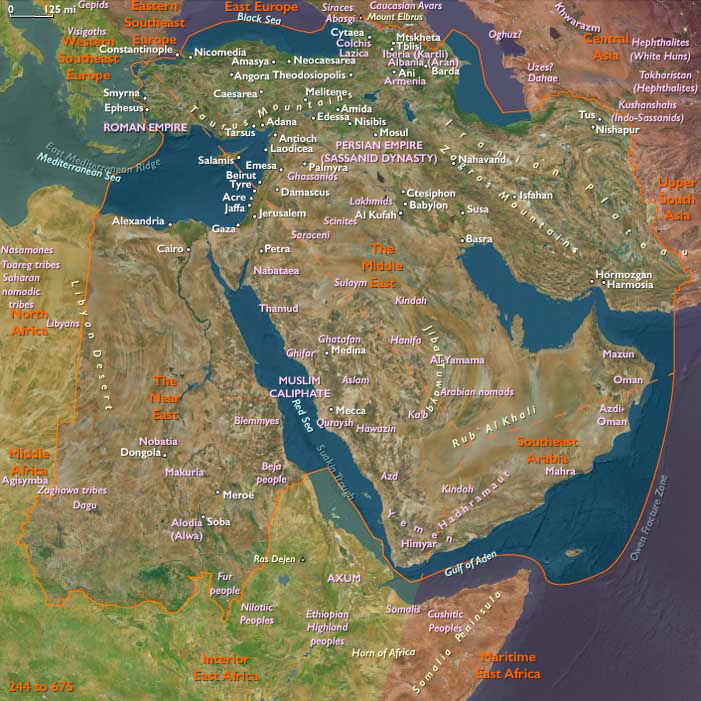
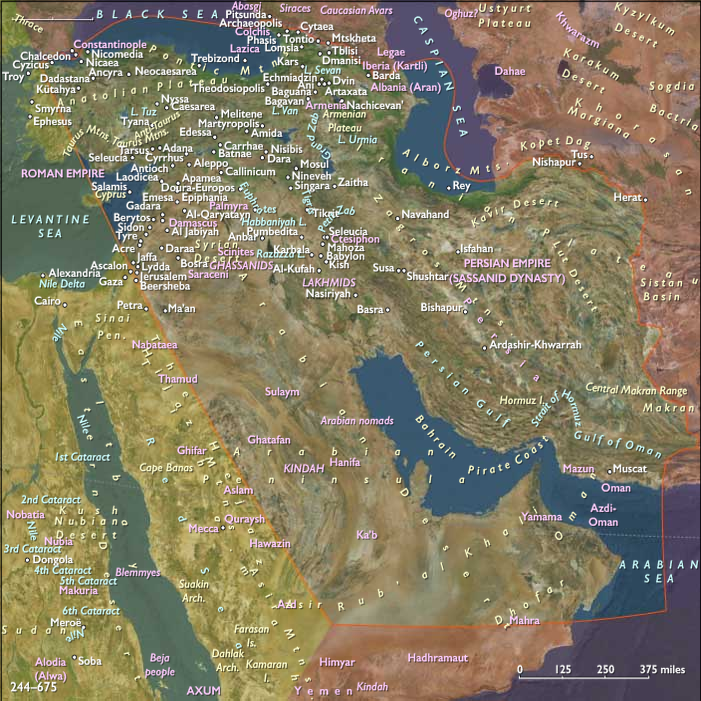
They have their headquarters well within the Roman empire, a little east of the Sea of Galilee at Jabiyah in the Jawlan (Golan) area; but they control large areas of northwestern Arabia, as far south as Yathrib, serving as a counterpoise to the Sassanian-oriented Lakhmids in the northeast.
From its strategic location in portions of modern Syria, Jordan, and Israel, Ghassan protects the spice trade route from the south of the Arabian Peninsula and acts as a buffer against the desert Bedouin.
Ghassanian influence spans the sixth century CE, and their most prominent member, al-Harith ibn Jabalah, given the title patricius in 529 by the emperor Justinian, supports the Romans against Sassanian Persia.
Locations
People
Groups
- Polytheism (“paganism”)
- Arab people
- Persian people
- Zoroastrians
- Bedouin
- Persian Empire, Sassanid, or Sasanid
- Lakhmid kingdom of al-Hira
- East, Diocese of the
- East, or Oriens, Praetorian prefecture of
- Syria Prima (Roman province)
- Christians, Eastern (Diophysite, or “Nestorian”) (Church of the East)
- Christianity, Chalcedonian
- Ghassan, Kingdom of
- Roman Empire, Eastern: Justinian dynasty
Topics
Commodoties
Subjects
Regions
Subregions
Years: 529 - 529
Locations
People
Groups
- Polytheism (“paganism”)
- Arab people
- Persian people
- Zoroastrians
- Bedouin
- Persian Empire, Sassanid, or Sasanid
- Lakhmid kingdom of al-Hira
- East, Diocese of the
- East, or Oriens, Praetorian prefecture of
- Syria Prima (Roman province)
- Christians, Eastern (Diophysite, or “Nestorian”) (Church of the East)
- Christianity, Chalcedonian
- Ghassan, Kingdom of
- Roman Empire, Eastern: Justinian dynasty
Topics
Commodoties
Subjects
Regions
Subregions